09/27/14

Kids with Pet Frogs and other Wildlife

Recently I’ve been meeting children at my Frogs Are Green table at various Jersey City events and this one young girl told me she had at home: fire-bellied toads, a lizard, fish, 2 dogs and her brother had turtles too.

Growing up my parents weren’t so keen on animals in the home and perhaps that’s why I love wildlife so much, watch nature programs, and have my own pets. Over the years I’ve had fish, turtles, and cats.
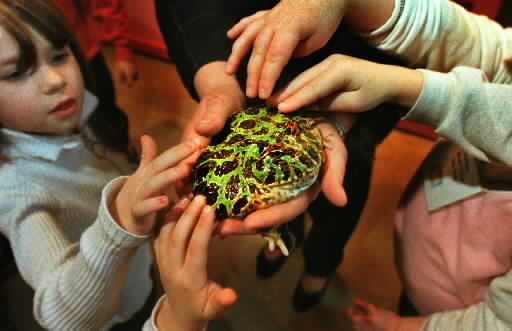
It got me thinking about all that variety from someone so young, and whether it’s a good idea for a child to be responsible for so many pets. In addition, I was quite surprised to hear she had frogs. At first I thought she was joking with me. But a few days later, I heard from another young boy that he also had fire-bellied-toads at home.

It’s not something I recommend because there are so many issues right now with frogs potentially carrying the chytrid fungus (Batrachochytrium dendrobatidis) disease and if those frogs were let go or escaped into an area unnatural to them, they would be helping spread the disease.

(To learn more about this, Save The Frogs has a great web page on this:

Chytrid Fungus in the Pet Trade

“As the trade of amphibians is highly unregulated, disease testing of amphibians traveling between countries and states is next to none. Many amphibians that travel often are carries of the chytrid fungus, which is greatly responsible for the amphibian declines around the world. Approximately 300 species have been detected with chytrid and it is now present in nearly 40 countries. In 2011, a study found that in many pet shops and pet expos nearly 3% of the captive amphibians tested positive for the presence of chytrid, and 13.6% of the collections yielded at least one positive result.” — from Save the Frogs

Frogs As Pets

I decided to look further into how common it is for kids to have pet frogs and found this informational web page: Your First Frog.”

It’s obvious from reading this page how complex taking care of a pet frog would be. Once you finish this page, I’m sure you’ll agree they belong in the wild.

Only those that are threatened with extinction and are being helped by scientists/herpetologists in captivity like the Golden Mantella, or those doing important research to help amphibians, should have them away from their natural habitats.

___________________________________________________________________

Here are some thoughts on this topic from David Veljacic, nature and wildlife conservationist

When deciding to buy a child a pet there some questions to keep in mind.

Is my child responsible enough to care for a pet? Never buy children pets to teach them responsibility. 

Is this interest a fad?

What is my child looking for in a pet? Does Your child want a playmate or a piece of nature? 

Do I have the space?

Does my child have the time? With kids enrolled in so many activities they simply may not have the time to care for the animal properly. Ultimately, the parents have the responsibility to pick up the slack that the kids may leave.

Can we afford the upkeep? 

And, if looking at exotics – Is it captive bred? Only buy captive bred animals.

Once You have decided to let Your child have a pet, You need to educate Yourself on the needs of the animal You are buying. You may be called upon to care for the animal from time to time. It is also good, particularly with young kids, to check up on the pets to make sure things are going well, so You should know a little about it. 

I have seen it happen many times with people who keep exotics, particularly reptiles and amphibians, where it becomes an obsession to buy more and more species. There is always a new color morph or new species available, and it can be very tempting. I recommend not growing a collection too quickly, a child can become overwhelmed before they know it. 

Do Your research! NEVER include pet store workers opinions in Your research! Pet store workers are there to sell You things, then sell You more things. You need have the type of animal You plan on buying researched before heading to the pet store, or breeder, and the only questions left should be things like…

Is the animal captive bred?
Is the animal eating/pooping properly?
You should also be allowed to inspect the animal for obvious injuries.

Many exotics that in the past were sold as “disposable” live for years, even decades. If You cannot commit to a long lived animal, don’t buy one. Never release captive animals into the wild. 
09/2/14

Hawaii’s Inhumane Frog Policy

I received yet another call from someone distressed about coqui tree frogs on her property. No, she wasn’t wanting to find out how to kill the frogs. She was trying to find out how to keep them and resist aggressive neighbors wanting the frogs destroyed.

For many people in Hawaii, as in Puerto Rico, the coqui frog is considered an adorable creature, singing at night and improving the environment by eating insect pests. They can get loud in large numbers, but for those who enjoy the sounds of wildlife, the coqui chirp is soothing and creates a white noise that aids sleep. 

However, the Hawaiian government has passed laws to vilify coqui frogs as a noisy environmental menace, making it illegal to “harbor” or transport coquis within the state. According to the law, coquis frogs are pests by definition, and anyone enjoying them does so at his own peril. Millions of dollars have been spent trying to stop the spread of the frogs, which now reside happily on the Big Island’s east side and in limited areas of the other islands.

Of course, if the coqui frogs were native to Hawaii, they would be protected, not killed. The sound would be appreciated and promoted, as it is in Puerto Rico.

coqui frog in Hawaii

However, in today’s Hawaii, only native species are valued. Introduced species are now regarded as illegal aliens, and harboring these aliens is against the law. Laws defining the coqui as a “pest” allow the cruel slaughter of these tiny, harmless creatures, bypassing humane treatment laws.

The Good Shepherd Foundation, of which I am the director, believes that cruelty to animals is unacceptable, regardless of whether the animals are native or not. In 2001 we started a program to counter the anti-coqui propaganda, called CHIRP, or the Coqui Hawaiian Integration and Reeducation Project. Acceptance, we believe, is better than an endless environmental war against the frogs.

Over the years we have been contacted by many residents who found the frogs desirable on their property, but who were being harassed by neighbors who did not yet have the frogs and wanted them eradicated. This meant having one’s property sprayed with citric acid, which kills plants as well as coquis, lizards, insects, and other non-target species. The acid burns the victims to death.

Anti-coqui hysteria has made people fearful of admitting they like the coquis, faced with the unfortunate choices of harassment, or letting eradicators poison their property.

Some residents would like to remove the coquis to avoid the drama, but don’t want to kill the coquis in the process. These humane-minded people are faced with another dilemma. Moving coquis is a crime. The government has made it so people can only kill coquis, either with citric acid or by cooking or freezing the live frogs. You can’t legally catch the frogs and release them somewhere else where there are other frogs.

This means the Hawaiian government has made it illegal to treat the coquis humanely. It forces residents to either be cruel to the frogs, or to break the law and illegally release the frogs elsewhere, which many people do.

The most recent phone call was from a woman who wanted to save the lone coqui on her property from a certain death. A neighbor heard the frog and reported it to the homeowner’s association, which was dispatching an eradicator right away. The neighbor also complained that this same woman was feeding non-native birds, and threatened to have the birds shot.

For those who love wildlife, Hawaii is no longer a paradise. Species are not valued for their beauty and other positive qualities, or for the biological diversity they bring to these volcanic islands. Instead, they are valued solely for being “native,” and are killed solely for being introduced.

It is a war on wildlife. Property owners, residents, and visitors who value wildlife for what it is, regardless of whether or not it was introduced, are victims of this war.

For more, see our website, www.HawaiianCoqui.org.

Guest post: Sydney Ross Singer is a medical anthropologist, author, and director of the Good Shepherd Foundation.  He lives on a coqui frog sanctuary with his wife and son on the Big island of Hawaii.

08/28/14

Eco-Interview: John Hamilton, Children’s Book Illustrator and Conservationist

John Hamilton, children's book illustrator with chameleon

When did this all begin? Please tell us a bit about your work.

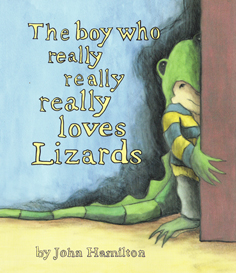
I am an artist and illustrator based in Manchester UK. My artwork has always been narrative /story-based, using oil on canvas, printmaking, and large-scale collage. My work includes characters acting out various scenarios and role play, as if from a film or stage play. I often include animals or people dressed as animals. I recently had a children’s picture book published called “The Boy Who Really Really Really loves Lizards” aimed at 3-7 year olds.

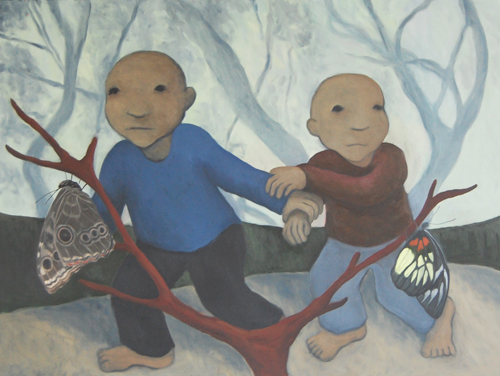
Go quietly so as not to wake the butterflies' oil on canvas, 2013

What is your educational background and what led to this creative path?

My background is in Fine Art. I did my degree back in 1990 and have been a practicing artist since then. A couple of years ago I did a Masters degree in Children’s Book Illustration. For the final project I wrote the story about my son Oliver who was obsessed by visits to the Manchester Museum, From the age of two he has loved the museum and would spend hours there.

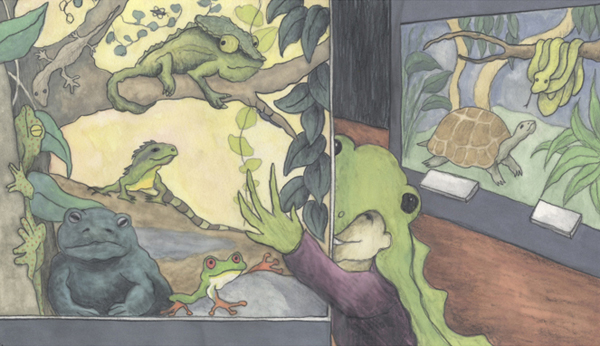
inside the vivarium - illustration from the book

What are some challenges you have faced and how did you deal with them?

When I was doing research at the museum for the book, I became friendly with Andrew Gray, the curator of the vivarium. He specializes in the conservation of frogs and has done a lot of work to project many endangered species from Costa Rica and other places. His passion and commitment to the Museum is amazing. He was also responsible for getting the museum to publish my book which is a playful look at my boys obsession with the museum and the lizards, frogs and snakes. I think we saw it as a way to engage the younger visitors and to perhaps encourage them to become aware of the conservation involved. The museum features heavily in the book.

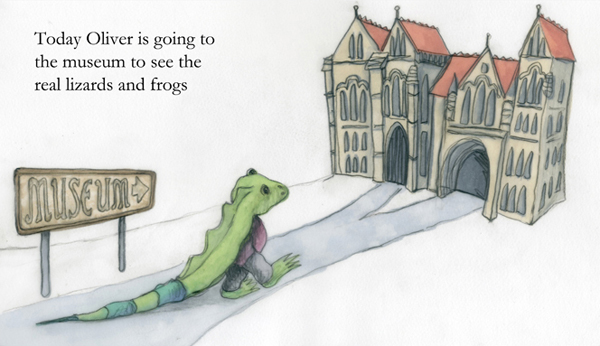
Today Oliver is going to the museum - illustration from the book

What can people do to help this cause?

The museum allows the public to sponsor the frogs and to contribute to the cost of research and support for the museum. Oliver recently sponsored a tiger monkey frog and got to meet it and hold it at the museum! You can also buy my book too!

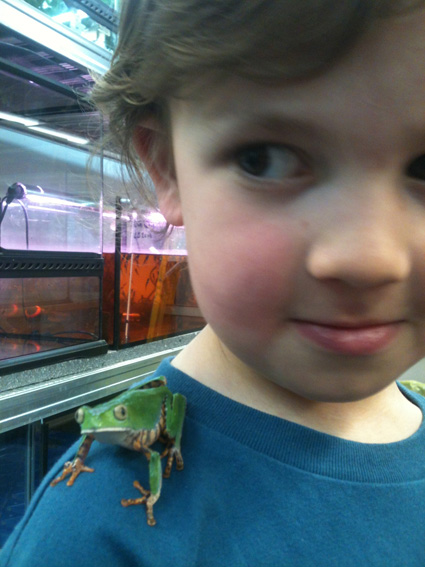
Oliver with the Tiger Monkey Frog at the Manchester museum

How do you reach your targeted audience?
Is it through your website, advertising or social media or another route? Which is most effective and why?

I am trying to promote my book at the moment and I have been doing that through Facebook and Twitter as they both allow you to reach a large volume of people very quickly. It is also a good way of keeping in touch with people and informing them of events and new work. There is also a website for the book where I post features, reviews and workshop projects done with schools and colleges.

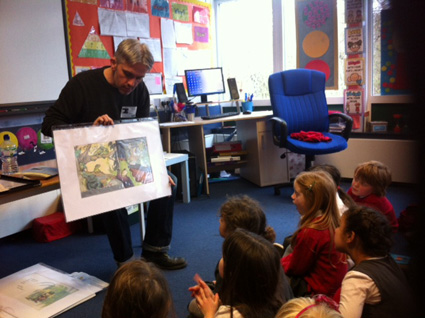
school workshop with John Hamilton

How do you keep the audience engaged over time?

Updates on Facebook and Twitter and by creating new links with organizations and groups with similar interests.

Tell us about your events around the world and some of the campaigns you have started.

The book is only available in the UK so that has been my main target but I would love it to go further afield! I have had emails from people in South Africa, Australia, France and the USA who have received the book, many as presents from the UK – so that is exciting!

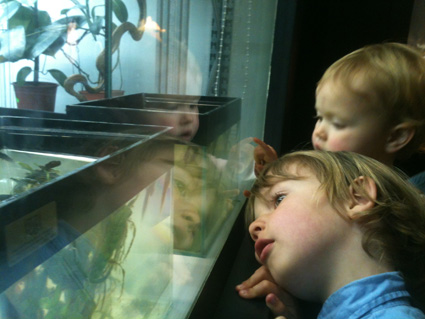
children looking at tadpoles in manchester museum

What is in the works for the future? What haven’t you yet tackled, but will want to do soon?

I am working on another picture book possibly about butterflies or snails! I am hoping the museum may show an interest in publishing this one too. I want to try and make this one a bit more factual and to include facts and information to allow children to continue their interest in the subject.

Would you like to add a bit more?

No. Just a thank you for the opportunity to talk about the book and hopefully reach a few more people and encourage some more young people to really, really, really love lizards and frogs!

Boy who really really really loves lizards

To find John Hamilton online:

Website: http://www.johnhamiltonillustration.com
Facebook: https://www.facebook.com/tbwrrrll
Twitter: @JohnHamilton17

For information on the Manchester Museum and their work with frogs and about sponsoring the frogs visit:
http://frogblogmanchester.com

06/18/14

Calling Amphibian Monitoring Project (CAMP)

The Conserve Wildlife Foundation of NJ coordinates the statewide Calling Amphibian Monitoring Program (CAMP). The object of this program is to assess the distribution, abundance, and health of New Jersey’s amphibians. This is part of a larger initiative called the North American Amphibian Monitoring Program (NAAMP) and the data collected in New Jersey will be submitted into the National database.

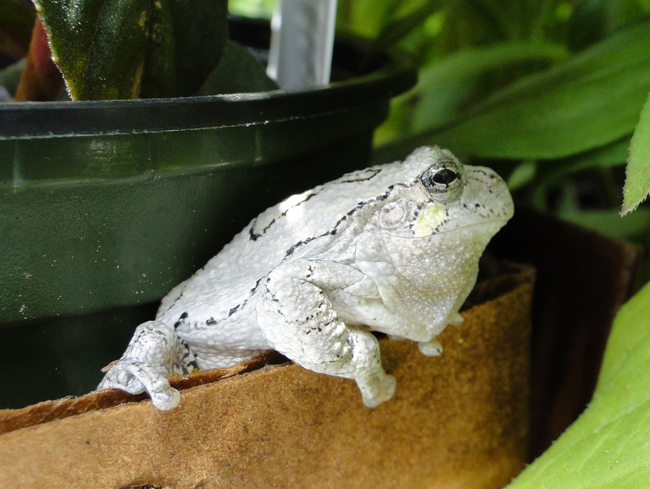
Gray-Tree-Frog-by-M-Patterson

Each of the 16 species of frogs and toads in New Jersey has a unique vocalization or “call” that can be heard during their mating season.

Here’s a list and call quiz of the Frogs in New Jersey:
Eastern Spadefoot (Scaphiopus holbrookii)
American Toad (Anaxyrus americanus)
Fowler’s Toad (Anaxyrus fowleri)
Northern Cricket Frog (Acris crepitans)
Pine Barrens Treefrog (Hyla andersonii)
Green Treefrog (Hyla cinerea)
Gray Treefrog (Hyla versicolor)
unknown gray treefrog species (Hyla chrysoscelis/versicolor)
Cope’s Gray Treefrog (Hyla chrysoscelis)
Spring Peeper (Pseudacris crucifer)
New Jersey Chorus Frog (Pseudacris kalmi)
American Bullfrog (Lithobates catesbeianus)
Carpenter Frog (Lithobates virgatipes)
Green Frog (Lithobates clamitans)
Wood Frog (Lithobates sylvaticus)
Southern Leopard Frog (Lithobates sphenocephalus)
Pickerel Frog (Lithobates palustris)

The Amphibians that are listed as Endangered or Threatened in New Jersey:

Endangered Amphibians
Salamander, blue-spotted – Ambystoma laterale
Salamander, eastern tiger – Ambystoma tigrinum
Treefrog, southern gray – Hyla chrysocelis

Threatened Amphibians
Salamander, eastern mud – Pseudotriton montanus
Salamander, long-tailed – Eurycea longicauda
Treefrog, pine barrens – Hyla andersonii
 

Volunteers participating in the CAMP project conduct roadside surveys (after dusk) for calling amphibians along designated routes throughout the state. Each 15-mile route is surveyed three times during the spring (March, April & June), during the given four week period. Each route has 10 stops, where you stop, listen and record for 5 minutes. A structured protocol is followed to determine which nights to survey, how long to survey, which species are calling, and how to estimate the total number of individuals calling at each site. All volunteers receive a Calls of NJ Frogs and Toads, CD with which to familiarize themselves with the calls.

The results of these surveys will provide ENSP (Endangered and Nongame Species Program) and the United States Geological Survey with valuable data on the calling amphibian populations in New Jersey. Because each route will be surveyed at the same time and for the same amount of time, routes can be directly compared within a given year and between years. This allows for trends in populations to be identified over time and if needed steps may be taken to protect these populations in the near future.

— Larissa Smith, Biologist/Volunteer Manager, Conserve Wildlife Foundation of NJ

05/22/14

Frogs and Strawberries

Last night I had a dream about a frog. Not unusual for me, right?

In the dream, I was lifting a strawberry out of a container and I see a little frog upside down. Not alive, I’m afraid.

This morning I searched for frogs and strawberries and discovered that it’s not uncommon for frogs to be seen in strawberry patches. Someone had posted a question online about whether the toad frequenting her garden was eating the strawberries. The frog was not eating the fruit, but the bugs in the garden. Most likely the bugs were nibbling on the strawberries. (I think I see a children’s storybook in the making.)

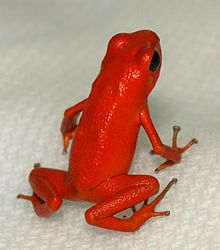
strawberry-poison-dart-frog-Oophaga-pumilio-zooAlso in my search, the Strawberry Poison Dart Frog came up, so here’s a photo and a bit about them.

From Wikipedia – Strawberry Poison Dart Frog:
The strawberry poison frog or strawberry poison-dart frog (Oophaga pumilio or Dendrobates pumilio) is a species of small amphibian poison dart frog found in Central America. It is common throughout its range, which extends from eastern central Nicaragua through Costa Rica and northwestern Panama. The species is often found in humid lowlands and premontane forest, but large populations are also found in disturbed areas such as plantations.[1] The strawberry poison frog is perhaps most famous for its widespread variation in coloration, comprising approximately 15–30 color morphs, most of which are presumed to be true-breeding.[2] O. pumilio, while not the most poisonous of the dendrobatids, is the most toxic member of its genus.

05/1/14

Learning How Frogs See and Hear

Guest post by Wes Deyton

How Frogs See

Frogs, due to the positioning and design of their eyes have nearly a 360 degree view. This makes up for the fact that they are not able to turn their head and look behind them like other animals can. Frogs, with their nearly 360 degree of field of view, make it difficult for predators to sneak up on them. Frogs also are unable to move their eyes within their eye sockets like humans and other animals can. This causes a Frog to have to turn his head to line up with it’s prey.

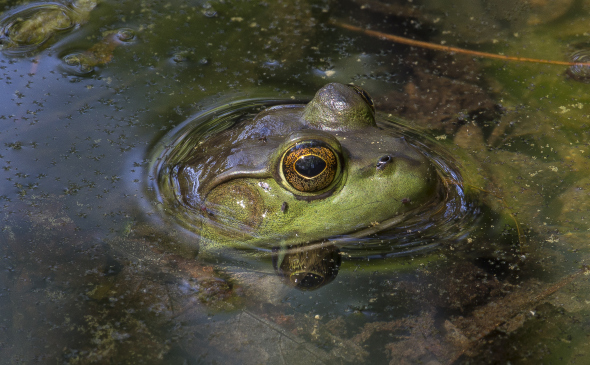
American-Bullfrog-by-Wes-Deyton

Frogs cannot see while they are attacking prey, so they must have their prey lined up when they go in for the strike. They are unable see their prey while they are making a strike, because when their sticky tongue comes out to snatch up an insect, their eyes retract into the top of their head.

Frogs are near-sighted and they do not see very well at a distance. Their eyes are extremely sensitive to movement, so if a frog’s prey does not move, they will not detect it. They also have excellent night vision, due to a mirror like layer in the back of their eye called a Tapetum. The Tapetum helps frogs reflect and collect ambient light between the back of the eye and the frog’s cornea. Frogs also use their eyes in a rather interesting way. They are unable to swallow like humans and other animals, so they actually push their eyes down into their head to push their food into their stomach.

Frogs eyes come in all different colors, from copper to bronze, gold to silver, and orange to red, like the Red-Eyed Tree Frog. They have three different eye lids. The third eye lid is the most interesting which is a clear membrane, and is called a Nictitating membrane, and this eye lid helps the frog to see underwater as well as to hide from predators.

How Frogs Hear

If you have ever been outside on a warm night you know just how loud Frogs and Toads can be. Male Frogs and Toads call to attract females. Below is a video of an American Toad calling to attract a mate.


You can see in the video, a Toad’s eardrum is the circular indention behind their eyes. You can also tell from the video, this toad calls quite loudly. Frogs and Toads are able to call at upwards of 90 decibels. They have quite sensitive hearing, so the question is, how do they not damage their eardrums or deafen themselves with their loud calls?

Scientists have discovered that Frogs hear with both their ear drums and their lungs and a pressure system builds inside the Frog that minimizes vibrations from internal noises made by the frog.

To further elaborate on this, I need to talk about how a frogs ear drum works. A frog’s ear drum is called a Tympanum and works in very much the same way that our human ear drums work. A frog’s ear drum, just like a humans ear drum, is a membrane that is stretched across a ring of cartilage like a snare drum that vibrates. There is rod that is connected to the ear drum, which vibrates by sounds that come at the frog. That sound is just pressure waves. The rod sloshes around in the inner ear fluid, which causes microscopic hairs to move, which send signals to the frog’s brain for interception. A frog’s ear lungs also vibrate when sound waves come toward it, although they are less sensitive than the frogs ear drum.

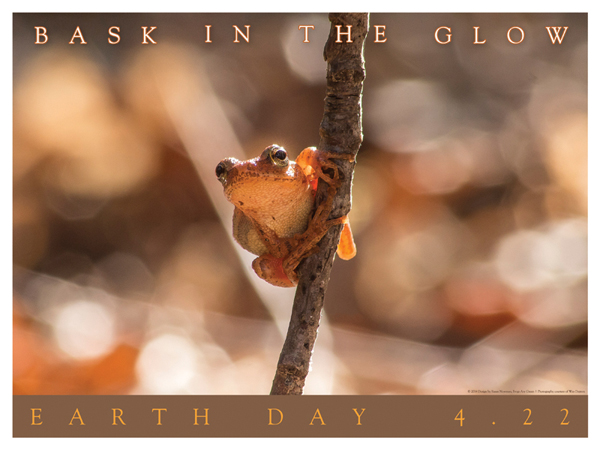
Earth Day poster with frog photographer, Wes Deyton and designed by Susan Newman

Some frogs, like the Spring Peeper, pictured, have a call that is so loud, they can be heard up to one mile away. These creatures are so noisy, it is a wonder that they do not hurt their ears and deafen themselves with their own calls. Frogs have a very clever method of making sure that their own loud calls do not hurt their own hearing.

In 1988, Scientist Peter Narins, who is a professor at UCLA of Physiological Science, found that frogs have an internal pressure system, a closed air loop, that keeps the frog’s own ear drum from vibrating excessively from its own call. Scientists have found that pressure builds between their lungs and ear drum, which then equalizes the pressure between the inner and outer surfaces of the frogs ear drum, which greatly cuts down on the vibrations that a frog experiences, from their internal calls. It is also believed that another purpose of the closed loop pressure system, is so Frogs can detect the direction a sound is coming from with its lungs, that way they can escape danger while calling. Being in the vicinity of a frogs calling can subject a human to sounds so loud, that are upwards of 90 dB, which can cause discomfort and hearing loss for humans.

Sources: April Holladay: Frogs Can Hear Without Ears. 4/26/2001. Wes Deyton’s blog at Last Mile Photography