06/27/14

Learning About Zero Waste in Jersey City

Did you know that each person produces 4.4 lbs of waste per day? Can Jersey City move towards “Zero Waste?”

Yesterday, I attended the “Jersey City Moving Towards Zero Waste Conference” in City Hall and I have to say it was an eye-opening experience. The speakers and panel discussions were informative and I learned about what some of my fellow citizens are doing right here in Jersey City, as well as what is being done elsewhere.

Mayor Steven Fulop started off the conference by talking about how important this topic is and his commitment to doing what he can and I will say that the food and beverages provided for the event were accompanied by a composting bucket and two separate clearly marked waste barrels.

The Mayor introduced Judith Enck, the Regional Administrator of Region 2 of the U.S. EPA, and we learned about initiatives around the country and the world in comparison to what we aren’t yet doing here. I know that the trash is a problem across this city and something has to be done to change people’s behavior. It’s not enough for a few people to care, but we have to change the way people think about trashing their own neighborhoods, as if there’s someone behind them ready to pick it up. There isn’t.

Did you know that the Jersey City trash is picked up and shipped out of state by rail cars? What a waste of time, effort and fuel.

Here’s a current tv commercial playing about recycling from the “Keep America Beautiful” campaign:


Maybe we need a “Keep Jersey City Beautiful” or “Jersey City Proud” brand campaign?

The speakers were: Debra Italiano, Founder and Chair of SustainableJC; PJ Wasinger, Upcycle Jersey City Artist; April Buther Wennestrom, Director, Affiliate Services, Keep America Beautiful; Dennis Whittinghill, Urban Farm Expert, and DamagedWear; Albe Zakes, VP of Communications, TerraCycle; Eric Silverman, Principle, Silverman; Aaron Klein, CEO, Greener Corners; Dale J. Carpenter, Chief Sustainable Materials Management, EPA Section 2; Gary Sondermeyer, VP of Operations, Bayshore Recycling Corp.; Sondra Flite, Environmental Specialist III, Bureau of Recycling and Planning, Division of Solid and Hazardous Waste; and Norman M. Guerra, CEO, Hudson County Improvement Authority.

The big topics of the day were recycling (what and how), what some of these companies are doing to spread awareness and get people involved, and composting.

Until yesterday, I had never heard of “Black Soldier Flies.” It’s not the flies themselves that eat the waste, but the larvae. Pretty interesting!

From Wikipedia:

Black Soldier Fly Larvae Composting
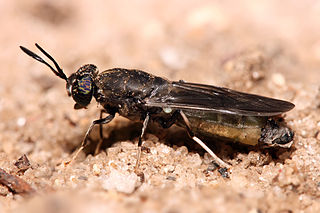
320px-Hermetia_illucens_Black_soldier_fly_edit1BSFL composting quickly converts manure or kitchen waste into an organic compost. In a compost bin, it can take only twenty days to start to compost. The resulting compost can be used for soil and fertilizers. After the conclusion of the compost process, the larvae can also be harvested as feed for poultry, chickens, and possibly dogs. On average a household will produce a little under a kg of food waste per day. This food waste can be composted at home using black soldier fly larvae much much faster than worms can do it. The BSFL will eat kilograms of scrap food a night in small composting units, eliminating your food waste before it can even begin to rot. This is probably the fastest composting technique. BSFL often appear naturally in worm bins, composting toilets, or compost bins. They can also be bought online. Without much added cost, these devices could be designed to also harvest BSFL.

About Composting from Wikipedia:

Compost is organic matter that has been decomposed and recycled as a fertilizer and soil amendment. Compost is a key ingredient in organic farming. At the simplest level, the process of composting simply requires making a heap of wetted organic matter known as green waste (leaves, food waste) and waiting for the materials to break down into humus after a period of weeks or months. Modern, methodical composting is a multi-step, closely monitored process with measured inputs of water, air, and carbon- and nitrogen-rich materials. The decomposition process is aided by shredding the plant matter, adding water and ensuring proper aeration by regularly turning the mixture. Worms and fungi further break up the material. Aerobic bacteria and fungi manage the chemical process by converting the inputs into heat, carbon dioxide and ammonium. The ammonium is the form of nitrogen (NH4) used by plants. When available ammonium is not used by plants it is further converted by bacteria into nitrates (NO3) through the process of nitrification.

Compost can be rich in nutrients. It is used in gardens, landscaping, horticulture, and agriculture. The compost itself is beneficial for the land in many ways, including as a soil conditioner, a fertilizer, addition of vital humus or humic acids, and as a natural pesticide for soil. In ecosystems, compost is useful for erosion control, land and stream reclamation, wetland construction, and as landfill cover (see compost uses). Organic ingredients intended for composting can alternatively be used to generate biogas through anaerobic digestion. Anaerobic digestion is fast overtaking composting in some parts of the world (especially central Europe) as a primary means of downcycling waste organic matter.

— Susan Newman, founder, Frogs Are Green

Are you recycling and composting? Please share what you are doing to keep your neighborhood beautiful.
06/12/14

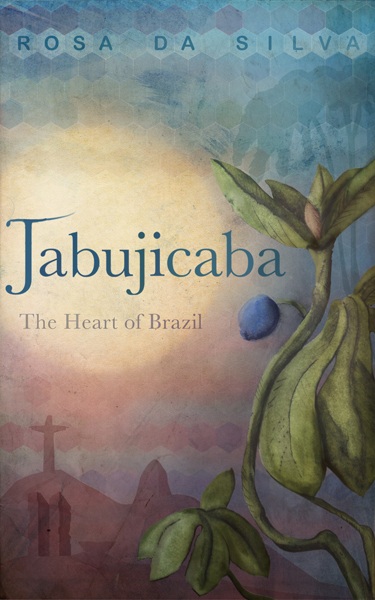
Eco-Interview: Rosa Da Silva, Author of Jabujicaba, The Heart of Brazil

When was your organization founded? Please tell us a bit about its mission, goals…

Jabujicaba the book was published as an e-book at the end of April 2014. The paperback version is coming out this month. Behind it is an idea. Literally a ‘novel’ campaign.

On June 2nd 2014 the not-for-profit company Voices for Nature Limited was incorporated. This takes the campaign forward beyond the life-span of the book.

The people working on this creative project are young and green and Indie… but the ideas behind all this are long in the tooth.

 Jabujicaba by Rosa da Silva

What is your educational background and what led to creating this organization?

I am half German and half English. I grew up always on the move. I have lived in many different countries, including the US where both of my children were born. I speak lots of different languages. I would say I grew up with strong feelings for nature and none for national affiliations.

I studied Modern and Medieval Languages at Cambridge University (Spanish and German). It helps to explain my love for magic realism – Garcia Marques, Isabel Allende – Latin American authors – and German writers like Kafka and Brecht and socialist political art eg: George Grosz and Kaethe Kollwitz.

I worked in the environmental area for many years, with a professional background in policy, communications and campaigning. I was involved in the early days when social/human rights, economic and environmental agendas were merged into ‘sustainability’ – an unimaginative word. I have worked in many countries including Brazil and Africa.

Politically, I believe in intervention in the markets for the good of others. I think a civilized society needs to ensure fair and equal outcomes, not just opportunities (which we know not everybody is able to take advantage of). I believe people must always be intellectually curious and be free to question. I believe in activism and not turning a blind eye or the other cheek. I believe in courage. In the separation of church, judiciary and state.

Over the decades there has been no real progress on climate change or conservation. Climate change continues on the up and so does species extinction. Something is clearly not right about how we are trying to tackle these problems – we know so many facts, we can measure the path we are on and predict where we are going. As a species, human beings need to reconnect with all living creatures and realise our inter-dependence.

I think we can find the right path by re-engaging people emotionally so they feel part (and not in charge) of the natural world.

That is the impulse behind Jabujicaba the book and setting up Voices for Nature. But it is not just a feeling, it is a process of political engagement (with a small ‘p’).


What are some challenges you have faced and how did you deal with them?

Pursuing fairness is a huge and continual challenge in everything I have done in my varied professional career. I was always standing up and arguing with ‘authority’ whether it was with a teacher at school or bosses at work.

Being heard in all the noise of a global market place, which is a Babel, is a big challenge.

The only way forward is to keep repeating yourself and remembering core values and the goal ahead. But you can’t get to where you are going alone in life. You need the help of others. You need to inspire and lead and to do that you need to be empathetic and kind.

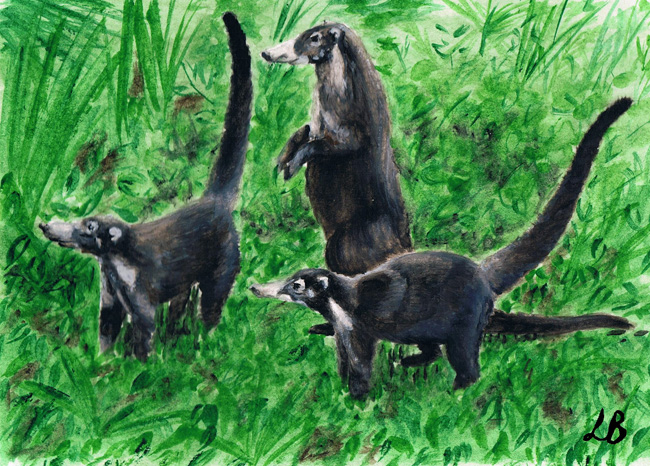
 white-nose coati from Jabujicaba

What can people do to help? Donate, and contribute to your cause? Other ideas?

I don’t want the interview to be about selling an idea or a project. It is for people listening to ask their own questions and maybe find some of their answers are aligned with mine. Then they might want to find more about what we are doing and help. They could maybe read the book. It has had good reviews.


How do you reach your targeted audience? Is it through your website, advertising or social media or another route? Which is most effective and why?

All possible routes are tried and taken, although we are trying to work bottom-up, Indie in everything. We wouldn’t say ‘no’ though if Harrison Ford stepped in to help our ambitions for a green Indiana Jones film! Sometimes ‘top down’ or celebrity endorsement can help you to get where you are going (although it is not without its dangers). Certainly we are using social media and word of mouth.


How do you keep the audience engaged over time?

By being happy, having fun, with lots of variety. Everything we do also has to ring an inner chord with the target audience of what really matters, the meaning of our existence, not just our individual life. Jabujicaba is not about simply ‘entertainment.’ Through our website we hope to engage people in other areas of their life – to campaign or to study or volunteer – or even just to take their children to the zoo but with a changed heart.


Tell us about your events around the world and some of the campaigns you have started.

When we made Jabujicaba the book available as a free download to test the audience, we found there was interest all over the world. About 700 copies were downloaded in 5 weeks.Take up is a lot less now, it costs a couple of dollars… We are still at the beginning of our journey.

Our campaigns, if you can call them such, involve around engaging with the books various stakeholders through interviews which explore the relationship between fact and fiction in the book. For instance, in the area of anthropology, with an anthropologist from Oxford University. Or in politics, with a green politician who did a ‘prequel’ meeting one of the characters in my book as a young man. Marco, who is the president of Brazil.

The focus of these interviews has been local and in the UK. We have tried to engage a little in the US, so far without success. It is hard not being there and time constraints mean you stay close to home.

Also the book is in English at the moment which restricts its target audience.

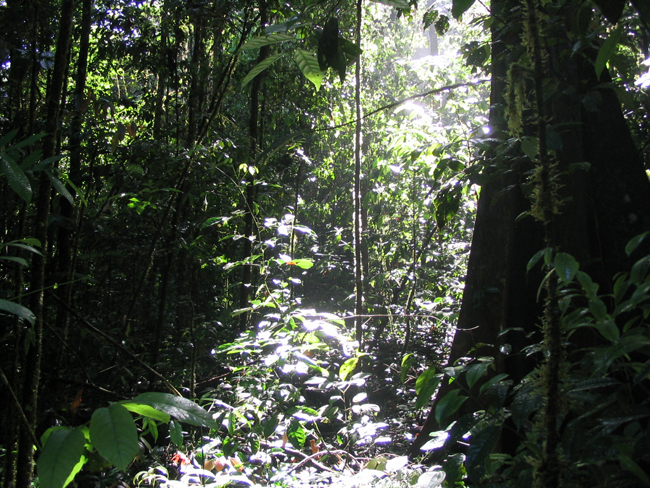
 rainforest in Brazil

What is in the works for the future? What haven’t you yet tackled, but will want to do soon?

We are working on Jabujicaba the film and progressing step by step. Jabujicaba as a ‘novel’ campaign is timed to coincide with the World Cup and Olympics in Brazil. After that, we plan Voices for Nature to kick in with our film initiative. Through film we will reach a much larger audience with our messages.

Longer term, we would like to fund and reward young people’s creative projects for rainforest conservation, using royalties from the book/film – a bit like Sophie’s World – and grow to a forest (metaphorically and literally).


Bonus!

Jabujicaba is about diversity in our own societies too – and social justice. We need to tackle these issues too.

All on www.jabujicaba.net – but also @ArchieAiredale (my dog!)


02/9/14

Enhancing Your Eco-Friendly Garden to Attract Frogs and Toads

Guest post by Jeriann Watkins

There are a few different reasons you might want frogs and toads in your garden. They do a great job of keeping bugs away. They’re fun to watch after rainstorms when they hop in puddles and through wet grass. They serenade you to sleep at night (ok, that may be a bad thing, depending on whether you like croaky serenades).

As much as you may like frogs and want them in your yard, you should never take it on yourself to place them there. Frogs do not do well when removed from their habitats. Also, you want to be sure that your garden is home to native species, not invasive ones that will do more to harm your private ecosystem than help.

The best way to attract any wildlife to your garden is to emulate what the land would do itself. Trees, shrubs, bushes, and vegetation that would normally grow in your area are most likely to attract native insects, which will in turn attract frogs and toads.

To the human eye, frogs are pretty unassuming. Some people don’t like the slimy appearance. Whatever your opinion, you probably don’t see them as vicious. But they are fierce predators with large appetites, so if you have the environment and the bugs, they will come.

Courtesy of New England Nature Notes: Image copyright Daniel E. Levenson 2013.

Courtesy of New England Nature Notes: Image copyright Daniel E. Levenson 2013.

Choose plants that retain moisture and offer shade. Frogs love cool damp environments, mostly out of necessity. Mulch and compost piles are also great for attracting frogs. They’re a).moist b). full of bugs and c).dark.

There are a lot of plants that are poisonous to frogs. If you have a vegetable garden, you’ll want to avoid planting these items near your pond or areas where frogs are likely to congregate:

Eggplant, Rhubarb, Snowpeas, Potatoes

For landscaping and flower gardens, you’ll want to avoid:

Honeysuckle, Azalea, Hydrangea, Daffodils, Hyacinth

For more info, check out this more exhaustive list of plants that are poisonous for amphibians and reptiles.

Frogs and toads are important for the environment, and are great for maintaining healthy eco-systems. While displacing wildlife to improve your garden will always backfire, you can enhance your garden and landscape to attract creatures that do need food sources and shelter. It’s a symbiotic relationship in that you’re helping them so they can help you.

01/20/14

The Caretta Research Project

Guest post by David Veljacic

The Caretta Research Project is an organization working with loggerhead sea turtles nesting on Wassaw Island National Wildlife Refuge, just off the coast of Savannah, Georgia. The project takes volunteers weekly throughout the nesting and hatching season and immerses them in the fantastic world of wildlife fieldwork, giving them a great opportunity to work hands on with the animals.  I was fortunate to have had the honor of working with this group for seven years, three as a paying volunteer for a week each season, and four as an assistant island leader, working the entire season.

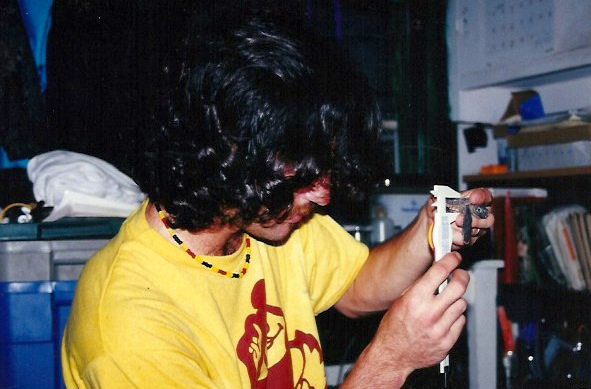
David Veljacic measures turtle

Here is an entry from one of my work “days.”  *I’ve added explanations where necessary*

July 3/4

7:30 am – we just got in from our dawn run; Lefty  *named so as her left rear flipper was missing; this prevented her from digging her own nests* came up and started nesting at 5:45am. Mike  *assistant director at the time*, and I had Rachel (volunteer) help Lefty dig the nest this time. She was SO excited, that’s Rachel not Lefty, Lefty was oblivious. I love having the volunteers do stuff, it’s such a happy thing. It’s time for bed.

10:30 am –got up, marked and GPSed nests on the South end; Kris  *director of the project* went North and took the few crew members who were awake birding, they saw the oyster catchers!, AND, AND the wood storks are at the dyke!

Body Surfing! Awesome!

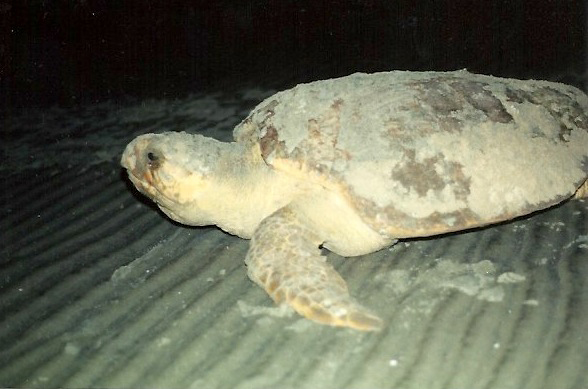
loggerhead sea turtle

Found freshly dead stranded loggerhead 15 paces north of marker 63. Did a necropsy; 56cm, male, probable shrimp net kill. I have it buried and screened at marker 63. The shrimp boats are everywhere right now, dumping their by-catch for it to wash up on the beach. It’s terrible (unless You’re a ghost crab, then You’d be rollin’ in it!), all these poor little fish and things just dead. Not to mention the pung of rotting animals, I know I said, “not to mention”, but I’m a rebel, at least here, on paper. haha.

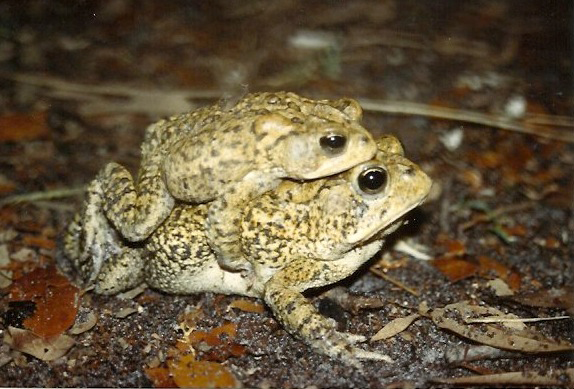
two frogs together

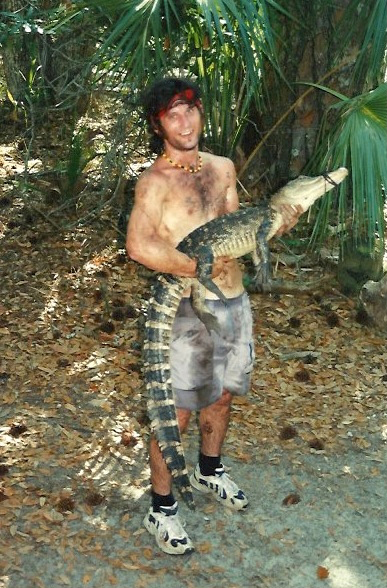
Bruce  *caretaker* came by, there was a gator in the ditch pipe beside his house that needed moving. Toughest catch so far! It’s not big, but it wedged itself good’n’tight in the pipe, took Mike and me ‘round half and hour to get it out so we could catch *and relocate* it.  5’ 3”. Showed the crew, then took them to let it go in South Pond where it can’t cause any trouble. The toads are EVERYWHERE! With females dragging clumps of squabbling males clinging desperately to them. . . and the constant trill, it’s just so amazing. Found a bat caught and spun up by a golden silk spider (insert full body shivers here). Rolled some logs, caught a couple of ground skinks, giant eyed click beetles,  AND, AND a scarlet snake! Found a king snake predating a yellow belly slider nest.

David Veljacic with alligator

So . . . shortly after arriving back at the cabin we noticed that we were covered in seed ticks. Covered! I’m surprised that I have any blood left; but, after sitting and picking at ourselves, and each other monkey style I think we’re OK.

8:45 pm – time to get ready to cruse the beach for lovely ladies  *turtles.*

11:25 pm – Holy Carp! First two runs, swamped! Both ends! Back at cabin for quick break. COFFEE!!! SSK 416 dry ran  *a dry run is when a turtle crawls up the beach but chooses not to nest for various reasons* twice, both again, between markers 10 and 13  *markers are spaced 100 meters apart and are used for locating nests, among other things.* I got my favourite neophyte of the season, SSX 474 / SSX 475 again, that’s three for three for her and I this season, will we see each other again? Had 5 nests on my end and 4 on Kris’, we both had to leave people at turtles to carry on patrolling, thank goodness Bev, Joe, Tom and Mary-Ellen (volunteers) know what to do. Great week for the new team members too!

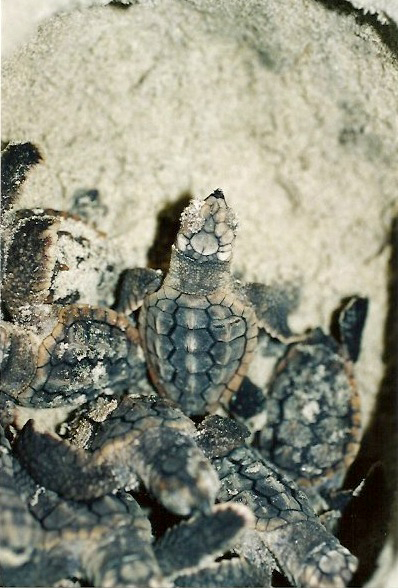
baby sea turtles

11:45 pm –  Oops, time to head back out.

6:35 am – Just in from a busy night, SSK 416 dry ran three more times before nesting 23 paces north of marker 11. My crew got 8 nests, we had to relocate one with 98 eggs, it was laid below the high tide line; Bev digs a mighty fine nest. Kris’ crew got 9 nests, 0 dry runs. 17 nests in ONE night! Kris got The Holy Roller *named due to a hole in the right rear margin of her carapace*

Now for a quick cup of coffee then I’m taking Mary-Ellen, Bev, and Joe to the Fish and Wildlife hut to do bird banding with Peter *the Fish and Wildlife Ranger in charge of the refuge.*

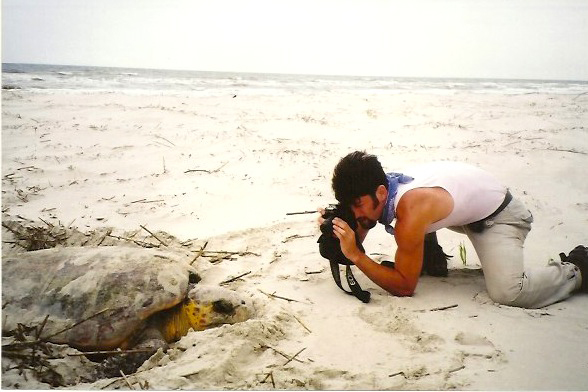
photographing sea turtles

12:20 pm – Back from banding. How about those horny (if You have found this diary and, for some reason, decide to read it to a small child, please feel free to substitute “amorous” for “horny”) dolphins off the Fish and Wildlife dock?!! I wish that I had taken my camera this morning, they were incredible! There were five of them leaping and cavorting about, with their bright pink bellies and their pointy red rockets waving about like flagpoles. They were at it for a long time before moving out of sight.

We banded 3 male and four female painted buntings!, a pair of blue birds, blue jays, cardinals, Carolina chickadees, white-eyed vireos, a black and white warbler, Carolina wrens (my faves., they’re so feisty!), AND, AND I got a humming bird on my last run! It was so tiny and delicate, what a beautiful wee thing. I brought it to Peter not knowing that he doesn’t band hummers, I wish I’d known, would have saved the poor little thing a walk. Oh yeah, I almost forgot (like I really could), we found a small Eastern diamond back on the trail!! Paul is coming next week to specifically band painted buntings and would like my help. Are You kidding me?! I’m in!

Um . . . why are there 6 squirrel tree frogs in my coffee mug?

Time for bed.

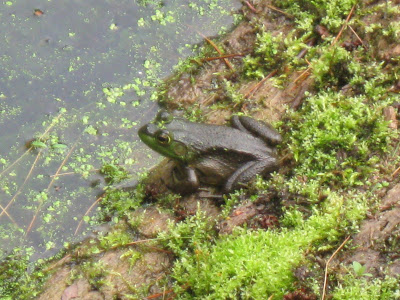
frog by david veljacic

12/1/13

EcoQube: Bring Nature to Life

Guest blog by Eric Suen and Kevin Liang, Aqua Design Innovations

Eric and Kevin - EcoQube

We could all use a piece of nature that we can enjoy or escape to everyday.

The problem is that most aquariums that we put in our homes are not sustainable ecosystems. They need maintenance like water changes, filter replacements, and the occasional algae scrub.

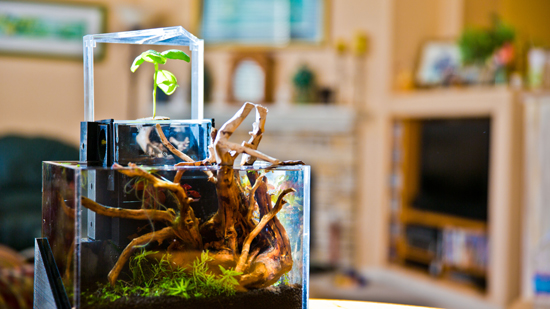
EcoQube close up

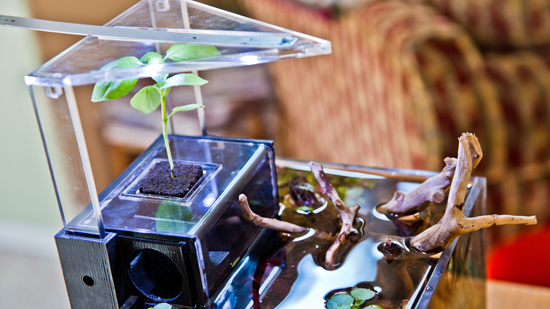
Aqua Design Innovations, an undergraduate UCSD startup has designed the EcoQube, a compact aquarium that uses plants like basil to keep the water clean.

EcoQube adjustable

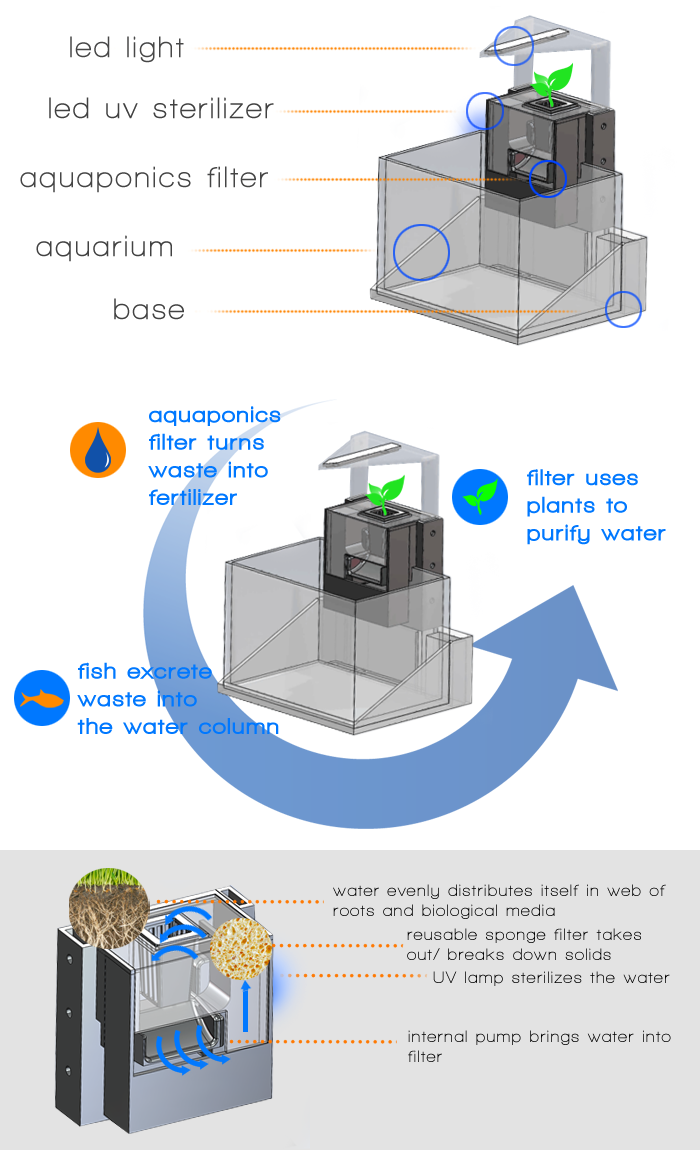
How does it work? The EcoQube is a recirculating system where the fish produce nutrients for the plants that grow above it. This concept is called aquaponics, a method of sustainable food production that the founders of Aqua Design Innovations, Kevin Liang and Eric Suen, see as the future of organic farming.

The EcoQube comes with a K-12 curriculum about the science behind aquaponics and self sustaining ecosystems. Help Kevin and Eric deliver the EcoQube to homes and classrooms across the country. You can support their Kickstarter campaign here: http://kck.st/1b6GV4m

aquaponics

Our names are Eric and Kevin. We’re UC San Diego students and aquarium geeks who met in high school and instantly became intrigued by planted aquatic ecosystems. As we got older, we realized the bigger challenges humanity as a whole faces in terms of food and water shortages so we decided to use our knowledge of aquariums to deliver the concept of aquaponics and the impact it can have to as many people as possible.

We started out working in various stores. Kevin actually served as a biologist assistant at the Steinhart Aquarium (California Academy of Sciences) where he managed and maintained 100,000 gallon systems as well as serve as the operations manager at Aquatic Central, the largest aquarium specific store in San Francisco. Eric was one of the first employees at Archaea International Corporation (DBA Aqua Forest Aquarium) also based in San Francisco where he focused on sales, customer relations and product user interface development.

(read and see many more pictures and video at their Kickstarter page) http://kck.st/1b6GV4m

11/17/13

Environmental Attorney and Amphibian Activist Talk Issues on Techno Granny Radio

Two weeks ago I was asked to talk about environmental issues on the Techno Granny’s radio show along with Tamar Cerafici, an environmental attorney based in New Hampshire. This show covered many topics under the title “10 Plus Technologies that will help you go green and conserve the environment.”

Some things we discussed:

  • Why frogs are threatened with extinction and the number of issues they’re facing
  • How industries such as paper mills are polluting the water which is affecting frogs and possibly humans
  • Why we should always use FSC (Forestry Stewardship Council) certified paper
  • Can technology really help you go green? Can an attorney really be an environmental advocate?
  • Working in the cloud and how this technology is saving the environment, such as Dropbox, Google docs, iCloud and Evernote, because you can use and access from anywhere
  • How to have a paperless office and how courtrooms are embracing this new technology

11/4/2013 – Link to Techno Granny Radio Show – Environmental Attorney, 1 Activist, 10 Green Technologies

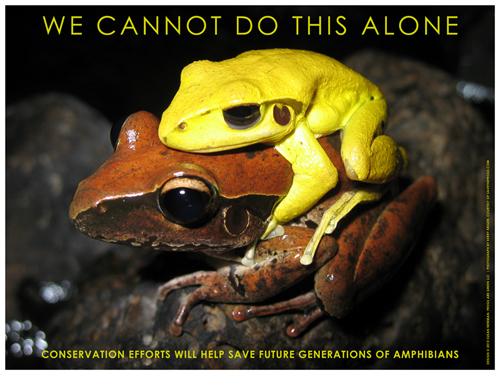
Frog conservation poster

Tomorrow morning  (11.18.2013) we will meet for round 2! Tamar and I will join the broadcast again at 10 am EST, after the Techno Granny (Joanne Quinn-Smith) received so many comments asking us to talk about additional topics.

Some of the topics to be discussed:

  • The effect pesticides have on the environment (pollution): water, animals, soil, humans
  • Atrazine: The 21st Century’s DDT (Roundup)
  • Chlorothalonil is the most commonly used synthetic fungicide in the USA, commonly applied to peanuts, tomatoes and potatoes. (what are we eating?)
  • Alternatives to using Pesticides, Green Farming?
  • Organizations talking about this and trying to spread awareness. (Save the Frogs, National Pesticide Information Center, U.S. Fish & Wildlife Service, Environmental Protection Agency and Frogs Are Green)

Resources for more information:

http://npic.orst.edu/envir/

http://www.fws.gov/contaminants/Issues/Pesticides.cfm

http://www.epa.gov/pesticides/ecosystem/

http://savethefrogs.org