10/16/13

Feeding the Birds for Fall Migration

Guest blog by Ernie Allison
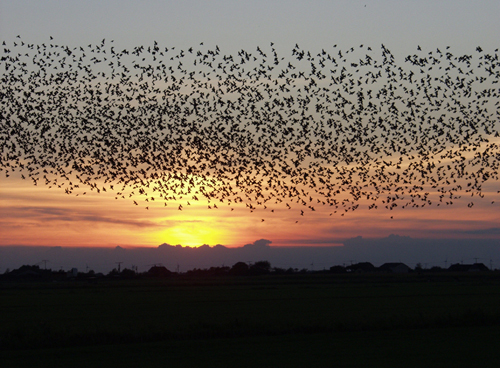
bird migration in sunset sky

Fall migration is a beautiful time to watch birds form large flocks and travel conspicuously across the land. This is a time when birds need a lot of energy, and will actually change their diet to increase their calorie intake. There are a lot of things we can do to help.

Before I start, no my friend, feeding birds does not usually affect bird migrations. Now that we have that out of the way, here are a number of things everyone should know about birds and bird feeding in this season.

Squirrels are Greedy Hoarders

If you’re planning to feed birds this fall, your greatest enemy is the evil squirrel. These cunning critters can figure out how to break into pretty much any feeder and they will just take it all and hide it away. Squirrels don’t know how, or simply don’t care, to share with anyone or anything. Don’t let yourself be moved to pity by their fluffy tails and cutesy mannerisms. They probably all have several winters worth stored up already. Invest in a squirrel proof bird feeder so that the birds have something to get them to the south.

Birds are Independent

You don’t need to worry about accidently domesticating a bird or causing dependence. Birds prefer to find their own favorite treats, especially insects and berries, and will supplement, not replace their diet, with the seeds and fats you offer in your feeder. So feel free to offer a way station on the long journey to their winter homes.

Birds are not Handicapped

For whatever reason, some people are afraid that birds just cannot handle eating sticky goo, like peanut butter. That isn’t true. Birds are perfectly capable of eating delicious slop, just like everybody else. In fact, the fat and protein in peanut butter is exactly what birds need to help them survive the taxing fall migration, so don’t be shy about mixing peanut butter in with your bird seed.

What you should be careful about is providing the regular over salted peanut butter that we enjoy so much. That isn’t good for anyone, us or the birds, so get something with less additives.

Easy feeding

You don’t even have to go buy a bird feeder to be helpful. After breakfast, grab all the leftover crumbs from your cutting board and plates, soak them in the leftover bacon grease, and throw it outside. The birds will find it and be glad for it.

Be messy in your garden. Let the leaves lie for a while so the bugs come and live in them for the birds to find and eat.

As a special bonus, birds will remember your location for next year, and return for another taste, so you can get another good look and maybe a nice picture.
 

Ernie Allison

About Ernie Allison

Ernie Allison lives in beautiful Idaho. He strongly believes in wildlife conservation and spreading awareness to issues concerning birds and nature in general. He writes extensively about nature all across the internet, and you can find his other works here.
08/21/13

7 Ways To Make Your Garden A Paradise For Wildlife

Guest post by Ricky Peterson

One of the joys of having a garden in summer is being able to observe wildlife close up. Whether you’re a bird lover or a fan of butterflies, we can all enjoy watching our feathered, furry and many-legged friends in our own back yard. But how can we attract them to our garden?

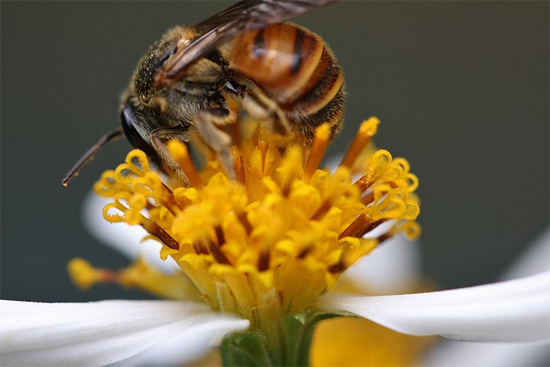
bee on flower wikicommons images

The key to making your garden attractive to wildlife is creating a comfortable habitat for them. Here are a few tips to do just that:

Home, tweet home

We all need somewhere to hang our hat, and animals and insects are no different. Set up a bird house in the spring, and you might just be rewarded with a family settling down for the summer. But birds aren’t the only ones who need somewhere to stay – bee houses are also available now, which is great news for our declining bee population.

Also, for an incredibly easy to set up and inexpensive shelter for a range of wildlife, simply lay some logs in a corner of your yard – and don’t bother tidying up fallen leaves. This will provide a home for lots of insects, which could help to eat pests as well as providing a tasty treat for birds. Also, mammals can use the leaf cover to hide food during the winter.

Food, glorious food

Speaking of tasty treats, you can help further on that front. There are lots of mixes of birdseed available, but if you’d like to try to attract a certain type of bird or other animal, try the following.

  • Mealworms – house sparrow and shrews
  • Peanuts – great spotted woodpecker and badgers
  • Fat balls – blue tit and great tit
  • Nyger seed – siskin and goldfinch
  • Sunflower hearts – bullfinch
  • Dog food – hedgehog
  • Root vegetables – deer


Think carefully about how suitable your garden is for wildlife before you try to attract animals there – are your neighbours as keen as you? Will there be busy roads that could cause danger?

Scrub up well

Ponds and birdbaths are a lifeline for many animals. As well as the fish who might live in your pond, birds can drink the water and use it to bathe, and of course frogs and toads will love the environment.

Blooming lovely

If you want to help the bee and butterfly population to thrive, it’s vital to have both early- and late-flowering plants so that our winged compatriots have plenty to feed on throughout the season. Try some of the following:

  • Spring: primrose, damson and blueberry
  • Summer: chives, dahlia and hardy geranium
  • Autumn: common ivy, sunflower and strawberry tree
  • Winter: clematis, crocus and honeysuckle


Leave the lawn

Fed up of mowing the grass every week? You officially have a valid excuse for not bothering! As well as the wildflowers that may pop up, a long lawn is a great haven for lots of wildlife. Insects will love it in the summer, and it may come in useful over winter for hibernating mammals.

Of course, you don’t need to let nature take over completely
even just a small patch will make a difference

Toxic love

Chemicals are not the friend of wildlife – as well as killing off the pests, they can harm or even kill the predator. If you’ve used chemicals in your garden but want to cut back, have patience. If your garden is varied enough, the predators should keep the pests in check, but you need to allow time for the ladybirds to return before you go spraying those aphids (and killing off the ladybirds, too).

Live and let live

Most importantly, show the wildlife in your garden respect – even though you might not love the beetles, they have a part to play in its ecosystem. Remember, too, to treat the wildlife as wildlife, and try to limit human interaction with animals – becoming dependent on you could be dangerous for them.

Enjoy creating your own wildlife paradise!


About Ricky Peterson

Hi there! My name is Ricky, I write for Swallow Aquatics. I am a nature lover and I like to spend as much time as possible in my garden. I don’t grow as much veg as I would like, but I am lucky enough to have a wealth of birds and insects come visit!

You can visit Swallow Aquatics here. We specialise in pond supplies and accessories, which are ideal if you want to build a pond in your garden (another great way to attract more wildlife!).

06/7/13

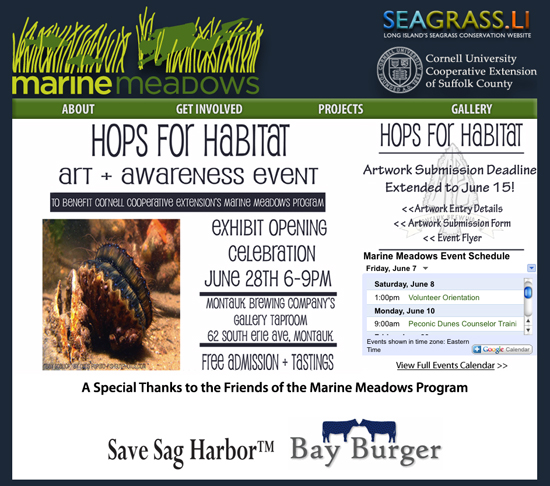
Hops for Habitat in Montauk – Open Call for Artists

OPEN CALL FOR ARTISTS! Cornell Cooperative Extension of Suffolk County (CCE) has been actively involved in the protection and restoration of local eelgrass meadows that are an important habitat for many biologically and economically important species of finfish and shellfish.

To help raise community awareness, they are seeking artist responses to this issue and would like to see works inspired by underwater habitat reflecting the value of our local marine environment during our “Hops for Habitat” art show and sale in Montauk Brewing Company’s Tasting Room from June 28 through July 31, 2013.

Deadline for submissions is June 15.

Please visit www.marinemeadows.com or contact Kimberly Barbour at kp237@cornell.edu for submission information.

hops for habitat art and awareness in montauk

05/21/12

The Map of Life: Where in the World Are Frogs?

A research team involving Yale University and the University of Colorado Boulder has developed a first public demonstration version of its “Map of Life,” an ambitious Web-based project designed to show the distribution of all living plants and animals on the planet.

According to their press release, the demo version allows anyone with an Internet connection to map the known global distribution of almost 25,000 species of terrestrial vertebrate animals, including mammals, birds, amphibians, reptiles and North American freshwater fish.

The researchers compiled information about the animals from different sources: field guides, museum collections, and wildlife checklists from scientists, conservation organizations, and “citizen scientists.” They hope that scientists and informed amateurs will supply new or missing information about the distribution and abundance of particular species.

The Map of Life allows users to see several levels of detail for a given species — at its broadest, the type of environment it lives in, and at its finest, specific locations where the species’ presence has been documented. One function allows users to click a point on the map and generate a list of vertebrate species in the surrounding area. More functions will be added over time, according to the team.

the map of life

“It is the where and the when of a species,” said Walter Jetz, associate professor of ecology and evolutionary biology at Yale and the project lead. “It puts at your fingertips the geographic diversity of life. Ultimately, the hope is for this literally to include hundreds of thousands of animal and plant species and show how much or indeed how little we know of their whereabouts.”

Eventually they hope that anyone, anywhere will be able to use their mobile devices to instantly pull up animal and plant distributions and even get a realistic assessment on the odds of encountering a particular species of wildlife.

The researchers  have created two video demos.


At Frogs Are Green, we think this will be a great project both as a learning tool (you can plug in a species name and get an overview of information about the species and where the species is found), but  it will also give scientists a tool to understand the biodiversity of a particular area.

Click, to try out the Map of Life.