12/4/14

Building Reach, Near and Far

We know that if we build a web presence with the right SEO (search engine optimization) over time we will reach those who are searching for what we are offering.

But what if your target audience isn’t looking for what you’re doing? How can we reach them?

This is the 5th year of the Frogs Are Green Kids Art Contest, so naturally those who have entered in the past are aware and may enter again. In addition, some parents and kids in countries around the world may be watching what other countries are doing and then get into the action as well. In the past 5 years we have received thousands of entries from more than 27 countries! When people are looking for something specific on the web and the right SEO is in place, those pages are found.

For example, Hong Kong has entered many beautiful artworks over the past few years, but this year in addition to the entries from China, we received entries from Japan, Malaysia and Indonesia. Last year we received some amazing art from Estonia, and this year from England, Ireland, Denmark, and Romania. Information can spread to new areas when we consistently push it out there and when the public is actively looking for it and then shares it, pushing it even further.

But the question today is how do we reach the ones nearby?

kids drawing frogs in park jersey city

The answer is by introducing people to real-time situations where they are learning new things. If we want children who live in urban areas to understand nature and why saving frogs is important, we need to bring them to the source, yes bring them to nature. How can we expect children who live in urban environments to care about wildlife when it is somewhat foreign to them? This is why many classrooms today have class pets. So children can be directly involved in the health and well-being of those animals. But there is nothing better than showing them the animals’ true habitat.

Last Spring, Frogs Are Green made a presentation to 60 first-graders at the Learning Community Charter School in Jersey City, showing them both frog art from around the world and a slideshow of some of the most unusual frogs. They learn about frogs and amphibians as part of their school curriculum and they already knew quite a bit and were very enthusiastic about the topic.

During 2014 we developed a new six-week curriculum, “Frogs, Amphibians and their Threatened Environment – Discovery and Expression through Art” which is available for download, under the education tab on our website.

During the summer and early fall, we had set up tables at quite a few community fairs and events so children could stop by, sit down and draw frogs with the art supplies we laid out. Children love to create and don’t need that much encouragement once engaged. They just need the right guidance from teachers and parents. We also know that children love animals. Many have pets at home, but it’s not the same as seeing those animals in nature.

If we want children to care about nature, we must show it to them, through field trips and when they see the real thing it will lead them to care what happens in the future.

What’s cool is that even in urban areas there are parks, such as our own Liberty State Park. Imagine the fantastic discovery students might have by seeing everything from frogs to birds, and more if they just went there with an educator.

We see a sharing cycle of teachers educating children, who bring that information home and tell their parents, who then share that with other parents, who share it with their kids and on to community leaders.

The key is getting those sparks of information and creativity started in the right places and making sure the people you want to reach are receiving it.

by Susan Newman, founder
11/18/14

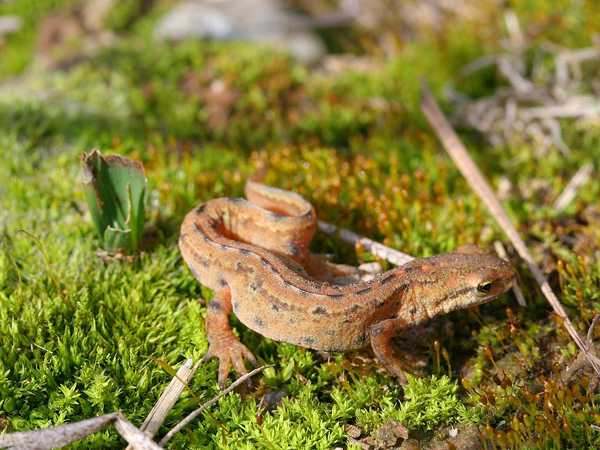
Attracting Newts to Your Pond

Encouraging newts to your garden pond will add life and color that can be seen for much of the year. You should never remove them from the wild but there are a few steps you can take to invite them to take up residence in your pond.

Newts not only add life to the pond, they also eat algae. So they provide a natural solution to a common problem. As they are most active during the warmer months of the year, when algae is rifer, they can be a real help. Of course other natural remedies such as Barley Straw will help too.

The best way to invite newts into your garden is to create the ideal habitat. A natural pond without fish is the best environment, as they will eat newt eggs and spawn.

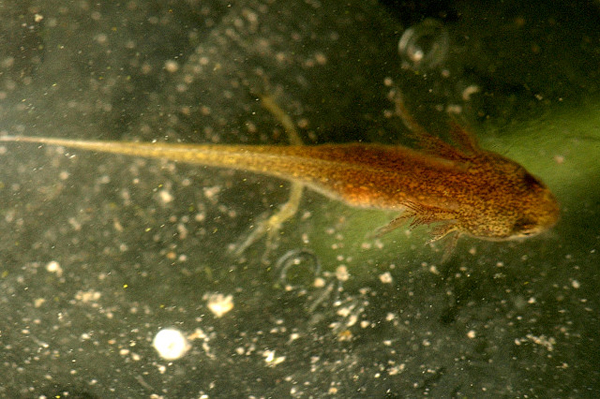
baby newt

Build a loose rockery around or near the pond. This will provide them with shelter to live and breed. The cool, damp, atmosphere is ideal for newts, and will encourage slugs and insects, a good food source. If you want to feed the newts, then you can add bloodworm, daphnia or brine shrimp to the water, a good retailer will have a wide range of pond foods.

Adding plants such as water mint or water forget-me-nots are small but have wide leaves which are perfect for newts to lay and hide their eggs in. Reed plants are also great to promote natural behaviors. The eggs have a jelly like texture, which newts wrap up in leaves to protect them.

Newts are most active from March/April, and you should see babies appear from June to August. From then on, you will notice that they start to disappear, as they mostly hibernate throughout the winter, until around February. During this time, try not to rearrange the rockery or do too much work around the area, as this will disturb the newts.

Children will no doubt be very interested in the new addition to your pond, and it’s a great way to promote a love of nature. However always supervise your children around these slippery creatures, and ensure that if they do pick a newt up, that they do so very gently and with wet hands. Don’t allow the newts to be taken away from the area, or held for more than a few minutes.

You may find that not only newts arrive, but that frogs and toads appear too. As they thrive in similar environments. They can live well together and create a beautifully natural area of wildlife in your garden.

Newt in garden

Don’t worry if newts don’t start to arrive, despite the lovely home you have created. It may take time for them to appear and breed. If your local environment has changed, such as new roads, building sites etc., this may affect the migration of newts too. Leaving the pond and its inhabitants to its own devices will encourage the most natural behaviors and results.

10/9/14

Robin Moore, Conservationist, Photographer and Author of In Search of Lost Frogs

Exclusive!

Tune in tomorrow, October 10, 2014 at 3pm EST and meet…

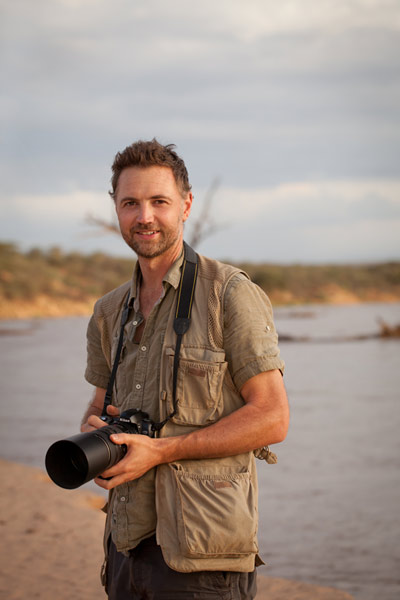
Robin Moore, conservationist, photographer and author of “In Search of Lost Frogs.”

*** Now Replaying *** The podcast interview is here:
Webcast: Robin Moore interviewed by Susan Newman

Follow the event and comment on Facebook:

Robin Moore Interview on Facebook with Susan Newman (aka Suzy Brandtastic)

Robin Moore, Conservationist, Photographer, and Author of In Search of Lost Frogs

About Robin Moore:

Robin Moore is a conservationist, photographer and the author of In Search of Lost Frogs (In Search of Lost Frogs).

Since gaining a PhD in biodiversity conservation, Robin has been a powerful voice for amphibian conservation.

He is a Conservation Officer with Rainforest Trust, Global Wildlife Conservation and the Amphibian Survival Alliance, the largest global partnership for amphibian conservation.

He is a proud Senior Fellow of the International League of Conservation Photographers (www.ilcp.com), represented by National Geographic Creative, and recently Co-Founded Frame of Mind (www.frameofmind.org), an initiative that empowers youth around the world to connect with their natural and cultural worlds through photography and visual.

_____________________________________

About Suzy Brandtastic interviews:

Susan Newman, an environmentalist and brand visibility designer knows how important it is to tell your “why.” Susan hosts a podcast series, live action video series and a written interview series, all featuring environmentalists, innovators, creatives and small business owners.

09/27/14

Kids with Pet Frogs and other Wildlife

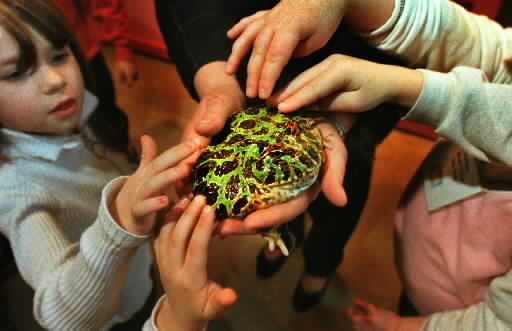
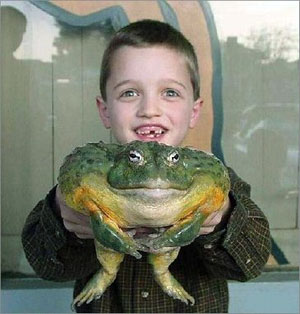
Recently I’ve been meeting children at my Frogs Are Green table at various Jersey City events and this one young girl told me she had at home: fire-bellied toads, a lizard, fish, 2 dogs and her brother had turtles too.

Growing up my parents weren’t so keen on animals in the home and perhaps that’s why I love wildlife so much, watch nature programs, and have my own pets. Over the years I’ve had fish, turtles, and cats.

It got me thinking about all that variety from someone so young, and whether it’s a good idea for a child to be responsible for so many pets. In addition, I was quite surprised to hear she had frogs. At first I thought she was joking with me. But a few days later, I heard from another young boy that he also had fire-bellied-toads at home.

It’s not something I recommend because there are so many issues right now with frogs potentially carrying the chytrid fungus (Batrachochytrium dendrobatidis) disease and if those frogs were let go or escaped into an area unnatural to them, they would be helping spread the disease.

(To learn more about this, Save The Frogs has a great web page on this:

Chytrid Fungus in the Pet Trade

“As the trade of amphibians is highly unregulated, disease testing of amphibians traveling between countries and states is next to none. Many amphibians that travel often are carries of the chytrid fungus, which is greatly responsible for the amphibian declines around the world. Approximately 300 species have been detected with chytrid and it is now present in nearly 40 countries. In 2011, a study found that in many pet shops and pet expos nearly 3% of the captive amphibians tested positive for the presence of chytrid, and 13.6% of the collections yielded at least one positive result.” — from Save the Frogs

Frogs As Pets

I decided to look further into how common it is for kids to have pet frogs and found this informational web page: Your First Frog.”

It’s obvious from reading this page how complex taking care of a pet frog would be. Once you finish this page, I’m sure you’ll agree they belong in the wild.

Only those that are threatened with extinction and are being helped by scientists/herpetologists in captivity like the Golden Mantella, or those doing important research to help amphibians, should have them away from their natural habitats.

___________________________________________________________________

Here are some thoughts on this topic from David Veljacic, nature and wildlife conservationist

When deciding to buy a child a pet there some questions to keep in mind.

Is my child responsible enough to care for a pet? Never buy children pets to teach them responsibility. 

Is this interest a fad?

What is my child looking for in a pet? Does Your child want a playmate or a piece of nature? 

Do I have the space?

Does my child have the time? With kids enrolled in so many activities they simply may not have the time to care for the animal properly. Ultimately, the parents have the responsibility to pick up the slack that the kids may leave.

Can we afford the upkeep? 

And, if looking at exotics – Is it captive bred? Only buy captive bred animals.

Once You have decided to let Your child have a pet, You need to educate Yourself on the needs of the animal You are buying. You may be called upon to care for the animal from time to time. It is also good, particularly with young kids, to check up on the pets to make sure things are going well, so You should know a little about it. 

I have seen it happen many times with people who keep exotics, particularly reptiles and amphibians, where it becomes an obsession to buy more and more species. There is always a new color morph or new species available, and it can be very tempting. I recommend not growing a collection too quickly, a child can become overwhelmed before they know it. 

Do Your research! NEVER include pet store workers opinions in Your research! Pet store workers are there to sell You things, then sell You more things. You need have the type of animal You plan on buying researched before heading to the pet store, or breeder, and the only questions left should be things like…

Is the animal captive bred?
Is the animal eating/pooping properly?
You should also be allowed to inspect the animal for obvious injuries.

Many exotics that in the past were sold as “disposable” live for years, even decades. If You cannot commit to a long lived animal, don’t buy one. Never release captive animals into the wild. 

09/2/14

Hawaii’s Inhumane Frog Policy

I received yet another call from someone distressed about coqui tree frogs on her property. No, she wasn’t wanting to find out how to kill the frogs. She was trying to find out how to keep them and resist aggressive neighbors wanting the frogs destroyed.

For many people in Hawaii, as in Puerto Rico, the coqui frog is considered an adorable creature, singing at night and improving the environment by eating insect pests. They can get loud in large numbers, but for those who enjoy the sounds of wildlife, the coqui chirp is soothing and creates a white noise that aids sleep. 

However, the Hawaiian government has passed laws to vilify coqui frogs as a noisy environmental menace, making it illegal to “harbor” or transport coquis within the state. According to the law, coquis frogs are pests by definition, and anyone enjoying them does so at his own peril. Millions of dollars have been spent trying to stop the spread of the frogs, which now reside happily on the Big Island’s east side and in limited areas of the other islands.

Of course, if the coqui frogs were native to Hawaii, they would be protected, not killed. The sound would be appreciated and promoted, as it is in Puerto Rico.

coqui frog in Hawaii

However, in today’s Hawaii, only native species are valued. Introduced species are now regarded as illegal aliens, and harboring these aliens is against the law. Laws defining the coqui as a “pest” allow the cruel slaughter of these tiny, harmless creatures, bypassing humane treatment laws.

The Good Shepherd Foundation, of which I am the director, believes that cruelty to animals is unacceptable, regardless of whether the animals are native or not. In 2001 we started a program to counter the anti-coqui propaganda, called CHIRP, or the Coqui Hawaiian Integration and Reeducation Project. Acceptance, we believe, is better than an endless environmental war against the frogs.

Over the years we have been contacted by many residents who found the frogs desirable on their property, but who were being harassed by neighbors who did not yet have the frogs and wanted them eradicated. This meant having one’s property sprayed with citric acid, which kills plants as well as coquis, lizards, insects, and other non-target species. The acid burns the victims to death.

Anti-coqui hysteria has made people fearful of admitting they like the coquis, faced with the unfortunate choices of harassment, or letting eradicators poison their property.

Some residents would like to remove the coquis to avoid the drama, but don’t want to kill the coquis in the process. These humane-minded people are faced with another dilemma. Moving coquis is a crime. The government has made it so people can only kill coquis, either with citric acid or by cooking or freezing the live frogs. You can’t legally catch the frogs and release them somewhere else where there are other frogs.

This means the Hawaiian government has made it illegal to treat the coquis humanely. It forces residents to either be cruel to the frogs, or to break the law and illegally release the frogs elsewhere, which many people do.

The most recent phone call was from a woman who wanted to save the lone coqui on her property from a certain death. A neighbor heard the frog and reported it to the homeowner’s association, which was dispatching an eradicator right away. The neighbor also complained that this same woman was feeding non-native birds, and threatened to have the birds shot.

For those who love wildlife, Hawaii is no longer a paradise. Species are not valued for their beauty and other positive qualities, or for the biological diversity they bring to these volcanic islands. Instead, they are valued solely for being “native,” and are killed solely for being introduced.

It is a war on wildlife. Property owners, residents, and visitors who value wildlife for what it is, regardless of whether or not it was introduced, are victims of this war.

For more, see our website, www.HawaiianCoqui.org.

Guest post: Sydney Ross Singer is a medical anthropologist, author, and director of the Good Shepherd Foundation.  He lives on a coqui frog sanctuary with his wife and son on the Big island of Hawaii.

07/7/14

Pond Maintenance: Tips for Keeping Wildlife At Your Pond

Ponds are an incredible edition to any garden and are perfect for attracting a whole range of wildlife; from the fish you may have purchased to the frogs, toads and newts you hope might come and visit. Ponds are a delicate ecosystem; the perfect blend of fish, oxygenating marginal plants and natural wildlife is sometimes hard to get right, but one of the things that can definitely help is maintaining your pond properly.

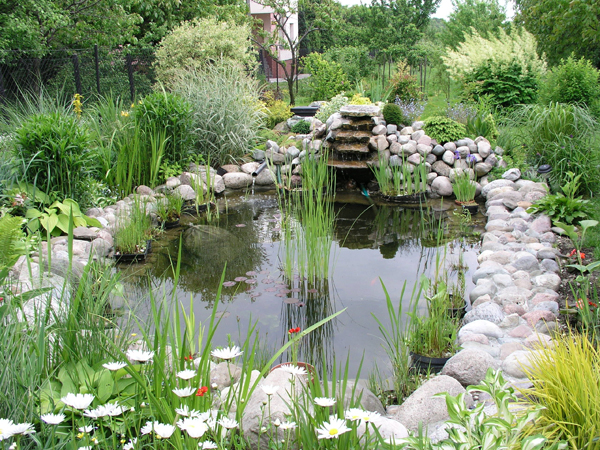
garden pond lush green and beautiful

All ponds need regular maintenance to prevent them from turning into glorified bogs. Regular cleaning is a good idea to prevent silting up.  Autumn is generally the best time for cleaning as much of the wildlife is less active or beginning to hibernate. Firstly, it is important to create a holding tank for your fish and other creatures and also your deep water plants using some of the pond water. Marginal plants should be alright as long as they are kept moist. The pond needs to be drained and the fish and creatures removed carefully and put into the tank as they become visible. Any decaying plant material may contain smaller creatures so place to the side of the pond so they can make their way back.

Remove any silt from the bottom of the pond. Most of this can be added to the garden to improve soil structure for your plants but do keep some in hand for replacing at the bottom of the pond.  This is important for maintaining an ecosystem for smaller organisms which are beneficial for the pond.

The next step is to clean the liner with a brush and then refill the pond, preferably using rainwater collected from a water butt. Finally return the fish and other creatures and also the deep water plants to the pond.

After cleaning it can take a while for the pond to recover, which is the reason an autumn cleaning is generally preferred.

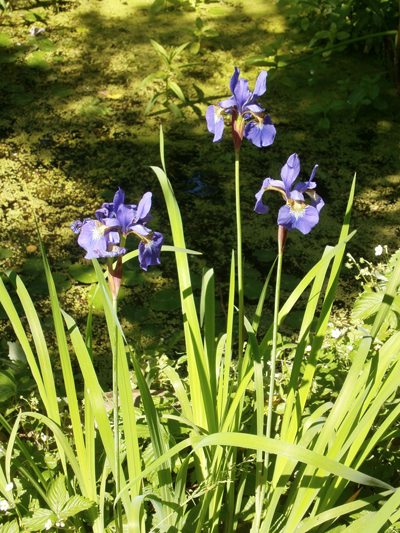
Water Iris surrounding pond

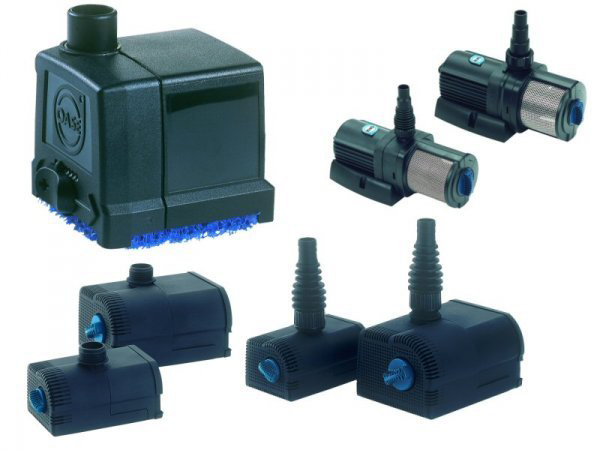
Another good practice to get into is maintaining your pond pump efficiently. If your pond does not have a pump they are readily available from retailers such as Swell UK in the UK.  If you notice the pump is going slower or has stopped completely it might be that the pump is just clogged or suffering from a build-up of blanket weed. Alternatively there may be a problem with the electrics and cabling. The first thing to check is the electricity.  Ideally you should have a circuit breaker and a switchbox.  The circuit breaker will trip if there is a problem with the electrics; and the switchbox will isolate the different cables on the off chance you have accidently cut through a wire.  If you have both of these you can diagnose the problem at the pump.

This problem is relatively easy to remedy; you can usually remove things easily enough from a pump.  Pumps are relatively easy to take apart and put together again.  If the pump looks green, then you have a problem with blanket weed, otherwise you need to look for the impeller (which is where the water from the pond is sucked in).  This is where the blockages will be – use a screwdriver to clear out the cavity. Pond pumps need regular maintenance if you do not look after your pond properly.

And there you have it; a happy clean pond and a suitable working pond pump make for the perfect habitat for fish, frogs and other wildlife.

Oase Pond Pumps


– Guest post by Chris Plum, pond and garden products advisor