02/27/15

Chytrid Fungus is Found in Madagascar

The entire amphibian class is currently afflicted by a global pandemic that is accelerating extinction at an alarming rate. Until now, a few islands like Madagascar were thought not to have been affected. However, an analysis of the latest series of tests shows that the chytrid fungus also poses a threat to amphibians in Madagascar. “This is sad news for herpetologists around the world,” says Dr. Dirk Schmeller of the UFZ, who was involved in analyzing the samples and has, together with Elodie Courtois, detected Bd in samples from Madagascar collected in 2010. “Firstly, it means that an island that is home to a particularly high number of amphibian species is now at risk. Several hundred species live only on this island. And, secondly, if the pathogen has managed to reach such a secluded island, it can and will occur everywhere.”
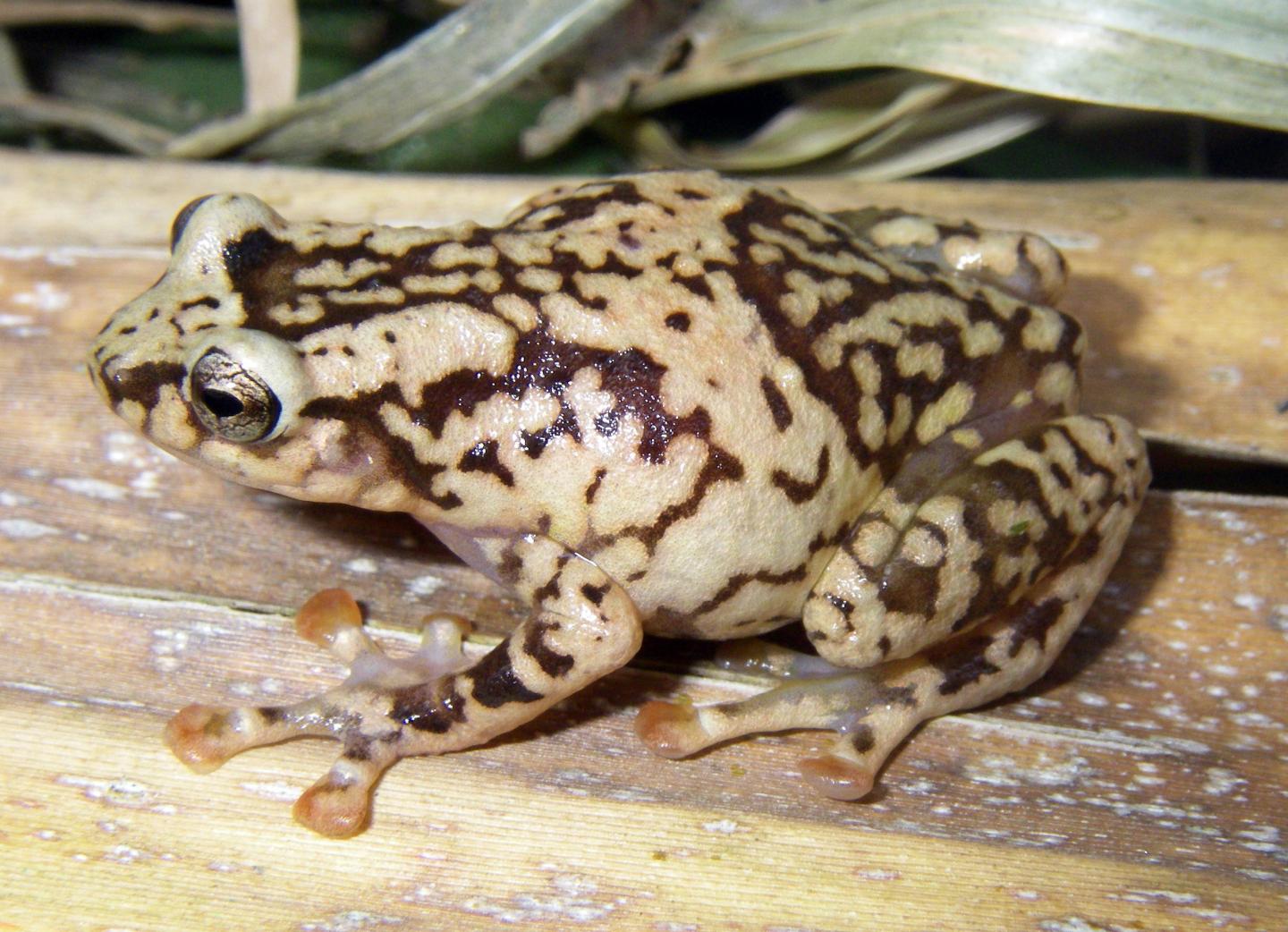
frog by Miguel Vences / TU Braunschweig

IMAGE: Chytrid fungus was proved on Platypelis pollicaris from Ranomafana. view more
Credit: Miguel Vences / TU Braunschweig

Prof. Miguel Vences from TU Braunschweig adds, “The chytrid fungus was found in all four families of the indigenous Madagascan frogs, which means it has the potential to infect diverse species. This is a shock!” The study also shows that the disease affects amphibians at medium to high altitudes, which ties in with observations from other parts of the world, where the effects of the amphibian epidemic have been felt primarily in the mountains.

“Luckily, there have not yet been any dramatic declines in amphibian populations in Madagascar,” Dirk Schmeller reports. “However, the pathogen appears to be more widespread in some places than others. Madagascar may have several strains of the pathogen, maybe even the global, hypervirulent strain. This shows how important it is to be able to isolate the pathogen and analyze it genetically, which is something we haven’t yet succeeded in doing.” At the same time, the researchers recommend continuing with the monitoring program across the entire country to observe the spread of the disease. The scientists also suggest setting up extra breeding stations for key species, in addition to the two centers already being built, to act as arks, so that enough amphibians could be bred to recolonize the habitats in a crisis. “We are also hopeful that we may be able to suppress the growth of the Bd pathogen with the help of skin bacteria,” says Miguel Vences. “It might then be possible to use these bacteria as a kind of probiotic skin ointment in the future.” A high diversity of microbial communities in the water could also reduce the potential for infection, according to earlier investigations conducted by Dirk S. Schmeller, Frank Pasmans, and their teams (published in Current Biology).

The outbreak of amphibian chytridiomycosis in Madagascar puts an additional seven per cent of the world’s amphibian species at risk, according to figures from the Amphibian Survival Alliance (ASA). “The decline in Madagascan amphibians is not just a concern for herpetologists and frog researchers,” says Dr. Franco Andreone, “It would be a great loss for the entire world.”
 
Guest post by Dr. Dirk Schmeller
Originally published:
http://www.eurekalert.org/pub_releases/2015-02/hcfe-acf022615.php
02/8/15

Frogs and Water Quality

Yesterday, in class with the Cloud Institute and Sustainable Jersey (NJ Learns), each student got to briefly share their project, so I was describing the Frogs Are Green mission and projects on the agenda for 2015.

My teacher Jaimie P. Cloud, challenged me with this question. “Much of what Frogs Are Green is about is bringing awareness to the public, but is there a change I want in the public’s behavior?”

It made me think about one specific area that we can focus on which would help frogs and amphibians as well as other wildlife and humans, and that is water quality.

We know that there are many issues, such as, pollution and oil spills, pesticides and other toxins, pharmaceuticals, and these aren’t just affecting wildlife, but us as well. It’s humans that are creating many of these problems, so it’s obvious that we must be the ones to correct it.

testing water quality

I did a search on Google for Frogs and Water Quality and was surprised to learn there is currently no standard for water quality as it applies to frogs and amphibians:
“The factors thought to be contributing to declines in frog populations include habitat loss, introduction of exotic species, overexploitation, disease, climate change, and decreasing water quality. With respect to water quality, agroecosystems use 80-90% of the water resources in the western United States, frequently resulting in highly eutrophic conditions. Recent investigations suggest that these eutrophic conditions (elevated pH, water temperature, and un-ionized ammonia) may be associated with frog embryo mortality or malformations. However, water quality criteria for frogs and other amphibians do not currently exist. Here, we briefly review data that support the need to develop water quality parameters for frogs in agroecosystems and other habitats.”
(from this website: PMC1519110/http://www.ncbi.nlm.nih.gov/pmc/articles/PMC1519110/)

What this tells me is that currently the water quality is tested to make sure it’s safe for humans, but there are no regulations in place for it to be safe for wildlife? Doesn’t it matter that it’s healthy for all life?

I’ll be reading much more on this issue and would like to invite you to share your thoughts or links to additional documentation you may have found.

Here’s a video I’d like to share because it shows just how important it is to educate the young with hands-on education from Marie Hartford, Science, 5th Grade Teacher and her students in Redmond, WA on the Teaching Channel about “Measuring the pH as it Relates to Water Quality.”

11/30/14

Green Cyber Monday

This time of year most are busy running around collecting this and that for their loved ones. I want to take this opportunity to express my thanks for all the frog loving fans who have read, shared and posted photos, artworks and interesting news items.

The contest entries are flying in from all over the globe. Artworks have come in from: South Korea, Bahrain, Slovakia, Germany, India, Indonesia, Bangladesh, Japan, Russian Federation, Morocco, England, Ireland, Australia, Denmark, Romania, Sri Lanka, Costa Rica and USA. There are just two weeks left to submit yours! The deadline is Dec. 15, 2014.

2014 Kids Art Contest hosted by Frogs Are Green
2014 Photo Contest hosted by Frogs Are Green

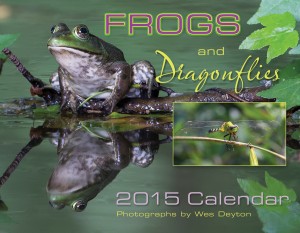
Frogs Are Green is a New Jersey nonprofit organization and we depend on the modest donations and sales from tee shirts, posters and calendars. Please purchase our NEW 2015 Frogs and Dragonflies calendar with exceptional photography by Wes Deyton, wildlife photographer in North Carolina, or one of our magnificent conservation posters showcasing collaborations from some of the most well known artists and photographers!

2015 Calendar Frogs and Dragonflies

If you are looking for a winter project to do with your children, download the FREE “Frogs, Amphibians and their Threatened Environment – Discovery and Expression Through Art,” 6 week curriculum!

I also wish to mention that I am enrolled in NJ Learns (a partnership between The Cloud Institute and Sustainable Jersey, thanks to my advocate, Sustainable JC, and through this education on sustainability, I am seeing more clearly, new educational ways to reach children and the general public. Look for expanded offerings as we move into 2015!

Wishing you all a very happy holiday season!
– Susan Newman, founder, Frogs Are Green

10/9/14

Robin Moore, Conservationist, Photographer and Author of In Search of Lost Frogs

Exclusive!

Tune in tomorrow, October 10, 2014 at 3pm EST and meet…

Robin Moore, conservationist, photographer and author of “In Search of Lost Frogs.”

*** Now Replaying *** The podcast interview is here:
Webcast: Robin Moore interviewed by Susan Newman

Follow the event and comment on Facebook:

Robin Moore Interview on Facebook with Susan Newman (aka Suzy Brandtastic)

Robin Moore, Conservationist, Photographer, and Author of In Search of Lost Frogs

About Robin Moore:

Robin Moore is a conservationist, photographer and the author of In Search of Lost Frogs (In Search of Lost Frogs).

Since gaining a PhD in biodiversity conservation, Robin has been a powerful voice for amphibian conservation.

He is a Conservation Officer with Rainforest Trust, Global Wildlife Conservation and the Amphibian Survival Alliance, the largest global partnership for amphibian conservation.

He is a proud Senior Fellow of the International League of Conservation Photographers (www.ilcp.com), represented by National Geographic Creative, and recently Co-Founded Frame of Mind (www.frameofmind.org), an initiative that empowers youth around the world to connect with their natural and cultural worlds through photography and visual.

_____________________________________

About Suzy Brandtastic interviews:

Susan Newman, an environmentalist and brand visibility designer knows how important it is to tell your “why.” Susan hosts a podcast series, live action video series and a written interview series, all featuring environmentalists, innovators, creatives and small business owners.

08/1/14

Tadpoles in Maine Pond Die from Ranavirus

An estimated 200,000 Wood Frog (Lithobates sylvaticus) Tadpoles in a local pond in Maine died within a few days (in 2013) from most-likely a ranavirus. A paper was recently published in Herpetological Review that is co-authored by Nathaniel Wheelwright, a biologist at Bowdoin College, along with the University of Tennessee.

“The dead tadpoles had signs of hemorrhaging in their legs and around their throats, and many had skin that was sloughing off their bodies”, Wheelwright said.

Wheelwright has monitored the pond for close to 30 years and said it was quite surprising. Usually there are 50-100,000 tadpoles and only 1000 may live to become adult frogs. But for all to die, very unusual. They did notice there were no leeches present.

There are other species who can carry the ranavirus, such as green frogs, bullfrogs, painted turtles and spotted salamanders* (*who were found in the pond and showed signs of suffering from the virus also.)

Here’s a video from Bowdoin College with biology professor, Nat Wheelwright talking about the tadpoles:

The good news is that this past Spring showed healthy tadpoles and frogs and no sign of any issues.

Do you think this was caused by pesticides and/or climate change? Too many tadpoles crowded together?
___________________________________________________________________

The differences between Chyrid Fungus and Ranavirus are:

Chyrid is a fungus and infects individual frogs who suffer damage to their skin. Once infected it impairs respiration and the frog dies. It has been devastating amphibian populations around the world.

Ranaviruses infect insects, fish, amphibians and turtles and infect larvae or recently metamorphosed individuals.

06/18/14

Calling Amphibian Monitoring Project (CAMP)

The Conserve Wildlife Foundation of NJ coordinates the statewide Calling Amphibian Monitoring Program (CAMP). The object of this program is to assess the distribution, abundance, and health of New Jersey’s amphibians. This is part of a larger initiative called the North American Amphibian Monitoring Program (NAAMP) and the data collected in New Jersey will be submitted into the National database.

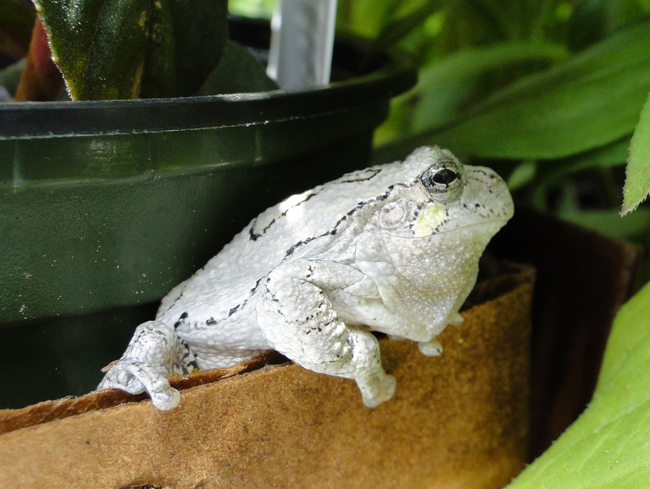
Gray-Tree-Frog-by-M-Patterson

Each of the 16 species of frogs and toads in New Jersey has a unique vocalization or “call” that can be heard during their mating season.

Here’s a list and call quiz of the Frogs in New Jersey:
Eastern Spadefoot (Scaphiopus holbrookii)
American Toad (Anaxyrus americanus)
Fowler’s Toad (Anaxyrus fowleri)
Northern Cricket Frog (Acris crepitans)
Pine Barrens Treefrog (Hyla andersonii)
Green Treefrog (Hyla cinerea)
Gray Treefrog (Hyla versicolor)
unknown gray treefrog species (Hyla chrysoscelis/versicolor)
Cope’s Gray Treefrog (Hyla chrysoscelis)
Spring Peeper (Pseudacris crucifer)
New Jersey Chorus Frog (Pseudacris kalmi)
American Bullfrog (Lithobates catesbeianus)
Carpenter Frog (Lithobates virgatipes)
Green Frog (Lithobates clamitans)
Wood Frog (Lithobates sylvaticus)
Southern Leopard Frog (Lithobates sphenocephalus)
Pickerel Frog (Lithobates palustris)

The Amphibians that are listed as Endangered or Threatened in New Jersey:

Endangered Amphibians
Salamander, blue-spotted – Ambystoma laterale
Salamander, eastern tiger – Ambystoma tigrinum
Treefrog, southern gray – Hyla chrysocelis

Threatened Amphibians
Salamander, eastern mud – Pseudotriton montanus
Salamander, long-tailed – Eurycea longicauda
Treefrog, pine barrens – Hyla andersonii
 

Volunteers participating in the CAMP project conduct roadside surveys (after dusk) for calling amphibians along designated routes throughout the state. Each 15-mile route is surveyed three times during the spring (March, April & June), during the given four week period. Each route has 10 stops, where you stop, listen and record for 5 minutes. A structured protocol is followed to determine which nights to survey, how long to survey, which species are calling, and how to estimate the total number of individuals calling at each site. All volunteers receive a Calls of NJ Frogs and Toads, CD with which to familiarize themselves with the calls.

The results of these surveys will provide ENSP (Endangered and Nongame Species Program) and the United States Geological Survey with valuable data on the calling amphibian populations in New Jersey. Because each route will be surveyed at the same time and for the same amount of time, routes can be directly compared within a given year and between years. This allows for trends in populations to be identified over time and if needed steps may be taken to protect these populations in the near future.

— Larissa Smith, Biologist/Volunteer Manager, Conserve Wildlife Foundation of NJ