08/22/14

Recycling: Why Is It So Hard for Some?

Recycle graphic from psdgraphicsYesterday I had an argument with someone I know. She was mixing all the trash into one bag to put out on the street. No matter what I said, she refused to separate the trash. Why is it so hard for some people to follow the rules (the law)… not just because the city tells us to, but because it’s right for our community and our planet.

My community has a trash problem, city wide actually. The street cleaners (physical people) are currently at a minimum. I see someone maybe once a week and that’s not enough to pick up after citizens who believe there is someone walking directly behind them ready and waiting for their chip bag, pizza plate or empty soda can. What kind of parent doesn’t teach their children to respect others, our community, and has those same bad habits? Store owners don’t bother to come outside and pick up the trash right outside their door.

And… we’ve got another problem (worse than regular trash, if you know what I mean) with the homeless who are living on the streets, and don’t get me started on the dog poop.

Lately, the Riverview Neighborhood Association has pushed back against this with their own “clean-up” project, one street at a time. A very impressive initiative, which more neighborhood associations need to implement.

The City of Jersey City and Sustainable JC have hosted conferences in City Hall such as the Zero-Waste Conference, but of course the people who attend (like me) already care about this issue, so how can we reach the people we need to?

Anyway, in case you’re not sure what the “Trash/Recycling” law is, here in Hudson County, here are some details via the Hudson County Improvement Authority — http://hcia.org Visit their website, because there is a lot more information including what you cannot recycle!

Solid Waste Management
Each and every day, Hudson County residents generate more than 1,500 tons of solid waste! Much of this can be harmful to our environment if disposed of improperly. Making certain that this trash is disposed of in an environmentally sound and cost-effective manner is the highest priority for the HCIA and its Division of Solid Waste.

Recycling
In Hudson County, recycling has become an important method of waste management. Materials that were once thought to be unrecyclable are now being commonly recycled. However, there are still some materials that can not be recycled and those that can be need to be prepared correctly for recycling so that they can be reprocessed into new products.

Paper

Paper and paper products comprise approximately 32% of the waste stream in Hudson County. There are many different types of paper:

* Corrugated Cardboard
* Chipboard & Paperboard
* Mixed Paper
* Phone Books
* Hi-Grade Office & Computer Paper

Plastics
Plastics can be very mysterious because each type is made up of different chemical components. Therefore, it is essential that only similar types get recycled together.

For Better Recycling
Sorting different types of plastic is essential to producing high quality recycled products. Check with your local recycling coordinator as to which types of plastics are collected by your municipality.

Glass
Recycle only glass bottles and jars from food, beverages and medicine. Do not recycle light bulbs, glassware, ceramics and window glass, which are each made of different ingredients, and by different processes.

Aluminum, Tin and Steel Cans
Typically, the only kind of aluminum your town wants set out for curbside collection is aluminum beverage cans. You can test if a can is aluminum or steel by using a magnet: a magnet won’t stick to aluminum. Unless indicated differently, glass, aluminum, steel and tin cans can be commingled for collection.

08/10/14

Frog-Friendly Gardens

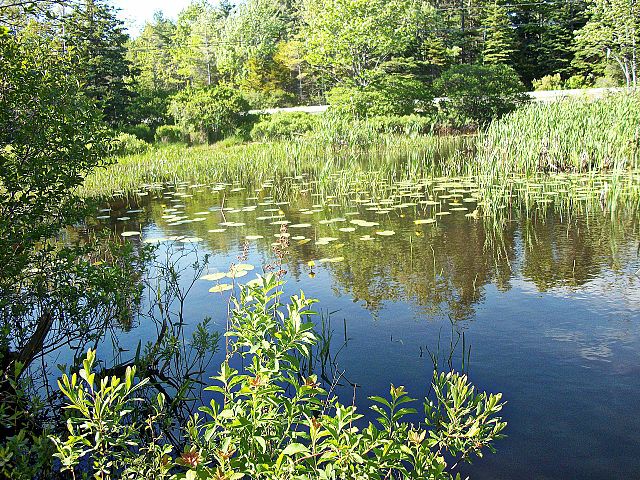
For most people making your garden a friendly area for frogs seems like a strange idea, but what we often don’t have is understanding. These often misunderstood amphibians are one of the nicest critters you can attract to your garden. In many ways frogs can be amazing survivors, however changing habitats over the years have caused them great distress and they are disappearing at an alarming rate [1]. You should keep in mind that introducing non-native frogs to the local ecosystem is a pretty bad idea, sometimes even forbidden by laws and for a good reason [2]. You can, however do your best to attract the local frogs to your garden, as they will be quite useful and great companions.

Frog pond by Eagle lake in Acadia National Park, Mount Desert Island, Maine. Photo by JR Libby.

Frog pond by Eagle lake in Acadia National Park, Mount Desert Island, Maine. Photo by JR Libby.

  • You would do well to avoid simply introducing the frogs into your Bayswater garden, instead you should do your best to invite them by creating the right conditions for that.
  • If you happen to have kids living with you, then they can learn to interact with the frogs. There is nothing to fear from most common variety frogs, so they can even be caught and picked up, just remember to treat them with respect and care.
  • You can make a useful garden pond to allow amphibians to live there, but that means your pond will need to have shallow edges that taper off into surrounding moist vegetation, such as nice and leafy mulch. Frogs will need shelter from summer heat, though they tend to enjoy moving around most after moist and rainy weather. Overhanging trees are welcome, as long as they don’t completely cover the pond in shade, as the frogs will still need sunlight. You need to use a good mix of native pond plants, such as marsh marigolds, water violets and the like if you want to have good vegetation around and in your pond. Check a garden center for more information and the type of plants in your area you can use. Your pond should be about 2-3 feet in depth for optimal conditions.
  • Another thing worth mentioning is that frogs will keep most insects away from your garden, since they dine on moths, mosquitoes, slugs, snails, flies, cockroaches, beetles and more. If you have a good combination of plants and shrubs native to the area as well as mulching your garden beds and keeping a good compost heap, then you will have a garden much more welcoming for amphibian guests.
  • Having a good garden pond will also improve the conditions where they can breed in peace, but it mostly depends on how much peace they get while living there. Shade and good plant life will create exactly what they need for living there.
  • There are some things to watch out for, which can be hazardous to frogs. If you do have frogs in your garden, you should pay special attention at all times when you’re using a string trimmer or mowing, or else you may hurt or even kill them. You must use a nylon mesh to keep your garden plants protected and that its size is good enough, such as at least 2 inches, as this will keep them away.

Sources:

1. Why are Frogs Disappearing?
2. Why Are Coqui Frogs a Problem in Hawai’i?


Ella Andrews, bloggerGuest post by Ella Andrews, who is a writer and blogger with great flair for gardening and landscaping. She is focused on writing the best possible way and is always searching for new inspiration sources. Her present article offers non traditional methods for garden care.

08/5/14

Baby Iguanas As Prizes?

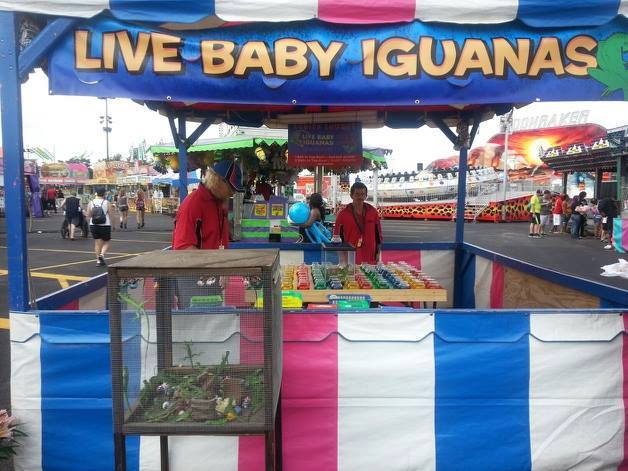
We’ve all been to our local county fair, rode on the ferris wheel, sprayed the water in the clown’s mouth, maybe even won a big stuffed frog. But what’s happening in Ohio (and perhaps other places) is the wrong way to get young people interested in caring for wildlife. Naturally, as people walk by a booth and see what seems like an easy game to win and the prize is a real, live, baby iguana, they are so tempted. Yes, they’ll win a baby iguana! This is so very wrong and has to be banned, now!

Here’s the story by Keith Gisser, founder of Herps Alive!

The Ohio State Fair in Columbus featured a booth that offered live iguanas as prizes.

The Ohio State Fair in Columbus featured a booth that offered live iguanas as prizes.

It started as one of those non-funny jokes. A friend posted this photo on Facebook last Tuesday and tagged me, asking, “How soon until you start getting calls on these, Keith ?”  The answer turned out to be Sunday. That didn’t take long at all, did it.

An Ohio State Fair booth was offering baby iguanas as prizes. The needed skill? Not knowing how to care for a live animal. Let alone a tough-to-care-for properly green iguana (Iguana iguana). But knowing how to toss a Ping Pong ball into a fishbowl.

These days most places don’t even give away love goldfish. They give a coupon for the goldfish. That makes sense. Win. Think about if you really want the animal. Go to pet store. Buy proper equipment. Then flush him two weeks later (the expected life span of a goldfish is two weeks. I am quite sure of this).

But not so with iguanas. A young man won his and brought it back to Cleveland (a two-hour plus drive plus who knows how long carrying him around in a box while enjoying healthy far food like chocolate dipped bacon.  And a ride on the Tilt-A-Whirl. He was there with friends and mom and dad were a bit surprised. But they did the right thing. They went to the pet store, started reading the care sheet and realized this was way beyond what they were prepared for. They called around and eventually the Cleveland Zoo referred them to the Herps Alive Foundation. I was doing an outreach event at  a Petco store and arranged to pick him up.

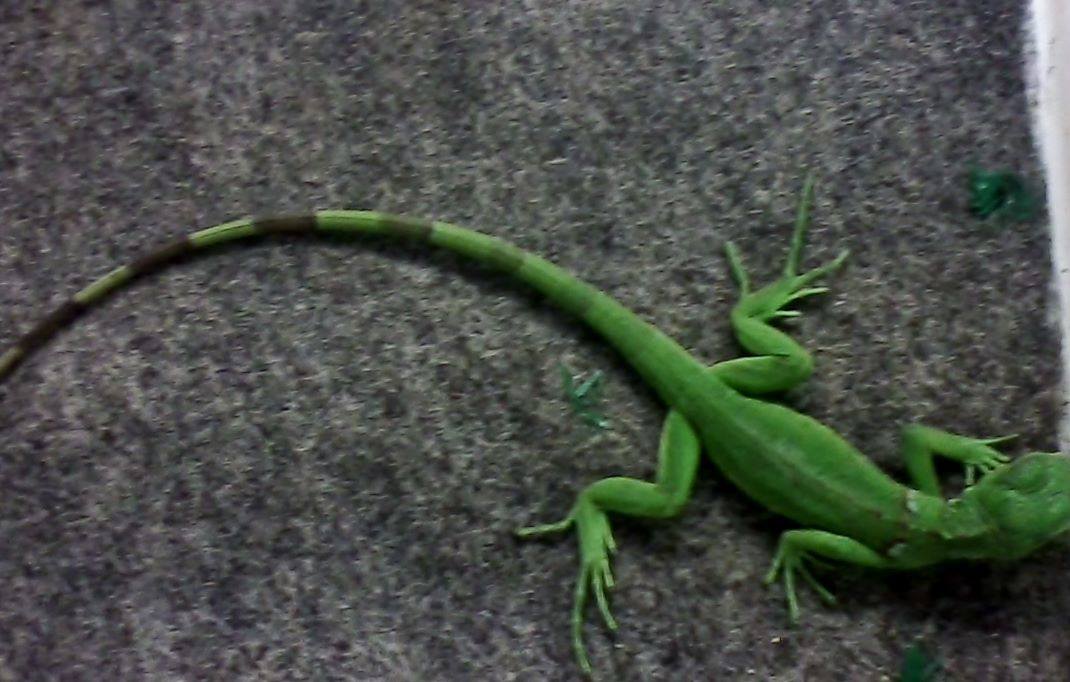
Baby Iguana rescued by Herps Alive

The iguana in question.

Fortunately this little hatchling is pretty healthy and eating. With full spectrum light and heat he should live a long and happy life. We hope to find a permanent home for him soon.

You might be surprised that after my bad experience with reptile laws in Ohio, that I really think we need a law banning these guys (and all live animals) as prizes. Many states and localities ban this practice, but not our state. Time for a change. Or a change.org perhaps. Give ‘em a coupon. Or a stuffed iguana.


Keith GisserKeith Gisser runs the Ohio based, award-winning, nationally recognized interactive reptile and amphibian program Herps Alive! He has been a herpetology educator for over thirty years and currently maintains about 100 reptiles, amphibians and crocodilians, nearly all adoptions or rescues, about half of which are used in his programs.

07/9/14

Eco-Interview: Allison Green, Painting Nature – Jersey City Artist

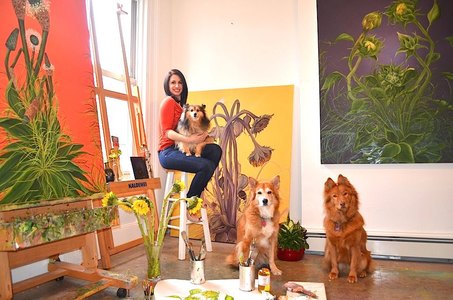
Frogs Are Green founder, Susan Newman interviews Allison Green about her large-scale, exquisite paintings of nature. Here’s what Allison shares with us:

Allison Green, Jersey City Fine Artist in her Studio

It’s hard to say exactly why I paint nature – but I am sure that it roots from my childhood life in Pennsylvania, where I grew up in a house on the perimeter of a lush forest. Memories of a childhood which revolved around nature are deep within me, especially today, as I have been living in the city for the last 20 years. Sometimes I wonder if I paint nature because I long for those lush forests of my childhood, or if it is the stories in those trees which still resonate so deep with in that I feel the need to let them out. Or, maybe it’s a combination of both.

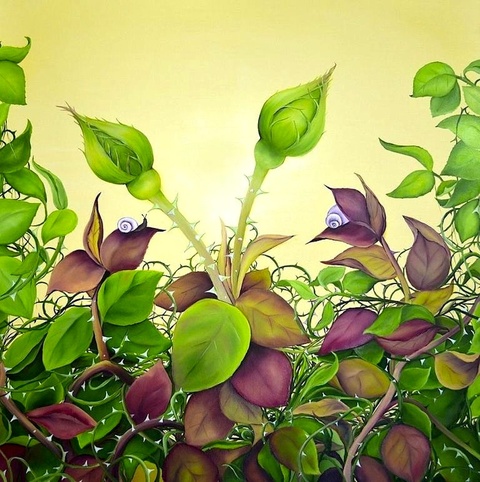
April Roses, 2013 - Oil on Canvas, 48" x 48"

April Roses, 2013 – Oil on Canvas, 48″ x 48″

These days, while I still love exploring vast forest and other pristine terrain, I have become most inspired  by urban nature – from cultivated gardens like the High Line and the New York Botanical Garden, to the wildest of plant life that seems to sprout everywhere throughout the city and streets.

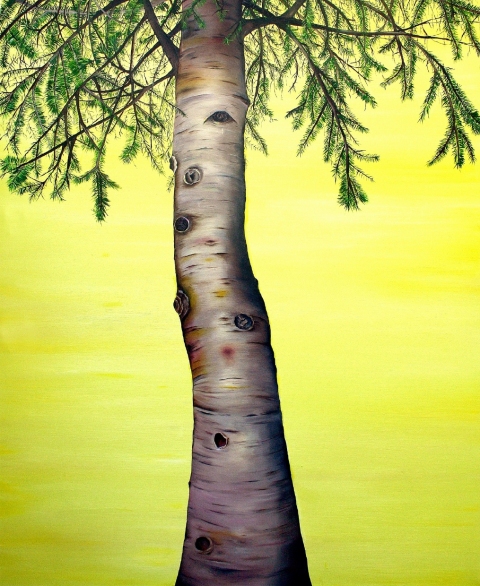
My inspiration often comes from the smallest details of a plant, such as the complex anatomy of a tiny, overlooked weed, the gnarled bark on an old, giant tree in the park, or those resilient vines growing up the sides of buildings in the summertime.

Eve, 2010 - Oil on Canvas, 30" x 24"

Eve, 2010 – Oil on Canvas, 30″ x 24″

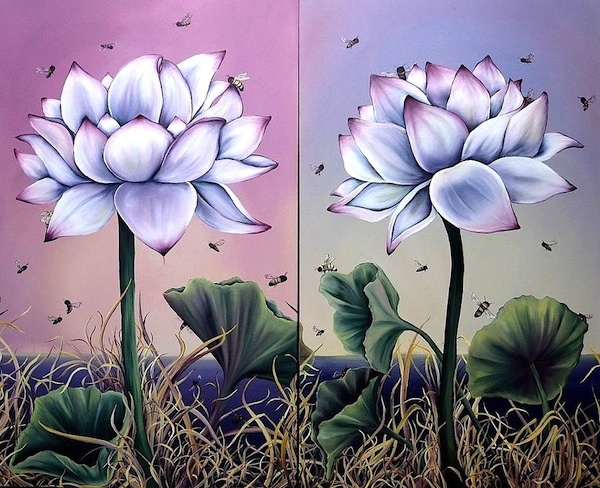
In my most recent paintings, I’ve also become fascinated with the delicate and complex reproductive relationships between plants and insects. A swarm of bees pollinating a pair of desirable lotus flowers, while mating snails hide within an ever-evolving rose bush are examples of new imagery in which I seek to capture the magical and surreal natural world.

In addition, I’ve become fascinated by the way all life forms change, evolve and become something very different along the way. “Everything Changes”, my latest series, documents different phases in a plant’s life cycle, along with depicting insect/plant relationships.

Pollinate Me (lotus flowers with pollinating bees) 2014, Oil on Canvas, 60"x72"

Pollinate Me (lotus flowers with pollinating bees) 2014, Oil on Canvas, 60″x72″

Nature is such an amazing, endless source of inspiration. And as humans are putting it in jeopardy in so many different ways, it has become an even more important subject in my mind. Whether it be to find beauty in a simple weed, cherish a neighborhood tree, or to realize the perfection of most common little bug,  I hope that my work can inspire someone to look at plant life and all of nature in a new way every day.

— Allison Green, Jersey City Artist


Lovers, 2010 - Oil on Canvas, 60" x 48"

Lovers, 2010 – Oil on Canvas, 60″ x 48″

Currently Allison resides and works in downtown Jersey City, where she creates large-scale oil paintings. Her first solo exhibition, “Deeply Rooted”, opened in March 2011 at Susan Eley Fine Art in New York City. A second solo show at SEFA, “Entwined”, opened in September 2012 and features a fully illustrated catalog with an essay by Lilly Wei. Green’s work is now included in the Brooklyn Museum Elizabeth Sackler Feminist Art Base, and her paintings were recently exhibited at PULSE NY in spring 2013.

Green holds a BA from the University of Maryland with a concentration in Fine Art and Women’s Studies. She also studied at Studio Art Centers International (SACI) in Florence, Italy in 1995.

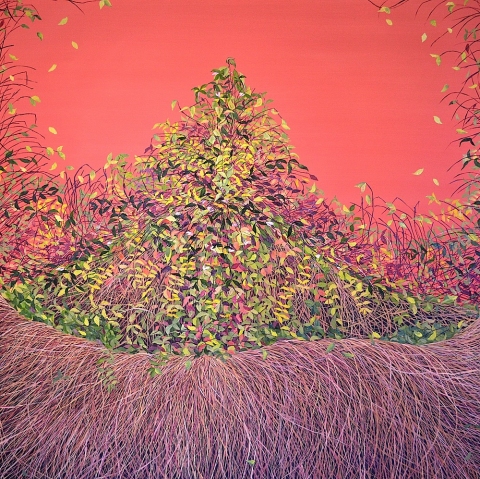
Sienna Thicket (Thicket #4) 2011, - Oil on Canvas, 48" x 48"

Sienna Thicket (Thicket #4) 2011, – Oil on Canvas, 48″ x 48″


06/12/14

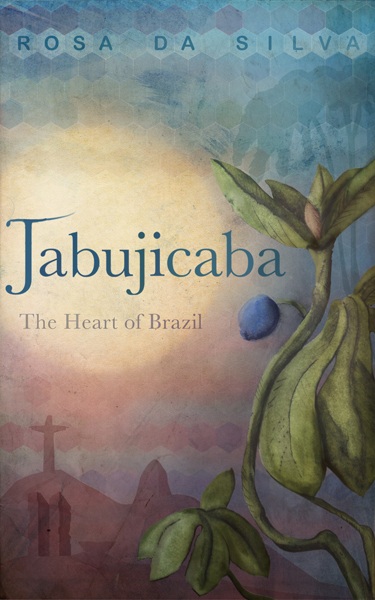
Eco-Interview: Rosa Da Silva, Author of Jabujicaba, The Heart of Brazil

When was your organization founded? Please tell us a bit about its mission, goals…

Jabujicaba the book was published as an e-book at the end of April 2014. The paperback version is coming out this month. Behind it is an idea. Literally a ‘novel’ campaign.

On June 2nd 2014 the not-for-profit company Voices for Nature Limited was incorporated. This takes the campaign forward beyond the life-span of the book.

The people working on this creative project are young and green and Indie… but the ideas behind all this are long in the tooth.

 Jabujicaba by Rosa da Silva

What is your educational background and what led to creating this organization?

I am half German and half English. I grew up always on the move. I have lived in many different countries, including the US where both of my children were born. I speak lots of different languages. I would say I grew up with strong feelings for nature and none for national affiliations.

I studied Modern and Medieval Languages at Cambridge University (Spanish and German). It helps to explain my love for magic realism – Garcia Marques, Isabel Allende – Latin American authors – and German writers like Kafka and Brecht and socialist political art eg: George Grosz and Kaethe Kollwitz.

I worked in the environmental area for many years, with a professional background in policy, communications and campaigning. I was involved in the early days when social/human rights, economic and environmental agendas were merged into ‘sustainability’ – an unimaginative word. I have worked in many countries including Brazil and Africa.

Politically, I believe in intervention in the markets for the good of others. I think a civilized society needs to ensure fair and equal outcomes, not just opportunities (which we know not everybody is able to take advantage of). I believe people must always be intellectually curious and be free to question. I believe in activism and not turning a blind eye or the other cheek. I believe in courage. In the separation of church, judiciary and state.

Over the decades there has been no real progress on climate change or conservation. Climate change continues on the up and so does species extinction. Something is clearly not right about how we are trying to tackle these problems – we know so many facts, we can measure the path we are on and predict where we are going. As a species, human beings need to reconnect with all living creatures and realise our inter-dependence.

I think we can find the right path by re-engaging people emotionally so they feel part (and not in charge) of the natural world.

That is the impulse behind Jabujicaba the book and setting up Voices for Nature. But it is not just a feeling, it is a process of political engagement (with a small ‘p’).


What are some challenges you have faced and how did you deal with them?

Pursuing fairness is a huge and continual challenge in everything I have done in my varied professional career. I was always standing up and arguing with ‘authority’ whether it was with a teacher at school or bosses at work.

Being heard in all the noise of a global market place, which is a Babel, is a big challenge.

The only way forward is to keep repeating yourself and remembering core values and the goal ahead. But you can’t get to where you are going alone in life. You need the help of others. You need to inspire and lead and to do that you need to be empathetic and kind.

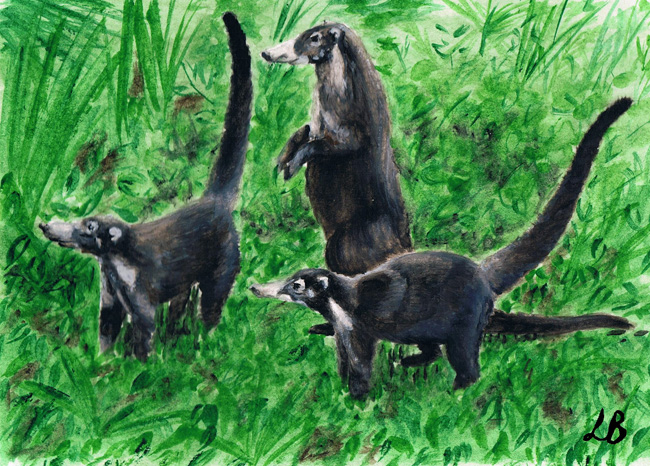
 white-nose coati from Jabujicaba

What can people do to help? Donate, and contribute to your cause? Other ideas?

I don’t want the interview to be about selling an idea or a project. It is for people listening to ask their own questions and maybe find some of their answers are aligned with mine. Then they might want to find more about what we are doing and help. They could maybe read the book. It has had good reviews.


How do you reach your targeted audience? Is it through your website, advertising or social media or another route? Which is most effective and why?

All possible routes are tried and taken, although we are trying to work bottom-up, Indie in everything. We wouldn’t say ‘no’ though if Harrison Ford stepped in to help our ambitions for a green Indiana Jones film! Sometimes ‘top down’ or celebrity endorsement can help you to get where you are going (although it is not without its dangers). Certainly we are using social media and word of mouth.


How do you keep the audience engaged over time?

By being happy, having fun, with lots of variety. Everything we do also has to ring an inner chord with the target audience of what really matters, the meaning of our existence, not just our individual life. Jabujicaba is not about simply ‘entertainment.’ Through our website we hope to engage people in other areas of their life – to campaign or to study or volunteer – or even just to take their children to the zoo but with a changed heart.


Tell us about your events around the world and some of the campaigns you have started.

When we made Jabujicaba the book available as a free download to test the audience, we found there was interest all over the world. About 700 copies were downloaded in 5 weeks.Take up is a lot less now, it costs a couple of dollars… We are still at the beginning of our journey.

Our campaigns, if you can call them such, involve around engaging with the books various stakeholders through interviews which explore the relationship between fact and fiction in the book. For instance, in the area of anthropology, with an anthropologist from Oxford University. Or in politics, with a green politician who did a ‘prequel’ meeting one of the characters in my book as a young man. Marco, who is the president of Brazil.

The focus of these interviews has been local and in the UK. We have tried to engage a little in the US, so far without success. It is hard not being there and time constraints mean you stay close to home.

Also the book is in English at the moment which restricts its target audience.

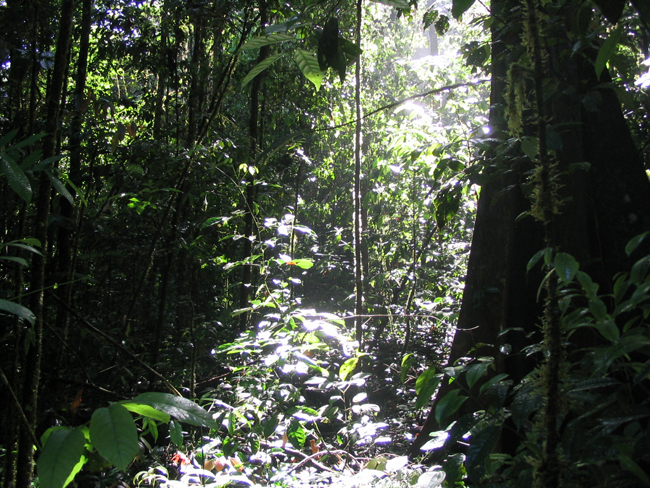
 rainforest in Brazil

What is in the works for the future? What haven’t you yet tackled, but will want to do soon?

We are working on Jabujicaba the film and progressing step by step. Jabujicaba as a ‘novel’ campaign is timed to coincide with the World Cup and Olympics in Brazil. After that, we plan Voices for Nature to kick in with our film initiative. Through film we will reach a much larger audience with our messages.

Longer term, we would like to fund and reward young people’s creative projects for rainforest conservation, using royalties from the book/film – a bit like Sophie’s World – and grow to a forest (metaphorically and literally).


Bonus!

Jabujicaba is about diversity in our own societies too – and social justice. We need to tackle these issues too.

All on www.jabujicaba.net – but also @ArchieAiredale (my dog!)


05/22/14

Frogs and Strawberries

Last night I had a dream about a frog. Not unusual for me, right?

In the dream, I was lifting a strawberry out of a container and I see a little frog upside down. Not alive, I’m afraid.

This morning I searched for frogs and strawberries and discovered that it’s not uncommon for frogs to be seen in strawberry patches. Someone had posted a question online about whether the toad frequenting her garden was eating the strawberries. The frog was not eating the fruit, but the bugs in the garden. Most likely the bugs were nibbling on the strawberries. (I think I see a children’s storybook in the making.)

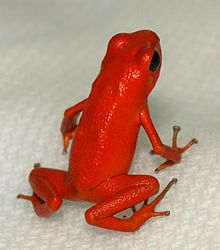
strawberry-poison-dart-frog-Oophaga-pumilio-zooAlso in my search, the Strawberry Poison Dart Frog came up, so here’s a photo and a bit about them.

From Wikipedia – Strawberry Poison Dart Frog:
The strawberry poison frog or strawberry poison-dart frog (Oophaga pumilio or Dendrobates pumilio) is a species of small amphibian poison dart frog found in Central America. It is common throughout its range, which extends from eastern central Nicaragua through Costa Rica and northwestern Panama. The species is often found in humid lowlands and premontane forest, but large populations are also found in disturbed areas such as plantations.[1] The strawberry poison frog is perhaps most famous for its widespread variation in coloration, comprising approximately 15–30 color morphs, most of which are presumed to be true-breeding.[2] O. pumilio, while not the most poisonous of the dendrobatids, is the most toxic member of its genus.