10/3/13

Protecting the Unique Frogs of Andasibe, Madagascar

Devin EdmondsGuest post by
Devin Edmonds,
Amphibian Conservation Director, Association Mitsinjo

It doesn’t get much better than a going into the forests of Andasibe at night.  There are leaf-tailed geckos, mouse lemurs, sleeping chameleons, and frogs. Lots of frogs. More than 100 different species, in fact, which have been identified in the surrounding forests. This is more than a third of all described frog species on the island.

Most of these frogs are nocturnal, but a few are also active during the day, like the Critically Endangered golden mantella (Mantella aurantiaca), which is only found in a small area near Andasibe in east-central Madagascar.

The conservation organization Mitsinjo works in the area around Andasibe, and is composed of 53 members of the community.

Our activities include:

  • Habitat management
  • Research
  • Nature-based tourism
  • Reforestation
  • Captive breeding
  • Environmental education

A group of our projects are targeted specifically at monitoring and addressing the threats our unique local frog species face. This includes the development of Madagascar’s first biosecure captive breeding facility capable of establishing assurance survival colonies of threatened amphibians.

Additionally, we conduct surveys to monitoring for declines and population changes. This activity compliments participation in a nation-wide early detection plan for the chytrid fungus Bd, the devastating pathogen contributing to alarming amphibian extinctions around the world. Fortunately, so far we have not detected Bd in Andasibe and reports elsewhere in Madagascar remain highly doubtful and unconfirmed.

Recently, Mitsinjo joined forces with the NGO Madagasikara Voakajy to contribute to the national conservation strategy for the golden mantella. Each month, we monitor three breeding sites at Torotorofotsy Wetland. This area is under tremendous pressure from artisanal gold mining, slash-and-burn agriculture, and charcoal production. Our habitat patrols help to ensure the breeding sites for this highly threatened amphibian remain intact.

To learn more about our organization like us on Facebook (www.facebook.com/Mitsinjo) and visit our website www.mitsinjo.org. For more information on amphibian conservation in Madagascar see www.sahonagasy.org
 

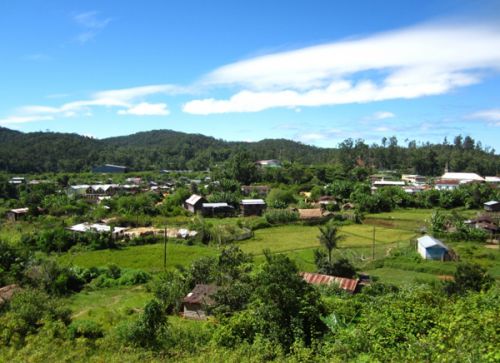
Andasibe Village

Andasibe Village, Madagascar

boophis luteus in amplexus

boophis luteus in amplexus

Captive breeding facility - Mitsinjo

Captive breeding facility - Mitsinjo

Captive breeding facility inside view - Mitsinjo

Captive breeding facility inside view - Mitsinjo

Mantella aurantiaca breeding site patrol at Torotorofotsy Wetland

Mantella aurantiaca breeding site patrol at Torotorofotsy Wetland

Mitsinjo swabs captive frogs for Bd

Mitsinjo swabs captive frogs for Bd

Mantidactylus species near Andasibe

Mantidactylus species near Andasibe

Mantella aurantiaca of Mitsinjo

Mantella aurantiaca of Mitsinjo

Andasibe-village thumbnail
OLYMPUS DIGITAL CAMERA thumbnail
captive-breeding-facility-mitsinjo thumbnail
captive-breeding-facility-inside-mitsinjo thumbnail
mantella_aurantiaca_breeding_site_patrol_at_Torotorofotsy_Wetland thumbnail
mitsinjo_swabs_captive_frogs_for_Bd thumbnail
mantidactylus_species_near_Andasibe thumbnail
OLYMPUS DIGITAL CAMERA thumbnail

06/18/13

SALAMANDERS IN CRISIS! An Overview of Why Salamander Conservation is Needed

Guest blog by Matt Ellerbeck, founder of Save the Salamanders

Although they are rarely given much thought, and often overlooked when they are, salamanders are in a terrible crisis. Around half of all the world’s salamander species are listed as threatened by the International Union for Conservation of Nature (IUCN). These species are all facing a high risk of extinction. A further 62 species have been designated as near-threatened with populations rapidly dwindling. This means they are quickly getting closer to threatened status and to the brink of extinction. Sadly for some salamanders it is already too late, as both the Yunnan Lake Newt (Cynops wolterstorffi) and Ainsworth’s Salamander (Plethodon ainsworthi) have already gone extinct.
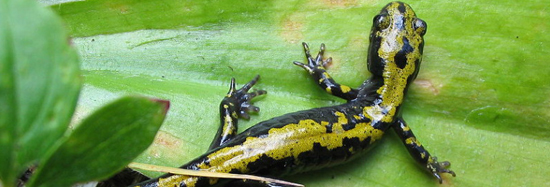
save the salamanders Salamanders have been on the earth for over 160 million years, and the terrible state that they now find themselves in is due to the detrimental acts of humans. Even those species that are not experiencing population declines deserve attention and conservation to ensure that they remain healthy and stable.

One of the biggest issues affecting salamanders is the loss of their natural habitat. Many areas that were once suitable for salamanders to live in have now been destroyed for developmental construction and agriculture. Habitats of all kinds are being lost at an alarming rate. Wetlands are drained, forests are logged and cut down, and waterfronts are developed. Salamanders are literally losing their homes and they are losing them rapidly. The expansion of urban areas threatens the suitable habitats that still remain.

Where natural habitats do still exist, they are often fragmented or degraded. Fragmentation occurs when healthy areas of habitat are isolated from one another. These fragmented areas are known as habitat islands. Salamander populations are affected since gene flow between the populations is prevented. This increases the occurrence of inbreeding, which results in a decrease in genetic variability and the birthing of weaker individuals.

Fragmented populations where inbreeding occurs often ends in a genetic bottleneck. This is an evolutionary event where a significant percentage of the population or species is killed or otherwise prevented from reproducing. Habitat fragmentation is also harmful because it often eliminates crucial requirements in the area which are critical to the survival of salamander populations. Such areas include spaces that can be utilized for thermoregulation, prey capture, breeding, and over-wintering. Without such habitat requirements populations dwindle.

Breeding sites, often in the forms of vernal pools are particularly important. The loss of such areas in the form of habitat destruction can negatively affect the entire population and its reproductive output. According to the Committee on the Status of Endangered Wildlife in Canada (COSEWIC), there is some evidence that certain salamander species have individuals that return to the pond in which they were born once they reach maturity. Therefore, destruction of a breeding pond may result in loss of the entire population returning to that site. Habitat complexity is also important as it offers shelter to salamanders from both predators and human persecution.

Degradation occurs when the natural habitat has been altered and degraded to such a degree that it is unlikely that any remaining salamanders species would be able to survive. Developments and agriculture near fragmented habitats put salamanders at serious risk. As amphibians, salamanders have extremely absorbent skins. Industrial contaminants, the introduction of sedimentation into waterways, sewage run off, pesticides, oils, and other chemicals and toxic substances from developmental construction sites and human settlements can all be absorbed by salamanders. This can quickly lead to deaths. They can also cause widespread horrific deformities to occur. A study conducted at Purdue University found that out of 2,000 adult and juvenile salamanders 8 percent had visible deformities.
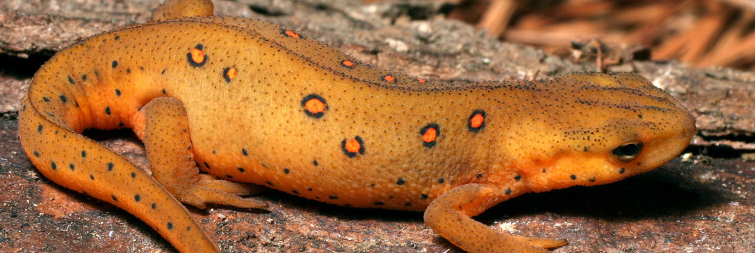
save the salamanders

According to Save The Frogs, Atrazine (perhaps the most commonly used herbicide on the planet, with some 33 million kg being used annually in the US alone) can reduce survivorship in salamanders. Many products are sold with the claim that they are eco-friendly. However, these should be viewed with caution. For example, according to N.C Partners in Amphibian and Reptile Conservation, Roundup and many other surfactant-loaded glyphosate formulations are not labeled for aquatic use. When these formulations are applied to upland sites according to label instructions, the risk to surfactant-sensitive species is considered low. While this may be the case for fish it does not necessarily apply to amphibians. Salamanders that breed in water also routinely use non-aquatic areas and could easily be exposed to glyphosate formulations that contain harmful surfactants through direct application and not just incidental drift.

Habitat destruction and degradation can also effect the availability of prey items, causing unnatural declines in appropriate food sources.

Habitats are often isolated and cut off from one another by the roads and highways that now run through them. Countless numbers of salamanders are killed on roads and highways every year when they are hit by vehicles. Salamanders that are migrating to breeding and egg-laying sites often must cross over roads to reach such areas. Here many of the mature members of the breeding population are killed. Removing members of the breeding populations greatly limits reproductive output, this makes it incredibly hard for salamander numbers to rebound.

Roads present an additional problem because they represent a form of habitat loss. The roads that run through natural areas also fragment the existing populations, drastically making them smaller in size. This limits the gene flow and genetic diversity between the isolated populations on either side and this greatly increases the chances of extirpation. When salamanders attempt to cross roads to travel between the populations, or to critical breeding/birthing sites it greatly increases their chances of being hit and killed by vehicles.
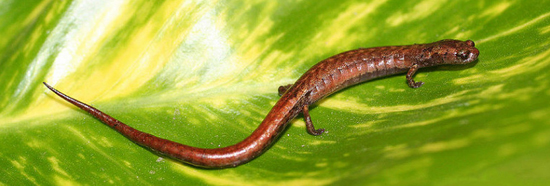
save the salamanders

The Wetlands Ecology and Management (2005) population projections for spotted salamander (Ambystoma maculatum) life tables imply that an annual risk of road mortality for adults of greater then 10% can lead to local population extirpation. Unfortunately, it is estimated that mortality rates can often be as high as 50 to 100%, which means populations are at extreme risk of extirpation and extinction due to road mortality. Wyman (1991) reported average mortality rates of 50.3 to 100% for hundreds of salamanders attempting to cross a paved rural road in New York State, USA. Given that this figure pertains to a rural area from over a decade ago, it is fair to assume that even higher mortality rates occur as their has been in increase in cars and roads over the years. Reducing road mortality is paramount to preserving salamander species.

Being hit and killed by vehicles is not the only threat that roads create for salamanders. Chemical run-off from vehicles contaminate roadside ditches and pools. These sites are often utilized by salamanders for breeding and birthing. According to Steven P. Brady (2012) survival in roadside pools averaged just 56%, as compared to 87% in woodland pools. Thus, an average of 36% fewer individual embryos survived to hatching in roadside versus woodland pools.

Salamanders are also threatened when they are harvested from the wild. Salamanders are taken for the pet trade, for food markets, and for use as fishing bait.

There is much about salamanders that scientists do not know. Aspects of the biology, ecology, and lifestyles of many species is a mystery. This undoubtedly means human interference is negatively affecting salamanders in ways in which we don’t even know. The intricate relation between all species and the vital roles they play within eco-systems is also being altered. Such alterations can have serious consequences to not just salamanders, but many other animals as well (including humans).

To find out how you can help please see: www.savethesalamanders.com
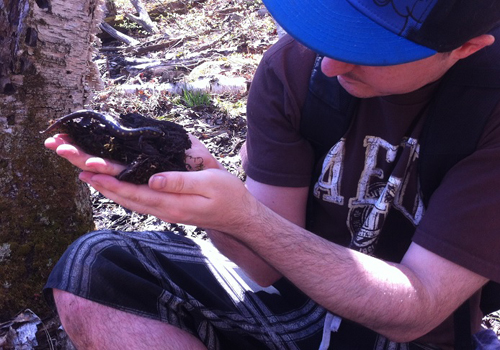
Matt Ellerbeck - Save the Salamanders

About Matt Ellerbeck and Save the Salamanders:

Over the years he has observed hundreds of salamanders in their natural habitats. This interest eventually led to Matt becoming a Salamander Advocate and Conservationist.

Matt also has considerable experience and expertise in regards to salamanders and their care. He has cared for and observed numerous species. These include forms belonging to the genera Plethodon, Ambystoma, Necturus, Notophthalmus, Hypselotriton, Pleurodeles, Taricha, Salamandra, Hemidactylium, Eurycea, Pseudotriton, Amphiuma, Siren, and Paramesotriton. Matt is also in possession of a license to keep Specially Protected Amphibians in Captivity for the purpose of education, which has been granted by the Ontario Ministry of Natural Resources.

Along with wildlife preservation, Matt also believes in the ideals of Environmentalism, Deep Ecology, Biocentrism, Ecocentrism, and anti-Speciesism; and draws from these various movements to help salamanders.

Matt is committed to continuing his efforts to help salamanders. His love and concern for these animals is second to none! 
06/7/13

Hops for Habitat in Montauk – Open Call for Artists

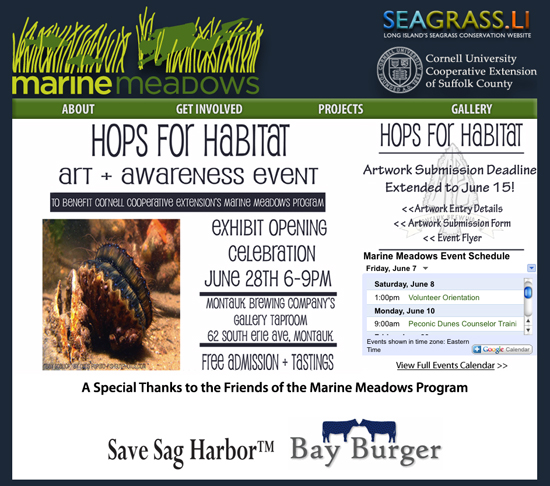
OPEN CALL FOR ARTISTS! Cornell Cooperative Extension of Suffolk County (CCE) has been actively involved in the protection and restoration of local eelgrass meadows that are an important habitat for many biologically and economically important species of finfish and shellfish.

To help raise community awareness, they are seeking artist responses to this issue and would like to see works inspired by underwater habitat reflecting the value of our local marine environment during our “Hops for Habitat” art show and sale in Montauk Brewing Company’s Tasting Room from June 28 through July 31, 2013.

Deadline for submissions is June 15.

Please visit www.marinemeadows.com or contact Kimberly Barbour at kp237@cornell.edu for submission information.

hops for habitat art and awareness in montauk

04/3/13

Eco Interview: Coyote Peterson Brands, Swamp Monsters, Brave Wilderness and Polar Ghost

Eco Interview: Coyote Peterson Brands, Swamp Monsters, Brave Wilderness and Polar Ghost

coyote peterson brands

When was your organization founded?
Coyote Peterson Brands LLC, Swamp Monsters and Brave Wilderness were all founded in 2010.
Please tell us a bit about your mission and goals
Coyote Peterson Brands was founded to develop a wide variety of film and television projects (Swamp Monsters and Brave Wilderness are the first) to be hosted by Coyote Peterson.  Our goal is to use media platforms as a vehicle and outlet to help conservation messages be spread across the globe.  Ultimately we hope to inspire and educate- through adventure- the next generation of explorers and conservationists.
 
What is your educational background and what lead to creating this organization?
I have been fascinated with nature since I was probably 4 years old.  This prompted me to educate myself as much as I could about animals and outdoor/wilderness survival.  I went to The Ohio State University from which I have a degree in film writing, production and directing.  Post- college my team and I decided to combine filmmaking with the animal kingdom and we began developing television and film projects.
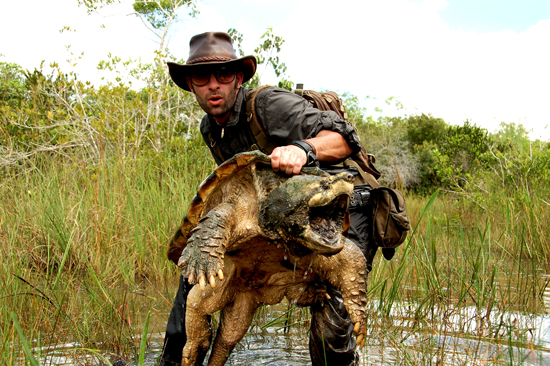
coyote peterson with snapping turtle
What are some challenges you have faced and how did you deal with them?
There is a laundry list of challenges we face each and every day.  Everything from raising funding in order to take an expedition for filming right down to surviving in the environment as we seek out the animals we hope to encounter and film.

Combining the world of filmmaking with animals and dangerous situations within environments is like a triple threat challenge.  Each one has its own obstacles and we take them on one at a time in a strategic manner.  We believe the key to succeeding at anything in life is nothing more than taking things one step at a time!

It is incredibly fun and rewarding work when things manage to pan out, and we always seem to find a way to make the impossible happen!  I credit that to my own ambitions and to an amazing producing team, camera team and the wonderful organizations and individuals that help us when on location filming.  When we do finally encounter animals that we seek in the wild…well that credit all goes to the beauty of nature and the “right place…right time” theory.
 
What can people do to help? Donate, and contribute to your cause? Other ideas?
Well, people can ALWAYS help.  Mostly we raise independent financing for our projects but this year we will tackle some huge conservation projects for which donations would be more than appreciated!  If people follow us through social media they will be able to keep up with what we are doing and we will advertise how to get involved. I also love to do public appearances and will always travel to meet new people and conservation groups.
coyote peterson icon
How do you reach your targeted audience?
We reach out to our audience mostly through the Internet.  For us it’s all about creating interesting content, whether original or shared from others.  If we can help educate and promote conservation for the planet and its animals we are doing the right thing.  We find that staying consistent with our work is the best way to garner a following.  Right now the CP Animal Anthology, which is a mixture of photograph collages and succinct facts, seems to keep our fans through Facebook, Twitter, and Instagram entertained.  As we begin to release video content we are confident our fan base will only keep growing!
 
Is it through your website, advertising or social media or another route?
Right now its social media, although in the future these devices will be a way to push fans and followers toward our website and internet channels.
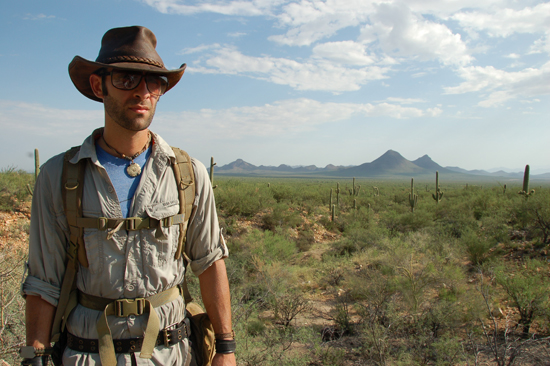
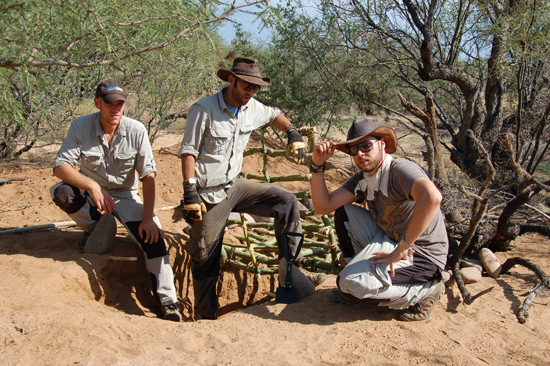
coyote peterson and gang on location
Which is most effective and why?
Most effective is probably Facebook, just because SO many people are on it multiple times a day.  It also allows you to share video and photo content quickly and links to all other social media platforms comfortably.  We use FB as our primary source of information sharing and combined with the iPhone it is an unstoppable force!  For example, the Animal Anthology is created using nothing more than the iPhone and the Internet…animal education and conservation are right in the palms of our hands…it’s so cool to live in an age when technology allows so much creativity!
 
How do you keep the audience engaged over time?
It’s all about new content.  However, it has to be GOOD content.  If you are consistently creating quality, people will keep coming back.  We aspire to really engage with our fan base and want to know what THEY want to see.  Social media is a huge help with that, because it allows our audience to interact and make suggestions!
 
Tell us about your events around the world and some of the campaigns you have started.
As we began Coyote Peterson Brands just two years ago, we have only travelled a limited amount.  Although we did go to Costa Rica to film, we find that there is much to be done in our own community, and hope that our audience adopts this message as well!  Our work in Columbus, Ohio has focused on research and conservation of wetland environment.  Specifically, we research Common Snapping Turtles, promote the preservation of their habitats, and educate a vast audience about these incredible and often misunderstood reptiles.

However, we are currently gearing up to start a conservation project and documentary film for Polar Bears which will be shot this fall in Churchill, Manitoba, Canada.  Polar Bears are the largest land predator on the planet, yet they are disappearing as the sea ice they depend on for survival continues to melt away from climate change.  This will be our biggest undertaking yet in the realm of conservation, and we feel one of the most important we will ever have the chance to be a part of.  My team is unbelievably excited to be taking on this challenge and it will certainly be a life changing experience.
coyote peterson logo
What is in the works for the future?
We have so much planned it makes our heads spin!  We have two web/tv series in development.  Swamp Monsters sends my team and me across the eastern part of the US as we follow a trail of folklore stories, photographic evidence and scientific facts while tracking down giant snapping turtles, hoping to capture and release a new world record.  Brave Wilderness is an animal adventure and conservation series that follows my team and me into remote locations as we track down and film some of the planet’s most amazing and misunderstood animals.  This series will span the globe and encompass the entire animal kingdom; no animal is too big or small for these adventures!  Both series are in development and begin filming this summer.  Finally, Polar Ghost is our documentary on Polar Bears and their plight facing extinction in the wild.  This will be a feature length documentary that we will submit to film festivals and then hopefully distribute through a network like National Geographic.  So in short…2013 is going to be one crazy and adventure filled year!
 
What haven’t you yet tackled, but will want to do soon?
Ha ha, that’s a big one!  I guess our overall goal is to have spent time on every continent, filming with as many of the world’s animals as possible and doing our absolute best to work with and promote as many conservation groups as possible.  Brave Wilderness will truly be the vehicle for that goal and while I might host the series…it’s really the animals and the conservation groups that we will work with who are the “stars” of the series.  Animals need help and as long as humans are on the planet they always will.  It’s a long road but we can’t wait to travel it!
 
What else would like our readers to know?
We have a ton of incredible sponsors that believe in our vision for the future of animal entertainment and conservation and it’s because of these sponsors that we are geared to the max!  People always want to know where I get all of my cool stuff, from the hat to the multi-tools, and all of them can be found on my website.  The team and I feel incredibly lucky to have what we consider to be the best names in the world of animal adventure behind us!
 
Great video of a Frog and Toad!

 
Wild video of a Snapping Turtle… or two…

 
To learn more about Coyote Peterson Brands, visit and follow the links below:

Coyote Peterson’s website, blog and social media:

www.coyotepeterson.com
https://www.facebook.com/CoyotePeterson
https://twitter.com/coyotepeterson
http://instagram.com/coyotepeterson/
http://www.flickr.com/photos/coyotepeterson/
http://vimeo.com/coyotepeterson
http://www.youtube.com/user/THEREPTILESHOW

04/2/13

Climate Summer – Bicycling for the Better Future Project

This is a guest post by Rebecca Newman, who is a freshman at Ithaca College studying Environmental Sciences.

climate summer 2013

I will be biking through New England for the Better Future Project.

Climate Summer 2013 Dates: June 7th – August 16th, 2013

The Better Future Project is an organization that promotes communities to move beyond using fossil fuels. Climate Summer is a program through the Better Future Project where young adults ride exclusively by bicycle to various towns in New England.

In these towns we will try to make changes towards a cleaner world by educating and organizing events in each community. As a rider this summer I am very excited to have this unique opportunity to help people make more sustainable choices. For a long time I have been interested in the environment and specifically making the change from fossil fuels to renewable energy.

Would you be willing to donate to this cause? Your donation helps fund the movement this summer and helps people to make more sustainable choices. You can follow our progress this summer by going to climatesummer.net

Also if you have any questions about the trip you can email me at rnewman1@ithaca.edu

To donate by check, you can make the check out to:

Better Future Project/OSI (please put Rebecca Newman in the notation section on the check!), and mail it to:

Open Space Institute/Better Future Project Citizen Action Program
c/o Nekenasoa Randresihaja
1350 Broadway, Suite 201
New York, NY 10018

To donate by credit card you can go to Climate Summer (please use Rebecca Newman for the “in honor of.”)
 

02/11/13

Eco-Interview: Matt Ellerbeck, Save the Salamanders

In this post, we are pleased to feature Matt Ellerbeck, a salamander advocate and conservationist, who created the Save the Salamanders project.

Matt Ellerbeck, aka The Salamander Man, is a man with a mission: he is striving to raise awareness of the threats that salamanders face, and to educate people on effective actions that they can take to help alleviate these threats. The actions include behavioral changes, land stewardship, and habitat management efforts. To bring his message of salamander conservation and protection to the public, Matt utilizes several platforms: media appearances, awareness campaigns, social networking, the distribution of informative fact sheets, and educational presentations/lectures.

Matt also aims to help salamanders by diligently collecting observational records of these animals in the wild. These records are sent to various organizations to help gain a better understanding of salamander populations, ranges, and habitats.

He hopes that through awareness and education, people will develop a sense of empathy and concern for salamanders, and in turn will have a desire to become active in their recovery. For those who do want to contribute to the conservation & protection of salamanders, his site contains much information on how to become active.

As Matt describes his mission:

Everything that I do, I do because I sincerely believe it will help contribute to the conservation & betterment of salamanders, which is my ultimate goal and ambition! Salamanders are the focal point of my life. There is not a day that goes by that I am not doing something salamander related, whether it’s presenting educational lectures on salamander conservation, writing articles, giving interviews, or collecting observations of salamanders in the wild. When I am not doing such activities I am planning and prepping for such efforts. A good portion of every day also goes towards the care of the many salamanders that I live with.  These salamanders take turns accompanying me during my lectures and presentations to act as education animals and ambassadors for their kind.

Below is a video interview with Matt in which he discusses his mission: