01/19/16

Protect and Save Liberty State Park

When you live in a city like Jersey City, you yearn for some open space. We’re fortunate to have Liberty State Park nearby. A beautiful park where you can ride your bicycle for miles, and see nature all around, as well as majestic views of the Statue of Liberty, skyline of Manhattan, ships coming up and down the Hudson River, and breathe some fresh air.

The park is just behind Lady Liberty and Ellis Island, and as you ride your bicycle the views continually change, each more breathtaking than the next.

I would hate to see development that doesn’t belong there, ruin such a pristine place.

Please sign the Petition to Save Liberty State Park which will tell Governor Christie that we want our park to stay just as is, so we can continue to enjoy it freely.

Susan Newman in Liberty State Park Bicycle riding

More Details via NY/NJ Baykeeper about Liberty State Park:

The governor’s recent proposals to lease public parkland to private developers for large-scale commercial projects would destroy the beloved park behind Lady Liberty and Ellis Island.

With public open space already so scarce in one of the nation’s most densely populated regions, we can’t let that happen. For forty years, overwhelming public consensus has consistently rejected exactly these kinds of commercialization and privatization efforts.

There’s a reason LSP is known as “The People’s Park” – we’ve won these battles before, and we can win again. But only with your help.

Please sign the Petition to Save Liberty State Park

#SaveLSP Liberty State park aerial view with Miss Liberty

#SaveLSP – Liberty State Park aerial view with Miss Liberty courtesy of Liberty State Park.


12/17/15

How To Teach Your Kids About Climate Change

 
Teaching your kids about climate change is no easy task. A lot of parents avoid talking about it with their kids because they have no idea how to bring it up. Climate change is also scary, even for adults, so great care needs to be taken when explaining things to your little ones.

By U.S. Fish and Wildlife Service Headquarters [CC BY 2.0 (http://creativecommons.org/licenses/by/2.0)], via Wikimedia Commons

By U.S. Fish and Wildlife Service Headquarters [CC BY 2.0 (http://creativecommons.org/licenses/by/2.0)], via Wikimedia Commons


It’s important that they still get a realistic overview and that you are honest with your children. However, you want to spark their interest in climate change, rather than scare them. They need to know about the problems climate change causes, but you must also find a way of explaining the solutions. They need to feel like they can make a difference.
 

Our kids and future generations need to be taught about how they can make a difference, and just how crucial their actions will be. Obviously, the depth and complexity of your conversation will depend on the age of your child. As they get older you can discuss the more complex scientific aspects of climate change, but when they are young, you just want to gently make them aware.
 

There are plenty of interesting ways you can ignite your children’s interest in climate change. Learning about the challenges the world faces doesn’t have to be too serious or boring. Here are some fantastic ways of teaching your kids about climate change.
 
Make climate change fun with educational games, apps and websites
 

There are many different tools and resources that have been created specifically for kids who are interested in the environment. Climate change is easily incorporated into lots of great games for kids.
 

There are entire websites specifically dedicated to teaching kids about climate change, and even some apps that touch on the subject. For example, NASA’s Climate Kids, Tiki The Penguin and The Young People’s Trust for the environment. There are even Apple and Android apps that help teach kids about climate change, such as Painting with Time and Offset.
 

Show them climate change videos made for kids
 
A quick search on YouTube will provide you with plenty of videos about the environment for kids. For example, this ‘global warming for kids’ video. Videos like this explain climate change in a way that kids can easily digest and process, and they are also fun to watch. Watch the videos with your kids and then let them ask questions afterwards.
 

Open their minds on family days out
 
You can subtly bring up the topic of climate change by going on educational days out. Take your kids to wildlife parks, on nature walks and to museums (such as The Natural History Museum). All these things will get them thinking about the environment and continue their education.
 

Let them explore climate by through being creative
 
Set your kids some fun tasks that are loosely related to climate change and the environment. Once they have had an introduction to climate change, get them to try and get their thoughts down on paper. They could write a poem about climate change, or try and paint their own interpretation of climate change. You could also come up with some fun climate change related games that you can play at home as a family.
 

Help them understand green living
 
Teaching your children how to live in an eco-friendly way will help enhance their knowledge of climate change. Make sure they know how to recycle and teach them to be aware of how much energy they are using. For example, switching lights off when they are not in use and not using more water than they need.
 

Let them develop a passion for nature
 
Your children may naturally become interested in climate change if they develop a passion for nature. If they fall in love with nature and enjoy spending time in the great outdoors then they are more likely to want to help protect our planet. Take your kids out walking, camping and get them involved in gardening.
 

Buy them books with underlying messages
 
If your child likes to read then buy them some climate change-related books. For young kids, the topic of climate change can be introduced gently through reading book with underlying messages. Older kids with an interest in the topic can go into much more depth. You can buy them books that teach them about how to protect the environment and that explain the science behind climate change.
 

The following is a guest post from Edward Woodward. A writer and a blogger at Kedel blog.

12/13/15

Reptile Kingdom Resides in Painting Workshop

Dec.6, 2015
Text by LAN Lianchao
Video by LAN Lianchao & CHANG Zhuojin & SHI Xinyue & LIU Yuting

Hundreds of transparent boxes are piled up against the wall, with simulated wild environments. The residents of those cubical rooms have watched the day and night of the painting workshop, ARTTRA, for seven years.

The vivarium belongs to a painter, Herman Chan, 41, who has over 100 reptiles from about 50 species.

“Maybe you can not find a second painting workshop with so many reptiles in Hong Kong,” he says.

Chan’s pets attract people who learn painting in a way of improving their ability of observation. Reptile knowledge is a bonus for curious students.

Chan says he collects and breeds various species of reptiles on purpose. “I enjoy taking care of them technically,” he says.

The first reptile owned by Chan was a salamander when he was in the primary school. Since then he has never stopped.

Chan used to raise his reptiles at home, afraid of customers’ resistance against them. He says he hopes to stay with them more, not only the time after work.

Not until he took a chameleon to the studio did he find the charisma of his pets. Children are really into it and inspired to watch the detailed of the animal, Chan says.

Meanwhile Chan tells them chameleons change color due to the temperature, humidity or light, not the background colors thought by many people.

“The studio is a perfect combination of my hobby and job,” Chan adds. “It is an incubator for my reptiles and my painting.”

Chan Tsz Yin Andrea, 5 yrs old, Hong Kong, Arttra.

Chan Tsz Yin Andrea, 5 yrs old, Hong Kong, Arttra.

With the Frogs Are Green annual children’s art contest deadline approaching, you can see how engaged the young students are by learning about amphibians and reptiles, seeing them up close, and then expressing themselves through art. I’m thrilled that Herman’s students entered our annual contest!

This blog was originally posted on https://lanlianchao.wordpress.com Frogs Are Green has permission to repost it.

11/28/15

How Bd has impacted Arizona’s amphibian species

A Frogs Are Green eco-interview with Nick Massimo and Evan Brus.

When was your organization founded? Please tell us a bit about its/your mission, goals… When did you first begin this important work?

Evan and I are both PhD students studying the disease dynamics of a deadly fungal pathogen that infects amphibians all over the world. The pathogen is Batrachochtrium dendrobatidis (Bd), and it causes the disease called chytridiomycosis. This disease was first noticed in the late 1980s and early 1990s as a wave of mass amphibian mortality events swept through Central America. Further research linked Bd to mass amphibian die offs and the extinction of multiple amphibian species all over the world.

Recent research has created a picture of how this pathogen may have originated in Brazil and spread to North America over 100 years ago. The oldest amphibian specimen that’s tested positive for Bd was in Illinois in 1888. Then, in the 1920s Bd was detected in California. Approximately 50 years passed before Bd was detected again in southern Mexico in 1972. The detection of Bd in Mexico was then tracked south into Central America where researchers first noticed the dramatic effects Bd could have on amphibian communities. The goal of our project is to better understand how Bd spread in the Americas, possibly passing through Arizona and to determine how this pathogen has impacted Arizona’s numerous amphibian species.

What is your educational background and what lead to wanting to specialize in this area and/or create your organization?

Nick Massimo
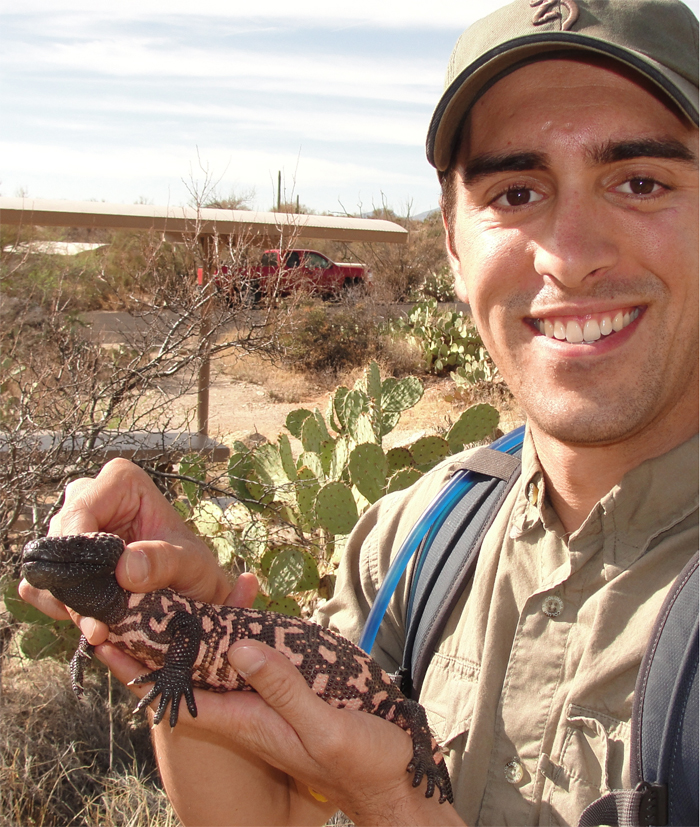
Nick MassimoI received a BS in biology and nutritional sciences and a minor in chemistry from the University of Arizona in 2011. After I graduated with my BS I spent two years working on numerous research projects studying species such as the Gila monster (Heloderma suspectum), desert tortoises (Gopherus agassizii), fungal endophytes (fungi that live inside plants), and several other herpertofauna species from the southwestern United States. I gained these experiences working with the University of Arizona, the Arizona Game and Fish Department and a not-for-profit group, Friends of Saguaro National Park. The combination of knowledge I gained from mycological and herpetological research in Arizona provided a great platform for me to pursue my PhD at Arizona State University studying how a fungal pathogen affects Arizona amphibians.


Evan Brus
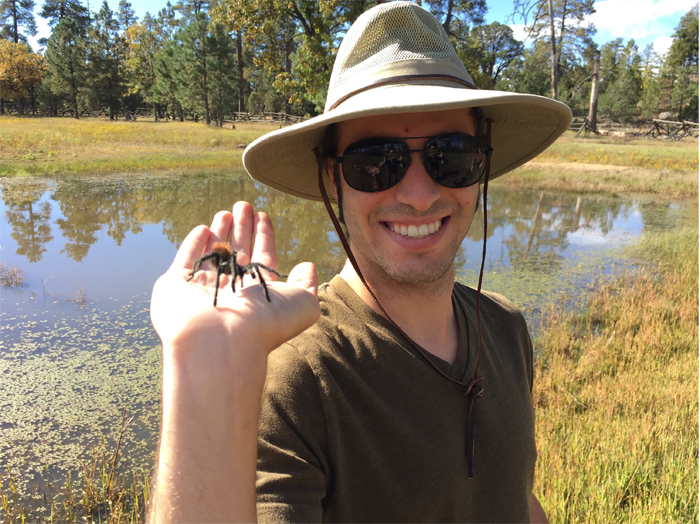
Evan BrusI received my B.S in Zoology, French, and Environmental Studies from the University of Wisconsin Madison in 2011. During and after college, I worked in a social insect behavior lab studying the signals and cues that regulate nest construction in Polybia occidentalis, eventually traveling to Costa Rica to do research there. While studying for an ecology course, I happened upon the book Extinction in Our Times by my current advisor, James Collins. I was immediately intrigued by the story of amphibian declines, and I applied to do my PhD in his lab at ASU the following year.


Who would say has influenced you or your work?

Nick Massimo

I was inspired to pursue a career in biodiversity conservation by my early childhood experiences where I spent time with my family enjoying the great outdoors. Through these experiences I developed a deep appreciation of our beautifully complex natural world. The time I spent at the University of Arizona pursuing my BS continued to guide me to pursue a career in conservation due to some of my wonderful professors. Dr. Robichaux, Dr. Bonine and especially Dr. Arnold helped provide me with fantastic experiences and mentoring opportunities at the University of Arizona. Towards the end of my bachelor degree I received an internship with the Arizona Game and Fish Department. My advisor, David Grandmaison, introduced me to a wide array of projects focusing on conservation strategies for mammal, bird, reptile and amphibian species in Arizona.

After I graduated, I received a job with my most influential mentor, Dr. Betsy Arnold. During my time working with Dr. Arnold, I gained a large amount of experience on how to develop, conduct and conclude an intricate research project working with fungi that live inside of plants. Without the help and mentorship Dr. Arnold provided me, I would not be where I am today. Dr. Arnold has been my most influential mentor.


Evan Brus

Like many biologists and ecologists, I grew up with a deep appreciation for nature. I was lucky enough to live in a relatively rural area of Wisconsin surrounded by streams and forests, which I relished as a child. My early experiences exploring the outdoors informed my initial choice to study biology, but I credit several college professors for helping me refine my interests and encouraging my work. My undergraduate research mentor Dr. Robert Jeanne, as well as his grad students Ben Taylor and Teresa Schueller, taught me the culture of academia and the skills needed for data collection, analysis, and eventual publication. Without my experiences in this research group, I probably would not be a scientist today. My other major influence was Dr. Calvin DeWitt, who taught my introductory ecology course with fervent enthusiasm and took personal interest in all his students. I learned from him how to pursue my passions and how to visualize the myriad connections between humans and the natural world in everyday life. Currently, I draw inspiration from the broad community of scientists researching amphibian decline and chytridiomycosis, too many to name. The quantity and quality of research produced in our field is remarkable, and everyone is willing to help one another and collaborate. It’s a very welcoming and dedicated community.


Please share the details of your work: the medium, technique and discoveries.

Our project will analyze how Bd may have been introduced into Arizona and how its introduction could have shaped Arizona amphibian distributions. In order to investigate these questions amphibian specimens housed in natural history collections will be assessed for the presence of Bd. Our work will determine at what time were certain species infected with Bd in the state, and do these historic infections help us understand the dramatic decline of leopard frog species in Arizona.
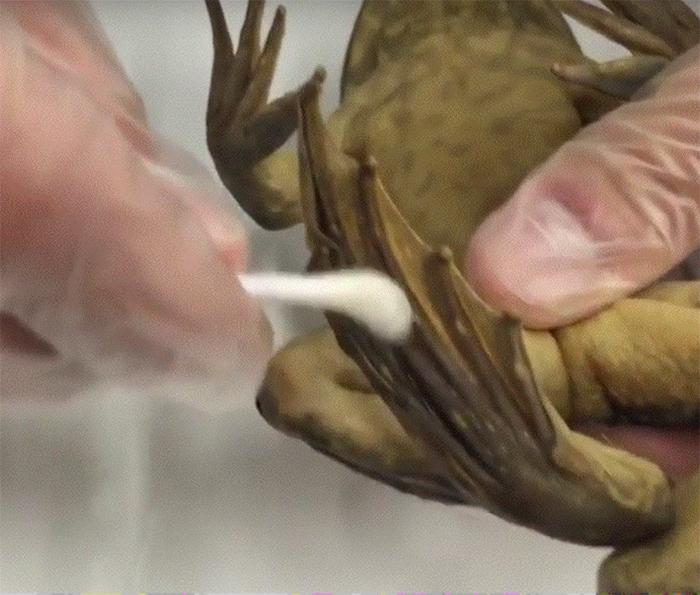
testing Arizona frogs for Bd

Our work will rely on testing amphibian skin for the presence of Bd DNA. In order to do this, we will swab amphibian specimens stored in natural history. DNA extractions will then be performed following protocols used by other researchers who have recently completed similar projects analyzing museum specimens. After DNA extractions are complete, real time PCR will be used to determine if fungal pathogen DNA is present and if so, quantify the pathogen load on the specimen. Once all of this data is collected we will gain an understanding of the disease dynamics of Bd in Arizona. This information will help determine when this deadly pathogen arrived in Arizona, what species of amphibians it infected after it arrived across time, and a possible mechanism that brought it to the state (e.g. invasive species, the bait trade etc.). Finally, this information will be used to help establish management plans to mitigate the spread of this pathogen in amphibian populations that are currently infected with Bd and also provide critical information on how to keep Bd out of populations that are currently uninfected.

We have not started our project yet. Other researchers who have recently completed similar projects have discovered Bd on amphibians in natural history collections in the past. Their work has helped us form our hypotheses on how Bd may have entered Arizona as it spread south into Mexico and Central America. Based off of a previous project we know that Bd was found on a Chiricahua Leopard Frog in Arizona as early as 1972. We would like to conduct an extensive project to discover the very important disease dynamics of Bd in Arizona, that’s why we are trying to raise funds for our research with the Instrumentl crowdfunding campaign (https://www.instrumentl.com/campaigns/history-of-a-deadly-disease-in-arizona-amphibians/).
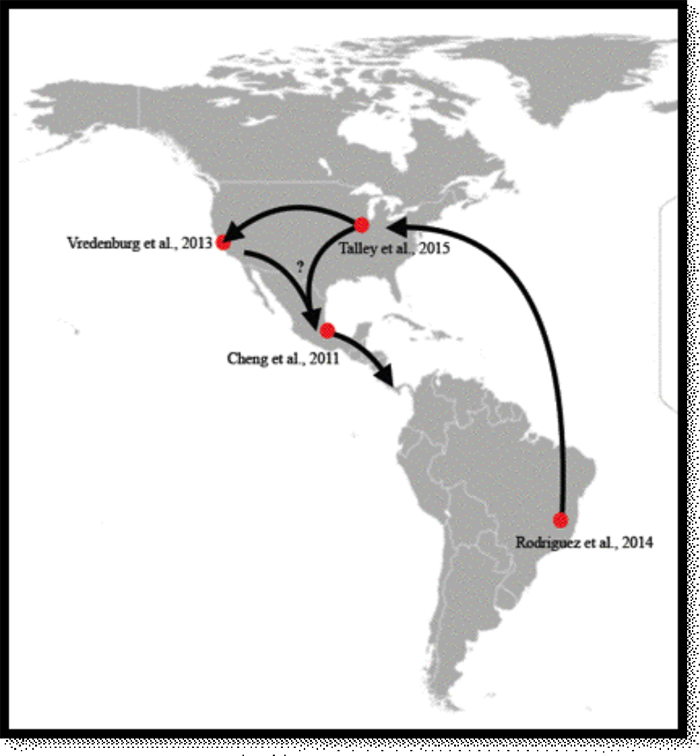
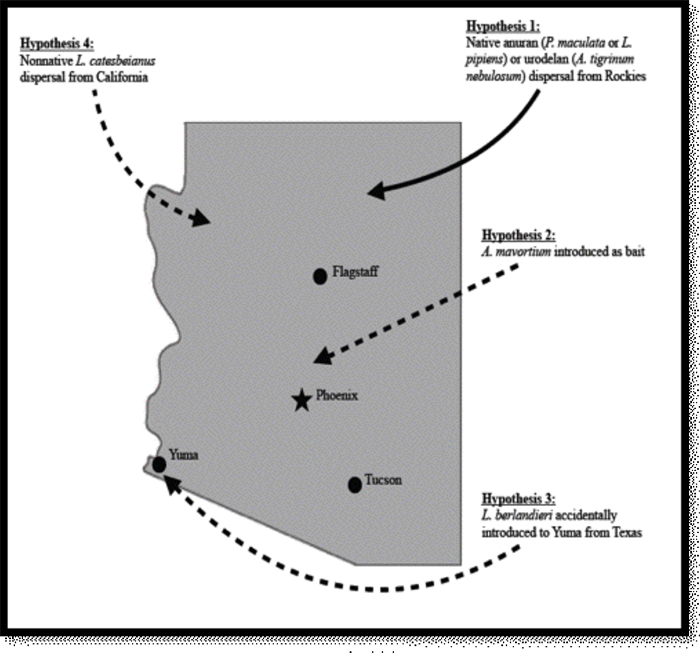
how Bd may have spread through the Americas

How Bd may have spread to Arizona

What has been the most exciting discovery?

As we reviewed recent research conducted by other scientists we were intrigued to learn that this fungal pathogen has a very complex history. Unraveling the history of this extremely deadly amphibian disease is made even more moving as amphibians are the most threatened Class of vertebrates on the planet (IUCN Red List Report 2015). This information paired with recent research indicates that amphibians are experiencing extraordinarily high extinction rates currently than they have in the past. We find this information extremely motivating, as we’d like to conserve amphibian biodiversity for the well being of ecosystems and for our future generations.

What are some challenges you have faced and how did you deal with them?

The biggest challenge we are currently facing is obtaining funding to conduct this important project. The scientific field as a whole has been experiencing a shortage of funds to carry out extremely important research projects, and our field is no different. To combat this issue, we are currently exploring new avenues to fund our research endeavors. This is where the crowdfunding campaign (https://www.instrumentl.com/campaigns/history-of-a-deadly-disease-in-arizona-amphibians/) comes into play. We are trying to reach out to our community more directly and get them engaged with our project. We’d like to communicate the challenge we, as scientists face, as well as the challenges amphibians are now incurring.

How do you reach your targeted audience?

Is it through your website, exhibitions, advertising or social media or another route? Which is most effective and why?

We are exploring a variety of options to engage our audience. We have been reaching out to our close colleagues, research and herpetology community directly through word of mouth and email to generate support for our project. Additionally, we have also used social media (Facebook and Twitter) to gain support for our research project. Both of these avenues have provided support for our project but we’d like to reach more people. To do this, we are contacting people and groups located within Arizona to convey that this project will directly impact the amphibian biodiversity of our state and in other parts of the world.

How do you keep the audience engaged over time?

We’ve created a Facebook group (https://www.facebook.com/groups/905234229573944/) to keep our audience up to date on the progression of our research project as it’s being conducted. This will keep our audience up to date on the current status of our project and the exciting discoveries we’re making. In addition to our Facebook group, we are also planning to present the results of our study in a scientific journal article and present this information to our community in a series of talks.

What can we do to inspire the next generation to want to help the environment and the wildlife?

The information we gain from completing this study will directly lend to the construction of effective amphibian biodiversity conservation strategies. Without the help from our next generation we are at risk of losing much of the amazing amphibian biodiversity on our planet. The Frogs Are Green organization could be a wonderful partner in helping us to spread our project to its supporters. We feel that this organization can help reach a younger and broader audience than we’ve been able to reach thus far. In order for the meaningfulness of our research to be effective we need our next generations to know about the wonderful and beautiful amphibian biodiversity our planet has to offer.

What can people do to help? Donate and/or share to your cause/work?

We would be most appreciative if individuals would pledge to share our campaign with friends and colleagues using social media. We hope to reach as many people as possible because we feel the current state of our planet’s amphibian biodiversity is at a critical point. As a community we need to act now to preserve these species to maintain healthy ecosystems and for future generations. Sharing our campaign would help us reach our goal however we would be extremely thankful if people would also donate to our project so we can conduct this extremely important research.

10/20/15

Frog color patterns and the lack of color on the ventral surface

Frogs are a component of an exclusive cluster of the animal realm that have a part in the subtle equilibrium of both the ecosystem and the food chain. Frogs can be seen more or less any place apart from Antarctica. The majority of frogs are found in tropical areas and more frogs are found in the hotter countries. There are approximately 4,740 species of frogs on the planet. They are in fact remarkable creatures that come in a huge range of sizes as well as colors.

Frogs generally eat insects such as flies, as well as, worms and small fish. In some cultures, frogs are believed to bring good luck. Noticeably, some frogs, such as the poison dart frog, have an adequate amount of toxin in their miniscule bodies to take the life of a human being. Some species of frogs are capable of changing their skin color, and a few of them have a similar skin color as their environment.

By liz west (leopard frog2) [CC BY 2.0 (http://creativecommons.org/licenses/by/2.0)], via Wikimedia Commons

By liz west (leopard frog2) [CC BY 2.0 (http://creativecommons.org/licenses/by/2.0)], via Wikimedia Commons

Without a doubt, frogs have several natural predators. Generally frogs are responsive to predators, which is why frogs put down a lot of eggs at a time. A few of the main predators of frogs are comprised of reptiles, like snakes and lizards. Some fish will eat frogs, and birds will also eat frogs. Frogs are always in danger of predators and unfortunately, humans also eat frogs. Luckily, frogs have developed many techniques for defending themselves from these predators.

The color patterns of frogs and their lack of color on the ventral surface, allow frogs to escape from predators. Usually, the underside of the frog is a lighter color than the top side for the reason that if the frog is hanging on top of the water and a predator is searching for a frog, the suns glare makes the frog difficult to spot. There are shady marks on the bottom and as a result it doesn’t expose the silhouette of the frog. Some of the frog’s upper side is darker since when swimming in the underneath of a dark pond, so it coordinates with the bottom.

By fa:User:Juybari (fa:File:Frog in Water.jpg) [GFDL (http://www.gnu.org/copyleft/fdl.html) or CC-BY-SA-3.0 (http://creativecommons.org/licenses/by-sa/3.0/)], via Wikimedia Commons

By fa:User:Juybari (fa:File:Frog in Water.jpg) [GFDL (http://www.gnu.org/copyleft/fdl.html) or CC-BY-SA-3.0 (http://creativecommons.org/licenses/by-sa/3.0/)], via Wikimedia Commons

Frogs have a huge range of skin colors and patterns, which indeed help them from their natural predators. Colors can aid as a warning to predators that the frog may be toxic. Some frogs have the ability to change the color of their skin to adjust their heat soaking up rate, which assist them in managing their temperature. Just like other creatures, a frog’s skin and its color can be a sign of poison. Eating a blue frog can be deadly. So, the blue colored frogs offer a sign that they are not edible.

By Michael Gäbler (own work (eigenes Werk)) [CC BY 3.0 (http://creativecommons.org/licenses/by/3.0)], via Wikimedia Commons

By Michael Gäbler (own work (eigenes Werk)) [CC BY 3.0 (http://creativecommons.org/licenses/by/3.0)], via Wikimedia Commons

Some studies have shown that the techniques for getting the better of a predator rely on the species of frog, but several of these resistances contain the utilization of color. It is found that some of the frogs have developed patterns on their backs that bamboozle or confuse aerial predators. The patterns cover up the shape of the frog; as a result, the predator doesn’t identify it as something safe to eat.

The largest parts of frogs are not dangerous, but there are some frogs that take advantage of poison as a self-protection tactic. Research reveals that some frogs have deadly poisons that could make a human harshly sick, or even kill someone. The toxic frogs such as the poison dart frog generally have brightly colored skin that stands as a caution. The toxic frogs have in fact very few predators. Frogs such as the barred leaf frog have light patterns on their legs and body. So, when the frog runs, these patterns will make the predator puzzled.

The animal kingdom makes use of a lot of tactics in order to save themselves from predators. Frogs are amazing and they use a lot of techniques to fool predators. Basically the upper surfaces of frogs are dark and go with their environment so that they are hidden from predators viewing them from above. The ventral surfaces of most of the frogs are normally a light color so that it will be disguised against the lighter sky while observed from underneath.

On land, a frog’s enemies will attack them from above and therefore, the color on its upper side serves as concealment. In water, the frog is susceptible to assault from below. For the most part, frog’s ventral surface is seldom uncovered to the sight of predators, so these surfaces don’t require camouflage. Frogs have a variety of patterns and colors that protects them from natural predators and harsh environments.

——–

Guest blog by Ligia Blake, who is a freelance blog writer and works for essayscouncil.com, a custom essay writing service with a passion of helping out students.

10/7/15

Does Fracking Threaten Drinking Water?

By Tim Evanson [CC BY-SA 2.0 (http://creativecommons.org/licenses/by-sa/2.0)], via Wikimedia Commons

By Tim Evanson [CC BY-SA 2.0 (http://creativecommons.org/licenses/by-sa/2.0)], via Wikimedia Commons

There is a lot of debate about fracking in the United States right now. There are valid arguments and scientific studies on both sides of the argument. This can make it hard to figure out who’s ultimately correct. On one hand, environmental activists argue that fracking is responsible for the pollution of drinking water. They point to the large number of chemicals used in the process of fracking, and make the point that some of these chemicals must be leaking into the watershed.

On the other hand, groups in favor of fracking point to the numerous safety precautions taken by drilling companies. These companies are regulated by a series of laws intended to protect the environment and local drinking water. Recently, defenders of fracking have been given another piece of evidence that is giving them a solid platform to backup their stance with.

That piece of evidence is a recent EPA (Environmental Protection Agency) report. In the report the EPA states that fracking does not threaten local drinking water supplies. The report took place over four years and looked at fracking activities across the United States.

The EPA concedes that in a few cases fracking wells have been responsible for contamination. However, they point out that these cases are few and far between. In fact, in cases where contamination has been detected, it almost always happens at wells that are violating one or more federal safety guidelines.

Fracking companies are also quick to point out that the chemicals they shoot into the ground are injected well below the watershed. In most places the watershed rests at about 2,000 to 3,000 feet. The wells that fracking companies drill go well below the watershed, up to depths of 9,000 feet. That means that these chemicals stay down in the ground, as they cannot go against gravity, and transition thousands of feet up to the watershed.

Companies also take extra precautions to preserve the watershed. All wells that are drilled have an additional amount of protection near the surface. Large amounts of concrete are poured around the fracking well closer to the surface, just as an extra precaution against any leaks.

All of these precautions protect drinking water from contamination. By following federal regulations and reinforcing wells near the surface, fracking companies strive to make their wells as secure as possible. These precautions are surely one of the reasons that the EPA concluded that fracking does not contribute to the contamination of drinking water.

However, no industrial process that uses as many chemicals as fracking can be completely clean and contamination free. Every year, rigs inject billions of gallons of fracking solution into the earth. Most of this solution is water and a small percentage is chemicals, lubricants and other compounds. Even though the solution is predominantly water, even just 2% of a billion gallons means 20 million gallons of pure chemicals.

One of the problems with fracking is that a majority of this solution is left behind in the earth. Depending on the well, only 30 to 50% of the solution used in fracking is recovered from beneath the ground. That means that every year a nearly unimaginable amount of polluted water is being left underground.

Problems also arise when that water is above ground. The fracking solution is usually stored in large tanks and ponds. Unfortunately, these storage areas are prone to dangerous spills. When fracking solution spills above ground, two things happen.

First, the solution sinks into the ground. Since thousands of gallons can spill at one time, this can add up to a significant amount of spilled solution. This water can sink down into the watershed. There, it gets mixed with clean water and is eventually used for drinking water.

The other problem associated with fracking solution spills happens when that water leaks into a local stream, river, pond or lake. When this happens the solution is carried off and it becomes mixed with pure, fresh water. This is a big problem because this type of leakage cannot be controlled. Once fracking solution leaks into a river, for instance, little can be done besides warning local residents about the danger.

More than anything else, there is one law associated with fracking that is alarming when it comes to the quality of drinking water. Fracking companies are exempt from the Clean Water Act and Safe Drinking Water Act. That means that their activities aren’t regulated by two acts which are explicitly designed to protect drinking water.

One of the larger problems with the question of fracking is that neither side has enough science to entirely disprove the other’s arguments. People who support fracking point out that spills are rare and many precautions are taken to protect drinking water.

Environmental activists argue that every year, fracking rigs use millions of gallons of potentially hazardous chemicals. Furthermore, they argue that by leaving these chemicals in the ground, fracking companies are risking watershed contamination.

Ultimately, the best way to solve the question is by doing your own local investigation. If you don’t live near a fracking rig then it’s likely you have nothing to worry about. If you do, you can take water samples and have them sent into the EPA for analysis.

It’s as likely as not that these samples will be fine and your drinking water is safe to drink. On the other hand, if there are chemicals present, you’ll be able to research them and discover if they potentially came from a fracking rig. Once you know what’s in your water, you’ll be able to take steps. Buying a water filter or filing an EPA complaint are all valid options.


John Davis writes for YourWaterFilterGuide.com, a site dedicated to helping everyone find clean, safe, drinking water.

Sources

http://www.nrdc.org/energy/gasdrilling/

http://www.sourcewatch.org/index.php/Fracking_regulations

http://www.wsj.com/articles/fracking-has-had-no-widespread-impact-on-drinking-water-epa-finds-1433433850

http://www.rt.com/usa/study-claims-fracking-safe-324/

http://cfpub.epa.gov/ncea/hfstudy/recordisplay.cfm?deid=244651