02/9/14

Enhancing Your Eco-Friendly Garden to Attract Frogs and Toads

Guest post by Jeriann Watkins

There are a few different reasons you might want frogs and toads in your garden. They do a great job of keeping bugs away. They’re fun to watch after rainstorms when they hop in puddles and through wet grass. They serenade you to sleep at night (ok, that may be a bad thing, depending on whether you like croaky serenades).

As much as you may like frogs and want them in your yard, you should never take it on yourself to place them there. Frogs do not do well when removed from their habitats. Also, you want to be sure that your garden is home to native species, not invasive ones that will do more to harm your private ecosystem than help.

The best way to attract any wildlife to your garden is to emulate what the land would do itself. Trees, shrubs, bushes, and vegetation that would normally grow in your area are most likely to attract native insects, which will in turn attract frogs and toads.

To the human eye, frogs are pretty unassuming. Some people don’t like the slimy appearance. Whatever your opinion, you probably don’t see them as vicious. But they are fierce predators with large appetites, so if you have the environment and the bugs, they will come.

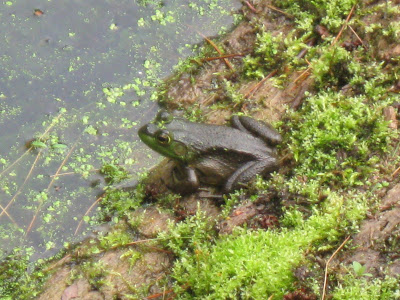
Courtesy of New England Nature Notes: Image copyright Daniel E. Levenson 2013.

Courtesy of New England Nature Notes: Image copyright Daniel E. Levenson 2013.

Choose plants that retain moisture and offer shade. Frogs love cool damp environments, mostly out of necessity. Mulch and compost piles are also great for attracting frogs. They’re a).moist b). full of bugs and c).dark.

There are a lot of plants that are poisonous to frogs. If you have a vegetable garden, you’ll want to avoid planting these items near your pond or areas where frogs are likely to congregate:

Eggplant, Rhubarb, Snowpeas, Potatoes

For landscaping and flower gardens, you’ll want to avoid:

Honeysuckle, Azalea, Hydrangea, Daffodils, Hyacinth

For more info, check out this more exhaustive list of plants that are poisonous for amphibians and reptiles.

Frogs and toads are important for the environment, and are great for maintaining healthy eco-systems. While displacing wildlife to improve your garden will always backfire, you can enhance your garden and landscape to attract creatures that do need food sources and shelter. It’s a symbiotic relationship in that you’re helping them so they can help you.

01/20/14

The Caretta Research Project

Guest post by David Veljacic

The Caretta Research Project is an organization working with loggerhead sea turtles nesting on Wassaw Island National Wildlife Refuge, just off the coast of Savannah, Georgia. The project takes volunteers weekly throughout the nesting and hatching season and immerses them in the fantastic world of wildlife fieldwork, giving them a great opportunity to work hands on with the animals.  I was fortunate to have had the honor of working with this group for seven years, three as a paying volunteer for a week each season, and four as an assistant island leader, working the entire season.

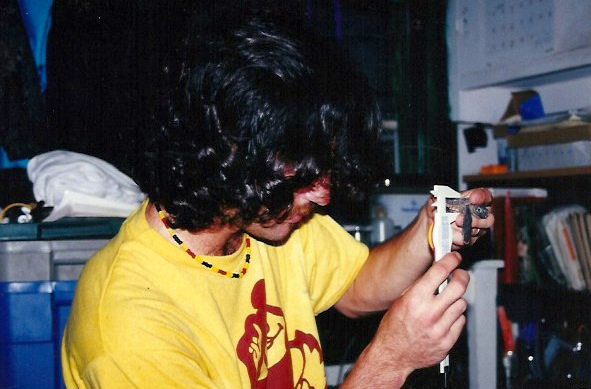
David Veljacic measures turtle

Here is an entry from one of my work “days.”  *I’ve added explanations where necessary*

July 3/4

7:30 am – we just got in from our dawn run; Lefty  *named so as her left rear flipper was missing; this prevented her from digging her own nests* came up and started nesting at 5:45am. Mike  *assistant director at the time*, and I had Rachel (volunteer) help Lefty dig the nest this time. She was SO excited, that’s Rachel not Lefty, Lefty was oblivious. I love having the volunteers do stuff, it’s such a happy thing. It’s time for bed.

10:30 am –got up, marked and GPSed nests on the South end; Kris  *director of the project* went North and took the few crew members who were awake birding, they saw the oyster catchers!, AND, AND the wood storks are at the dyke!

Body Surfing! Awesome!

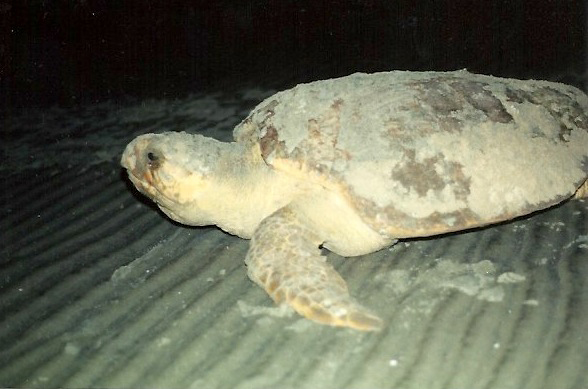
loggerhead sea turtle

Found freshly dead stranded loggerhead 15 paces north of marker 63. Did a necropsy; 56cm, male, probable shrimp net kill. I have it buried and screened at marker 63. The shrimp boats are everywhere right now, dumping their by-catch for it to wash up on the beach. It’s terrible (unless You’re a ghost crab, then You’d be rollin’ in it!), all these poor little fish and things just dead. Not to mention the pung of rotting animals, I know I said, “not to mention”, but I’m a rebel, at least here, on paper. haha.

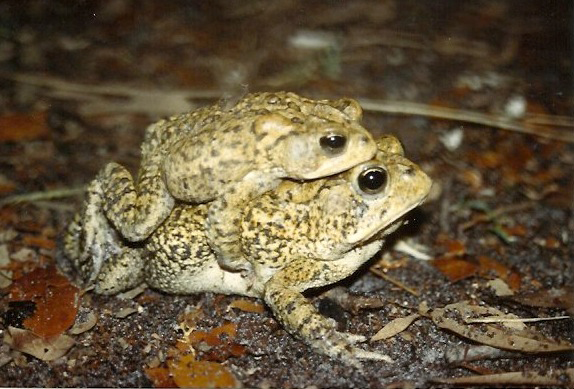
two frogs together

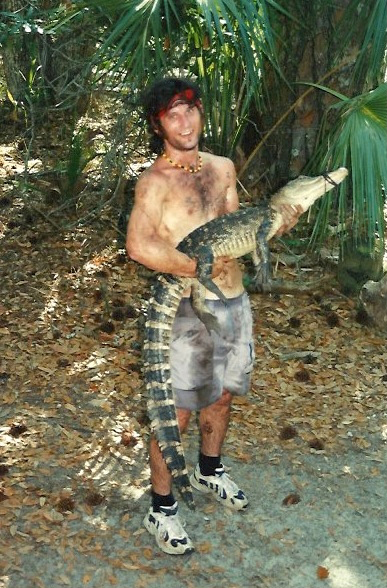
Bruce  *caretaker* came by, there was a gator in the ditch pipe beside his house that needed moving. Toughest catch so far! It’s not big, but it wedged itself good’n’tight in the pipe, took Mike and me ‘round half and hour to get it out so we could catch *and relocate* it.  5’ 3”. Showed the crew, then took them to let it go in South Pond where it can’t cause any trouble. The toads are EVERYWHERE! With females dragging clumps of squabbling males clinging desperately to them. . . and the constant trill, it’s just so amazing. Found a bat caught and spun up by a golden silk spider (insert full body shivers here). Rolled some logs, caught a couple of ground skinks, giant eyed click beetles,  AND, AND a scarlet snake! Found a king snake predating a yellow belly slider nest.

David Veljacic with alligator

So . . . shortly after arriving back at the cabin we noticed that we were covered in seed ticks. Covered! I’m surprised that I have any blood left; but, after sitting and picking at ourselves, and each other monkey style I think we’re OK.

8:45 pm – time to get ready to cruse the beach for lovely ladies  *turtles.*

11:25 pm – Holy Carp! First two runs, swamped! Both ends! Back at cabin for quick break. COFFEE!!! SSK 416 dry ran  *a dry run is when a turtle crawls up the beach but chooses not to nest for various reasons* twice, both again, between markers 10 and 13  *markers are spaced 100 meters apart and are used for locating nests, among other things.* I got my favourite neophyte of the season, SSX 474 / SSX 475 again, that’s three for three for her and I this season, will we see each other again? Had 5 nests on my end and 4 on Kris’, we both had to leave people at turtles to carry on patrolling, thank goodness Bev, Joe, Tom and Mary-Ellen (volunteers) know what to do. Great week for the new team members too!

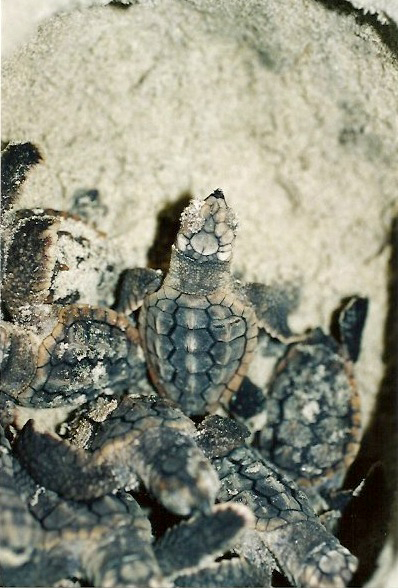
baby sea turtles

11:45 pm –  Oops, time to head back out.

6:35 am – Just in from a busy night, SSK 416 dry ran three more times before nesting 23 paces north of marker 11. My crew got 8 nests, we had to relocate one with 98 eggs, it was laid below the high tide line; Bev digs a mighty fine nest. Kris’ crew got 9 nests, 0 dry runs. 17 nests in ONE night! Kris got The Holy Roller *named due to a hole in the right rear margin of her carapace*

Now for a quick cup of coffee then I’m taking Mary-Ellen, Bev, and Joe to the Fish and Wildlife hut to do bird banding with Peter *the Fish and Wildlife Ranger in charge of the refuge.*

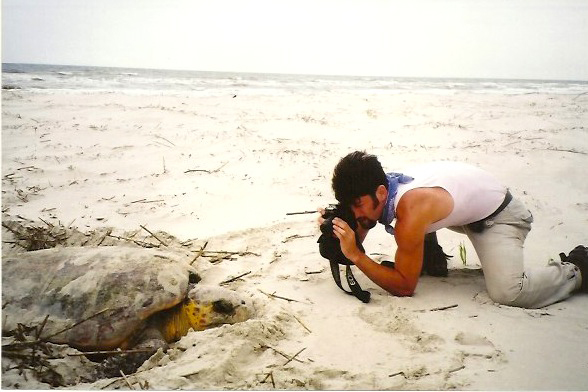
photographing sea turtles

12:20 pm – Back from banding. How about those horny (if You have found this diary and, for some reason, decide to read it to a small child, please feel free to substitute “amorous” for “horny”) dolphins off the Fish and Wildlife dock?!! I wish that I had taken my camera this morning, they were incredible! There were five of them leaping and cavorting about, with their bright pink bellies and their pointy red rockets waving about like flagpoles. They were at it for a long time before moving out of sight.

We banded 3 male and four female painted buntings!, a pair of blue birds, blue jays, cardinals, Carolina chickadees, white-eyed vireos, a black and white warbler, Carolina wrens (my faves., they’re so feisty!), AND, AND I got a humming bird on my last run! It was so tiny and delicate, what a beautiful wee thing. I brought it to Peter not knowing that he doesn’t band hummers, I wish I’d known, would have saved the poor little thing a walk. Oh yeah, I almost forgot (like I really could), we found a small Eastern diamond back on the trail!! Paul is coming next week to specifically band painted buntings and would like my help. Are You kidding me?! I’m in!

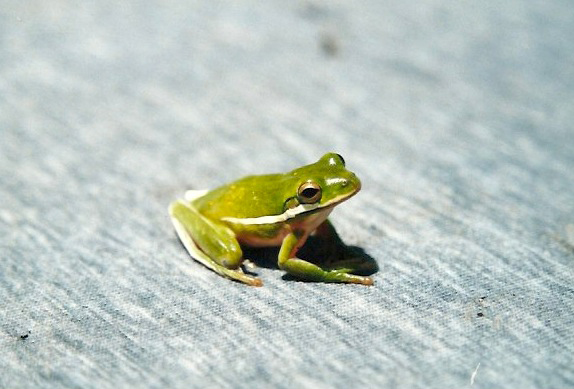
Um . . . why are there 6 squirrel tree frogs in my coffee mug?

Time for bed.

frog by david veljacic

01/14/14

Mid-Winter Bullfrog Rescue

I’m so pleased to share a story that comes by way of Lexington, Massachusetts. Jack Stearns, a scientist and Meteorologist, has rescued a bullfrog in the middle of Winter. Below are the details, correspondence that I shared with The Wandering Herpetologist, Sara Viernum, who offers her advice.

Dear Susan,

I hope you can help me with some information.

Where my wife works in eastern MA there is a large garden wall.  Yesterday one of her workers came in and told her there was a frog on the sidewalk. My wife went out and there was a huge bullfrog on the sidewalk, sitting half in of snow.  By tracing back his path he saw the frog had come out of a huge crack in the wall.  We have had brutal weather the last few weeks with temps as low as -10F with heavy snow.

Because the frog would not survive where it was, (i.e a busy sidewalk and a street treated with chemicals) one of my wife’s coworkers placed the frog in a container, using rubber gloves and brought him home. We are frog and toad people so we are very familiar with their needs and habitats, however a frog appearing on your doorstep in the heart of winter is a new one!

The frog is OK and looks in good shape and very plump. He had no signs of any injury, his eyes are clear and he has a moist skin and is very lethargic, which I would expect being in semi-hibernation.  I placed him in cold water up to his jaw and put him in our coal cellar which is at a constant 34 degrees since I didn’t want to warm him up to wake him up.

Obviously everything is frozen solid so the only choice I have is to keep him where he is.  I looked on him this morning and he definitely is in a hibernation state and you see he is breathing very slowly.

Is there anything else we should be doing until spring arrives?  There is a small pond near our house which is full of bullfrogs and eventually we want to place him there.  The pond has a small current and I know the frogs burrow into the mud there to escape the current which is stronger in the winter.  Right now our frog would be in no state to burrow into the mud.

I hope you can help.  This guy is huge and a lovely specimen and we would hate for anything to happen to him.

Thank you, Jack Stearns, Lexington, MA
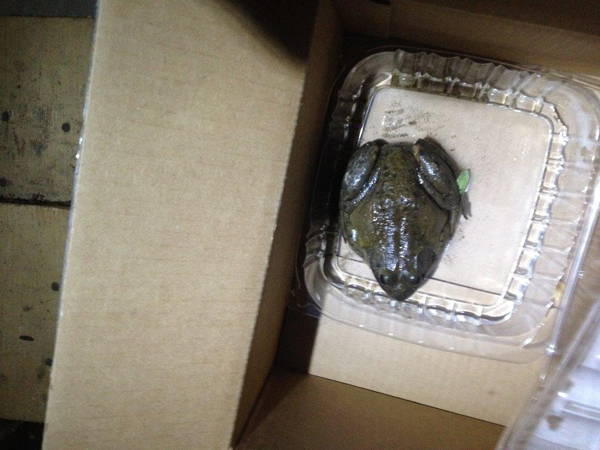
bullfrog in lexington MA

Jack,

Susan with Frogs Are Green forwarded me your email about the bullfrog.  Bullfrogs usually hibernate in the mud in a pond in the wild.  Offering your frog wet/moist soil to burrow into might help.

A side note: Bullfrogs are known chytrid fungus carriers.  It’s usually not a good idea to relocate any amphibian to another wetland because of the risk of spreading a disease to another population.  But I know that allowing an animal to perish instead is not a good option either.  I would suggest contacting a local nature center to see if they would be interested in taking the frog.

Thanks for being a friend of amphibians.

Cheers!

Sara E. Viernum

The Wandering Herpetologist
http://www.wanderingherpetologist.com
https://www.facebook.com/thewanderingherpetologist

________________________________________

Sara,

Thank you for response.  I will introduce some moist soil into his container.  He seems to be doing OK so giving him the soil may increase his chances of survival for the next couple of months.

I did not know about the fungus thus I will not put him in the pond near our house in the Spring. The last thing I want is to start an epidemic in another pond. The frogs in that pond are huge and it is fun to hear them croak in the late Spring and early summer and I don’t want to jeopardize those wonderful sounds.

Where our frog was found by my wife on the sidewalk, is not too far from a small pond near the building where my wife works.  It is the only body of water anywhere near the area and had bullfrogs in it.  Would it be OK to release him back to that pond since that is where he likely came from?

Another alternative is if I can’t find a local nature center, I have very small manmade pond in my Hostas garden.  Maybe he would be happy there in the warm weather, maybe he could control my slug and bug problem.

I will keep you posted on our progress.

My wife and I have always been partial to frogs and toads. Where we spent summers on Chatham, MA the house bordered a pond that was full of Spring peepers in the spring and sounds of Green and Bullfrogs in the summer.

Being a scientist myself (Meteorologist), I am well aware of the environment around me and that we all are stewards of this Planet.

Thanks again, Jack
________________________________________

Jack,

Thanks for considering the impacts of introducing the frog into a new population could cause.

I’d think releasing it in the pond nearest the location it was found would be fine.  But he would definitely help control insects in your pond.  The only concern would be him surviving in it next winter.  The pond would need to have enough debris (leaf litter, mud) and deep enough not to freeze solid for it to hibernate in.  
Best of luck.

Sara,

________________________________________

Susan and Sara,

Just a note on how Bartholomew is doing.  The name comes from a pamphlet printed in 1918 called Bartholomew Bullfrog.

In addition to the assistance I received from you two, I also have been getting help from a gentleman in Rockport, MA who oversees the Vernal Pool program in that town.

Right now the Bullfrog is in a large flat container filled with water with soil on one half of the bottom. Once he was transferred to the tank he took a few strokes then settled to the bottom on the end with no soil where he is definitely in a state of hibernation. He looks good and with a little bit of luck we are all set until Spring. Attached is a picture taken this morning.

He has become quite a celebrity where my wife works since most people there now have heard him being found and are curious on how he is doing.

Thanks again for all your help and I will keep you posted on his progress.

Jack
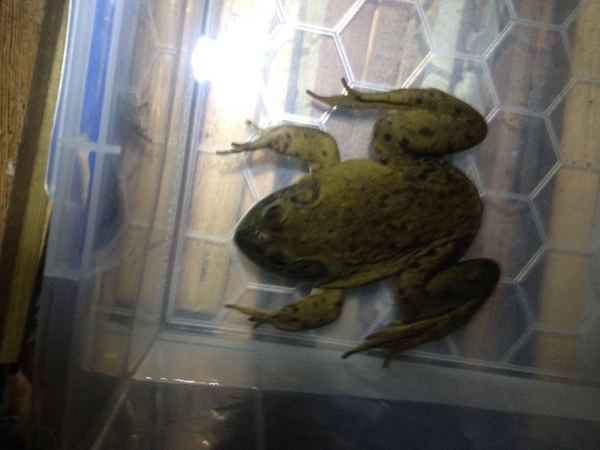
bullfrog rescued in winter MA

Update: 1.20.2014

Susan,

Bartholomew continues to do well.

He started to shed is skin so at the suggestion of Sara I moved him into another tank since she said that bacteria could grow in the dead skin and the water could become a little funky.

Moved him in on Saturday.  This critter is strong!  He is definitely healthy!

Then yesterday he did a sneak out. He managed to lift the corner of the tank top and climb out and went and sat in the corner of the coal room.

I told Sara about the sneak out and she told me that they are notorious escape artists.  She also said that he might be happier in a bed of wet soil.  I got some wet soil with no additives, fertilizers and the like in it.  I put him in that tank and we will see what happens.

With the colder weather moving in, temperatures which now stand at 39F in the coal room will definitely drop to near freezing the next few days and I am sure he will become even less active.

This frog is smart and he knows it!

Sincerely, Jack

11/17/13

Environmental Attorney and Amphibian Activist Talk Issues on Techno Granny Radio

Two weeks ago I was asked to talk about environmental issues on the Techno Granny’s radio show along with Tamar Cerafici, an environmental attorney based in New Hampshire. This show covered many topics under the title “10 Plus Technologies that will help you go green and conserve the environment.”

Some things we discussed:

  • Why frogs are threatened with extinction and the number of issues they’re facing
  • How industries such as paper mills are polluting the water which is affecting frogs and possibly humans
  • Why we should always use FSC (Forestry Stewardship Council) certified paper
  • Can technology really help you go green? Can an attorney really be an environmental advocate?
  • Working in the cloud and how this technology is saving the environment, such as Dropbox, Google docs, iCloud and Evernote, because you can use and access from anywhere
  • How to have a paperless office and how courtrooms are embracing this new technology

11/4/2013 – Link to Techno Granny Radio Show – Environmental Attorney, 1 Activist, 10 Green Technologies

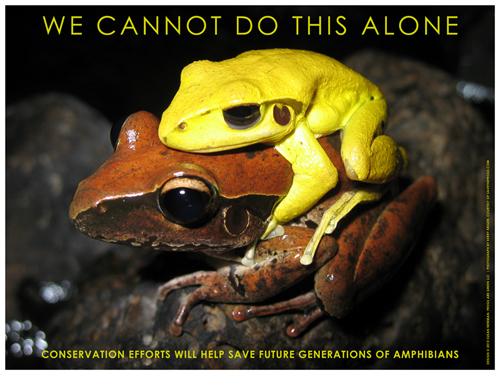
Frog conservation poster

Tomorrow morning  (11.18.2013) we will meet for round 2! Tamar and I will join the broadcast again at 10 am EST, after the Techno Granny (Joanne Quinn-Smith) received so many comments asking us to talk about additional topics.

Some of the topics to be discussed:

  • The effect pesticides have on the environment (pollution): water, animals, soil, humans
  • Atrazine: The 21st Century’s DDT (Roundup)
  • Chlorothalonil is the most commonly used synthetic fungicide in the USA, commonly applied to peanuts, tomatoes and potatoes. (what are we eating?)
  • Alternatives to using Pesticides, Green Farming?
  • Organizations talking about this and trying to spread awareness. (Save the Frogs, National Pesticide Information Center, U.S. Fish & Wildlife Service, Environmental Protection Agency and Frogs Are Green)

Resources for more information:

http://npic.orst.edu/envir/

http://www.fws.gov/contaminants/Issues/Pesticides.cfm

http://www.epa.gov/pesticides/ecosystem/

http://savethefrogs.org

11/3/13

2013 Kids Art Contest Hosted by Frogs Are Green

Calling All Kids ages 3-12! – The 4th annual 2013 Frogs Are Green Art Contest

Contests officially opened on July 20th, 2013.

Kids art contest 2013
Last year we received over 260 entries from kids around the world, and the year before over 500! As always, we are so impressed by kids’ creativity and imagination and the variety of ways they express themselves: in crayon, watercolor, colored pencil, clay, 3D sculptures, dioramas, murals, mosaics, and mixed media.

We will award winners based on age in these age groups: 3-6, 7-9, 10-12. We also added a few new categories last year, Best 3D, Most Unusual Artwork, best Environmental, and this may expand depending on what we receive. The 1st place winners will receive a Frogs Are Green Poster of their choice from our store. All kids receive a certificate via download on our site.

Our 2013 campaign to help frogs! As part of the campaign we’re excited to announce the 4th FROGS ARE GREEN art contest for kids.

Contest theme:

How Will YOU Help Save Frogs and Amphibians!

Your artwork can be about frogs/amphibians and how you (or all of us) can help them.

Deadline for submissions is December 15, 2013 and the winners will be announced January 21, 2014. The winners will be featured in a post.

We’re looking for drawings, paintings, sculpture, collage, or whatever format helps you express yourself.

This year we have a new contest area using Flickr, where you can enter yourself.

There are three different group pools, so be sure to enter your photo/artwork into the right group pool.

Frogs Are Green 2013 Kids Art Contest

For the Kids’ Art Contest, you must add a caption, with your Name, Age, and Country (and a caption if you like) or your submission will not be added.

Please print out the attached flyer to post in your neighborhood schools.

We can’t wait to see your artwork!

10/16/13

Feeding the Birds for Fall Migration

Guest blog by Ernie Allison

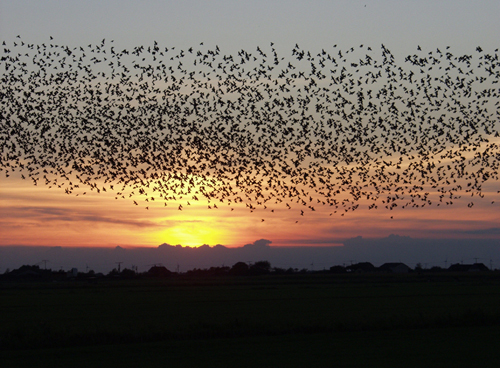
bird migration in sunset sky

Fall migration is a beautiful time to watch birds form large flocks and travel conspicuously across the land. This is a time when birds need a lot of energy, and will actually change their diet to increase their calorie intake. There are a lot of things we can do to help.

Before I start, no my friend, feeding birds does not usually affect bird migrations. Now that we have that out of the way, here are a number of things everyone should know about birds and bird feeding in this season.

Squirrels are Greedy Hoarders

If you’re planning to feed birds this fall, your greatest enemy is the evil squirrel. These cunning critters can figure out how to break into pretty much any feeder and they will just take it all and hide it away. Squirrels don’t know how, or simply don’t care, to share with anyone or anything. Don’t let yourself be moved to pity by their fluffy tails and cutesy mannerisms. They probably all have several winters worth stored up already. Invest in a squirrel proof bird feeder so that the birds have something to get them to the south.

Birds are Independent

You don’t need to worry about accidently domesticating a bird or causing dependence. Birds prefer to find their own favorite treats, especially insects and berries, and will supplement, not replace their diet, with the seeds and fats you offer in your feeder. So feel free to offer a way station on the long journey to their winter homes.

Birds are not Handicapped

For whatever reason, some people are afraid that birds just cannot handle eating sticky goo, like peanut butter. That isn’t true. Birds are perfectly capable of eating delicious slop, just like everybody else. In fact, the fat and protein in peanut butter is exactly what birds need to help them survive the taxing fall migration, so don’t be shy about mixing peanut butter in with your bird seed.

What you should be careful about is providing the regular over salted peanut butter that we enjoy so much. That isn’t good for anyone, us or the birds, so get something with less additives.

Easy feeding

You don’t even have to go buy a bird feeder to be helpful. After breakfast, grab all the leftover crumbs from your cutting board and plates, soak them in the leftover bacon grease, and throw it outside. The birds will find it and be glad for it.

Be messy in your garden. Let the leaves lie for a while so the bugs come and live in them for the birds to find and eat.

As a special bonus, birds will remember your location for next year, and return for another taste, so you can get another good look and maybe a nice picture.


Ernie Allison

About Ernie Allison

Ernie Allison lives in beautiful Idaho. He strongly believes in wildlife conservation and spreading awareness to issues concerning birds and nature in general. He writes extensively about nature all across the internet, and you can find his other works here.