10/3/13

Protecting the Unique Frogs of Andasibe, Madagascar

Devin EdmondsGuest post by
Devin Edmonds,
Amphibian Conservation Director, Association Mitsinjo

It doesn’t get much better than a going into the forests of Andasibe at night.  There are leaf-tailed geckos, mouse lemurs, sleeping chameleons, and frogs. Lots of frogs. More than 100 different species, in fact, which have been identified in the surrounding forests. This is more than a third of all described frog species on the island.

Most of these frogs are nocturnal, but a few are also active during the day, like the Critically Endangered golden mantella (Mantella aurantiaca), which is only found in a small area near Andasibe in east-central Madagascar.

The conservation organization Mitsinjo works in the area around Andasibe, and is composed of 53 members of the community.

Our activities include:

  • Habitat management
  • Research
  • Nature-based tourism
  • Reforestation
  • Captive breeding
  • Environmental education

A group of our projects are targeted specifically at monitoring and addressing the threats our unique local frog species face. This includes the development of Madagascar’s first biosecure captive breeding facility capable of establishing assurance survival colonies of threatened amphibians.

Additionally, we conduct surveys to monitoring for declines and population changes. This activity compliments participation in a nation-wide early detection plan for the chytrid fungus Bd, the devastating pathogen contributing to alarming amphibian extinctions around the world. Fortunately, so far we have not detected Bd in Andasibe and reports elsewhere in Madagascar remain highly doubtful and unconfirmed.

Recently, Mitsinjo joined forces with the NGO Madagasikara Voakajy to contribute to the national conservation strategy for the golden mantella. Each month, we monitor three breeding sites at Torotorofotsy Wetland. This area is under tremendous pressure from artisanal gold mining, slash-and-burn agriculture, and charcoal production. Our habitat patrols help to ensure the breeding sites for this highly threatened amphibian remain intact.

To learn more about our organization like us on Facebook (www.facebook.com/Mitsinjo) and visit our website www.mitsinjo.org. For more information on amphibian conservation in Madagascar see www.sahonagasy.org
 

Andasibe Village

Andasibe Village, Madagascar

boophis luteus in amplexus

boophis luteus in amplexus

Captive breeding facility - Mitsinjo

Captive breeding facility - Mitsinjo

Captive breeding facility inside view - Mitsinjo

Captive breeding facility inside view - Mitsinjo

Mantella aurantiaca breeding site patrol at Torotorofotsy Wetland

Mantella aurantiaca breeding site patrol at Torotorofotsy Wetland

Mitsinjo swabs captive frogs for Bd

Mitsinjo swabs captive frogs for Bd

Mantidactylus species near Andasibe

Mantidactylus species near Andasibe

Mantella aurantiaca of Mitsinjo

Mantella aurantiaca of Mitsinjo

Andasibe-village thumbnail
OLYMPUS DIGITAL CAMERA thumbnail
captive-breeding-facility-mitsinjo thumbnail
captive-breeding-facility-inside-mitsinjo thumbnail
mantella_aurantiaca_breeding_site_patrol_at_Torotorofotsy_Wetland thumbnail
mitsinjo_swabs_captive_frogs_for_Bd thumbnail
mantidactylus_species_near_Andasibe thumbnail
OLYMPUS DIGITAL CAMERA thumbnail

08/21/13

7 Ways To Make Your Garden A Paradise For Wildlife

Guest post by Ricky Peterson

One of the joys of having a garden in summer is being able to observe wildlife close up. Whether you’re a bird lover or a fan of butterflies, we can all enjoy watching our feathered, furry and many-legged friends in our own back yard. But how can we attract them to our garden?

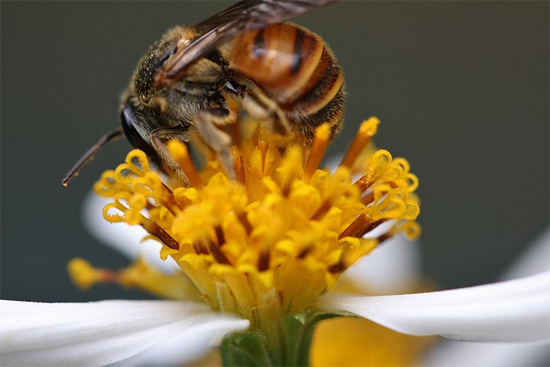
bee on flower wikicommons images

The key to making your garden attractive to wildlife is creating a comfortable habitat for them. Here are a few tips to do just that:

Home, tweet home

We all need somewhere to hang our hat, and animals and insects are no different. Set up a bird house in the spring, and you might just be rewarded with a family settling down for the summer. But birds aren’t the only ones who need somewhere to stay – bee houses are also available now, which is great news for our declining bee population.

Also, for an incredibly easy to set up and inexpensive shelter for a range of wildlife, simply lay some logs in a corner of your yard – and don’t bother tidying up fallen leaves. This will provide a home for lots of insects, which could help to eat pests as well as providing a tasty treat for birds. Also, mammals can use the leaf cover to hide food during the winter.

Food, glorious food

Speaking of tasty treats, you can help further on that front. There are lots of mixes of birdseed available, but if you’d like to try to attract a certain type of bird or other animal, try the following.

  • Mealworms – house sparrow and shrews
  • Peanuts – great spotted woodpecker and badgers
  • Fat balls – blue tit and great tit
  • Nyger seed – siskin and goldfinch
  • Sunflower hearts – bullfinch
  • Dog food – hedgehog
  • Root vegetables – deer


Think carefully about how suitable your garden is for wildlife before you try to attract animals there – are your neighbours as keen as you? Will there be busy roads that could cause danger?

Scrub up well

Ponds and birdbaths are a lifeline for many animals. As well as the fish who might live in your pond, birds can drink the water and use it to bathe, and of course frogs and toads will love the environment.

Blooming lovely

If you want to help the bee and butterfly population to thrive, it’s vital to have both early- and late-flowering plants so that our winged compatriots have plenty to feed on throughout the season. Try some of the following:

  • Spring: primrose, damson and blueberry
  • Summer: chives, dahlia and hardy geranium
  • Autumn: common ivy, sunflower and strawberry tree
  • Winter: clematis, crocus and honeysuckle


Leave the lawn

Fed up of mowing the grass every week? You officially have a valid excuse for not bothering! As well as the wildflowers that may pop up, a long lawn is a great haven for lots of wildlife. Insects will love it in the summer, and it may come in useful over winter for hibernating mammals.

Of course, you don’t need to let nature take over completely
even just a small patch will make a difference

Toxic love

Chemicals are not the friend of wildlife – as well as killing off the pests, they can harm or even kill the predator. If you’ve used chemicals in your garden but want to cut back, have patience. If your garden is varied enough, the predators should keep the pests in check, but you need to allow time for the ladybirds to return before you go spraying those aphids (and killing off the ladybirds, too).

Live and let live

Most importantly, show the wildlife in your garden respect – even though you might not love the beetles, they have a part to play in its ecosystem. Remember, too, to treat the wildlife as wildlife, and try to limit human interaction with animals – becoming dependent on you could be dangerous for them.

Enjoy creating your own wildlife paradise!


About Ricky Peterson

Hi there! My name is Ricky, I write for Swallow Aquatics. I am a nature lover and I like to spend as much time as possible in my garden. I don’t grow as much veg as I would like, but I am lucky enough to have a wealth of birds and insects come visit!

You can visit Swallow Aquatics here. We specialise in pond supplies and accessories, which are ideal if you want to build a pond in your garden (another great way to attract more wildlife!).

07/19/13

Swimming Pool Becomes a Frog Breeding Pool

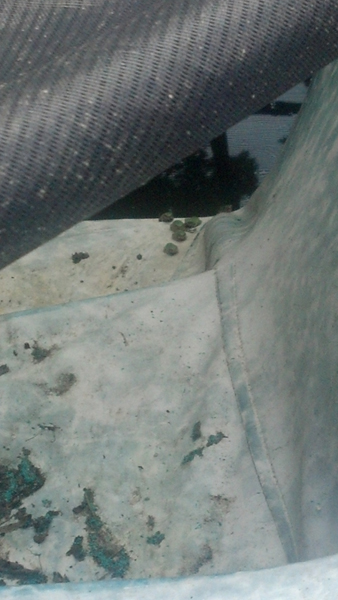
A frog loving fan, James, called the other day to report on what he discovered when he visited his Mother’s pool. It seems that during Superstorm Sandy, the covering of the pool ripped and since there was a separation the frogs began creeping in and under the covering. Since they hadn’t been to the home in a while, they didn’t know this was happening. Being back at the home now, there are thousands of frogs in different stages of development.

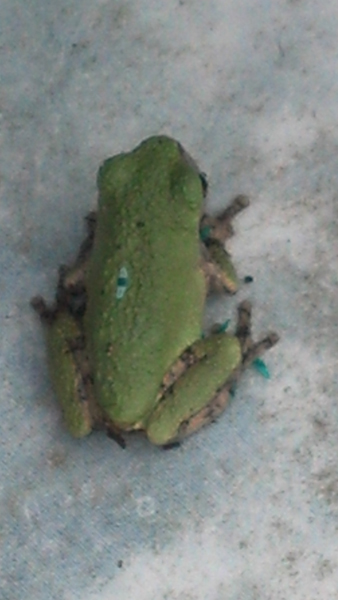
green frog in swimming pool

by James

I have noticed little tiny frogs sitting on the sides of the walls where the liner touches the ground. They all look so fragile and everything is complicated to touch. I just hope they realize the opening is there if they need to come out.

I did see one jump back from the concrete back into the pool onto the first step when he saw me. That’s how I took the picture. I wanted to put something in the water to float but you can’t throw things in because there are so many. I have to try and place it in but the water is so low. This is a job for specialists because if you use nets in the water you will get tadpoles in all different stages. I have never seen anything like it and the frogs that have developed are tiny. They can fit on the tip of your finger. that’s how big the frog is of the picture I sent to you.

I called Peta today but they were busy and couldn’t talk to me. If you were standing in front the of pool you would say “OMG.” You can’t tell in the pictures. When you are standing in front of the pool looking closely you can see them all.

I feel bad because there are tiny green ones sitting on the step and side of the pool and I’m not sure what their game plan is. I opened part of the liner in case they want to climb out.

I didn’t know frogs need to sleep on something so I suspected they might be on the steps since the water is low. When I looked at the steps in the pool I saw many almost developed in the water, some clinging on the side of the pool, and others were sitting on the steps.

I opened the pool cover in the corner where the steps are located to see if any of them climbed out. I was going to put a back wash hose in the water and lead it out to the ground so they can walk on it and out of the pool. i don’t know if this is a good thing to do because there aren’t any ponds around and people are always cutting their grass. plus its hard to even put anything in because there are so many and they can get hurt. If I put the back wash hose in then I would have to do it very slowly. They ones on the steps were all looking at me while I was trying to take their picture.

I sent his story to a few experts and here’s a response from
Keith Gisser
, Herpetologist, Herps Alive! Foundation

I would certainly call Wildlife Management. It is unlikely you are the only one. Having said that, this sounds like toads or (if they are bright green) gray tree frogs. There is a reason they all emerge at the same time and that is so that a few of them make it.

Moving these guys is pretty easy. I would use a fish net and a couple rubbermaid tubs with the water they are in. Just scoop ’em up – froglets in one, tadpoles in the other and get them to a suitable habitat nearby.

Do you have the same issue?

Do you have any suggestions that can help James?

swimming pool becomes breeding pool for frogs

07/14/13

Herps Alive! A Reptile Rescue Herpetologist Writes About Frogs

Guest Post by Keith Gisser

I know what you are thinking.

Why is a reptile rescue guy writing about frogs? They aren’t reptiles. And captive frogs don’t need to be rescued. Gators, boas, pythons, maybe even big monitor lizards and iguanas, sure. But frogs?

Herps Alive! The Interactive Reptile and Amphibian Experience, is a traveling educational herpetology program and display. We have presented in 36 states (primarily at college campuses, but also at libraries, festivals elementary and high schools). Now in my fifties, I did my first paid program at age 17,  and now my daughter a degreed Interpretative Naturalist, and my son, a marketing whiz, often travel and help me. We offer display programs and interactive lectures as well as classroom sessions, and have presented an estimated 3,000 programs since we started (we have worked some “real” jobs here and there).

As your reputation builds, you start getting calls to adopt animals. Usually they are pets that people can’t keep. Sometimes they are police seizures or animals from other unfortunate situations.  We have always accepted these animals in an effort to keep a good relationship with the museums, nature centers and law enforcement officials who contact us.

But in the last year or so, the rescue mission has taken on a life of its own.  We have been asked to take in dozens of animals. And for the first time, we began rehoming a few. As a result we are spinning off our rescue mission and working on moving it to a separate location, as we turn it into a charitable foundation.

But what about the frogs?

I have been fascinated with frogs my entire life. My career as a herpetologist probably began at age nine when I caught a toad. I brought him home in a rinsed out pickle jar. (That was 45 years ago when such behavior was acceptable. At the time they were also in the genus Bufo, not Anaxyrus) I have bred several species of frog in captivity and always include a discussion of metamorphosis in my educational programs.
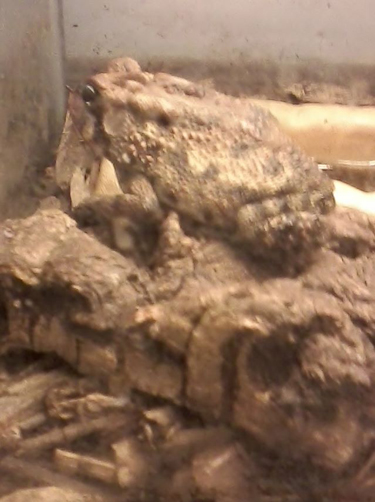
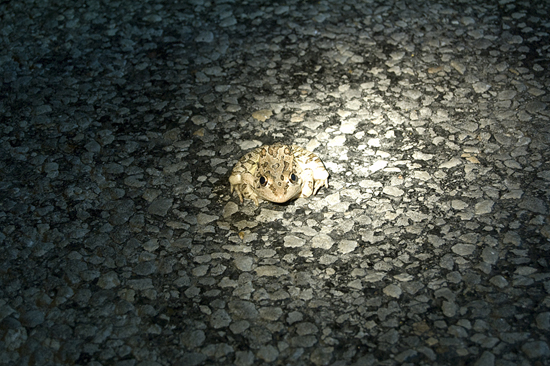
Southern Toad

Right now we have three frogs among our 150 animals.  Our Southern Toad (Anaxyrusterrestris) was living in a Carolina classroom after a student had brought him. He had been in captivity for too long to be released, so when we came in to do a program, the teacher asked if we could take him. Known just as The Toad, he eats crickets and small worms, as well as waxworms.

Beatrice is an African Clawed Frog (Xenopuslaevis) who was raised from a small size by my son’s ex-girlfriend. When she moved into a new home, she asked us to take her on. Beatrice was raised in a 10 gallon aquarium. When we tried to move her to a larger one, she went off feed and seemed generally unhappy. So back into the ten she went even though it really is too small for her. She loves her goldfish and nightcrawlers and eats anywhere from 10-30 a week. Unfortunately, her relatives have been taking a bad rap lately as they have been identified as the culprits that carried of the dreaded chytrid fungus.  It’s not really their fault. In everywhere except their African home, they were used as lab animals. They were used as part of a pregnancy test. The problem is not with them carrying the fungus, but rather with the irresponsible people who have released them outside their normal environment.
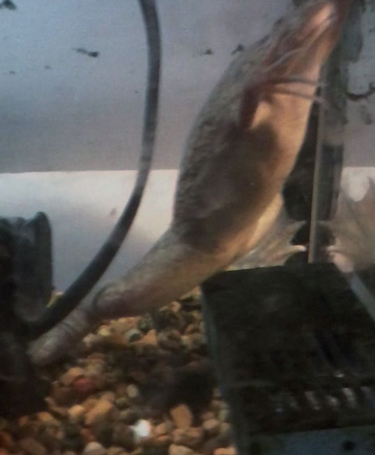
African Clawed Frog

Finally, there is Poncherello Pegone Pixiefrog, our African Bullfrog (Pyxicephalusadsperus). “Ponch” is named for the  mayor on the cartoon My Gym Partner’s a Monkey., who is also a Pixie, or African Bullfrog. We adopted him from a breeder because he appears to be blind in one eye and the breeder did not want him. Ponch eats thawed mice off tongs, usually one or two a week. He is also a regular in our programs, having traveled to 14 states since we got him two years ago. While our other frogs are kept in our entrance hallway (Our facility is not air conditioned), Ponch loves the heat and his aquarium is kept in our snake and lizard room, where the high ambient temperature helps him with digestion.

We hope to see you some time in the future…

About Keith Gisser:

Keith caught a toad (Anaxyrus ssp) when he was nine and his herpetology career began. He has presented Herps Alive! an award-winning, nationally recognized interactive reptile and amphibian program based in Ohio, at over 170 college campuses and hundreds of other venues in 39 states.

Gisser, who has been a herpetology educator for over thirty years and currently maintains about 140 reptiles, amphibians and crocodilians, nearly all of which are adoptions or rescues, about half of which are used in his programs. The rescue and adoption mission has taken more and more of his time and efforts in recent years and will soon be “spun off” as the Herps Alive! Foundation, which is in the process of seeking non-profit status and accreditation as a rescue.


07/4/13

Frogs Crossing the Road in the Rain

Rio Grande Leopard Frog by Sara Viernum

Rio Grande Leopard Frog by Sara Viernum

A frog fan, Brian, emailed about the frogs in his area crossing the road when it rains, and I asked a few experts to advise him. We all agreed to share this content so you can know what to do in your own area.

Brian asks:
To reiterate our conversation, there is an ecosystem in and around the Salt Pond community in Bethany Beach DE, which subsequently is intertwined by a few roads. There is one particular stretch of about two blocks where, like clockwork, when it rains the frogs cover the street. It seems to be two species doing this; the bull frogs and little peepers. I did a rough estimation of about 125 of these frogs are being killed by car traffic every time it rains. That’s roughly 4000 per summer season. What is it about the rain that draws these frogs to the pavement?  And what practical solution can be done to lessen the slaughter?

Best regard, Brian H.

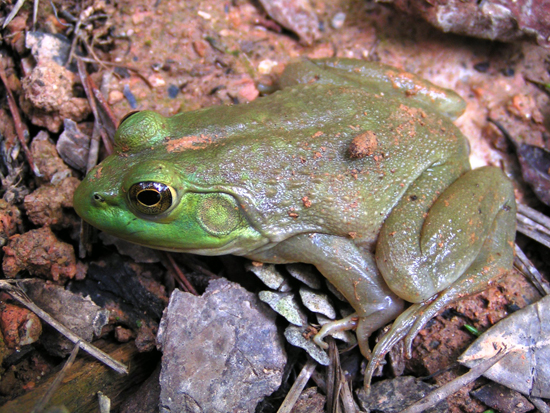
Bullfrog by Sara Viernum

Bullfrog by Sara Viernum

Two responses from the experts:

Hi Susan and Brian,
Happy for others to chirp in as well, but the frogs are not so much attracted to the pavement, but the rains signaling the fact that its time to breed!  So when this happens the frogs migrate from where they live their everyday lives to a suitable breeding site, which hopefully still exists.  I’ve seen cases where the traditional ponds have been turned into carparks or shopping malls and all the frogs turn up and say “WTF?” And inevitably die.  There is another explanation and that depends upon the size of the frogs – if they are adults then the above explanation is probably true, however if they are metamorps or juveniles then its quite likely this is a mass migration AWAY from the breeding site of newly developed froglets to find a good place to live and the only way they can avoid drying out on the hostile pavements is to travel when it rains.

OK – what can be done to save them?

People try many things, during rainy days you can get volunteers to help the frogs across the roads, you can put signs up to warn motorists and tell them to be careful, you can close the roads – all these have differing successes depending on manpower, but the best solution is to advocate for some frogs tunnels and drift fences to be installed.  Essentially you erect a barrier, which for these species would need to be carefully constructed as peepers can climb very well and bullfrogs can jump very well, and these barriers prevent the frogs from crossing the road and direct them to an underpass where they can cross the road safely (obviously the same needs to happen on the other side so that they don’t get squashed coming back).  Having said all this, both the species mentioned are fairly common species and are not under threat (although it would be good to get their ID professionally confirmed) and are not in decline – at the moment, so it would be difficult to motivate city councils or governments to take action for a fairly common species.  But its great that Brian wants to do something an it would be great if Kerry Kriger (Save the Frogs) or I can help.

All the best

Phil Bishop
Associate Professor
Chief Scientist
Amphibian Survival Alliance
asa logo


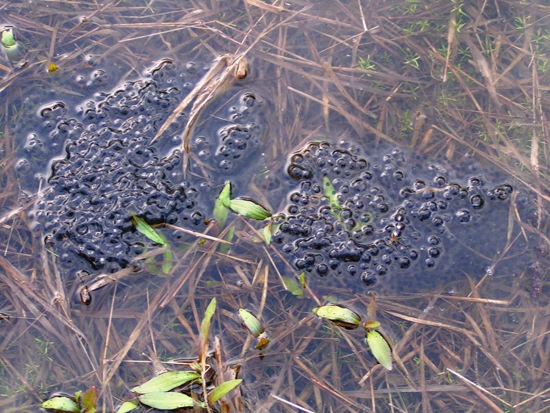
Ranid Eggs by Sara Viernum

Ranid Eggs by Sara Viernum

Brian,

Susan with Frogs Are Green forwarded your e-mail to me.  Roadways are a huge problem for herpetofauna as you’ve found out.  The frogs are mostly likely coming out on the roads during rainy nights to move to breeding grounds or in search of food.  Frogs love rainy nights and move around a lot during them.  Some possible solutions to help save the frogs are to petition the city and or your local Fish and Wildlife/Dept of Natural Resources office to install frog crossing signs and get the speed limit lowered and/or to install fencing that diverts the frogs to an under road crossing (if one is nearby).  If this is a little used road you might asked that it be closed during certain seasons like the famous snake road in the Pine Hills in Southern Illinois that is closed twice a year to allow rattlesnakes to migrate.  Another possibility is to start a citizen group that devotes time to cruising the roads on rainy nights saving the frogs.  I’ve heard of a few areas in the US where people do this.

Thanks for being concerned about the frogs.

Cheers!

Sara Viernum, The Wandering Herpetologist

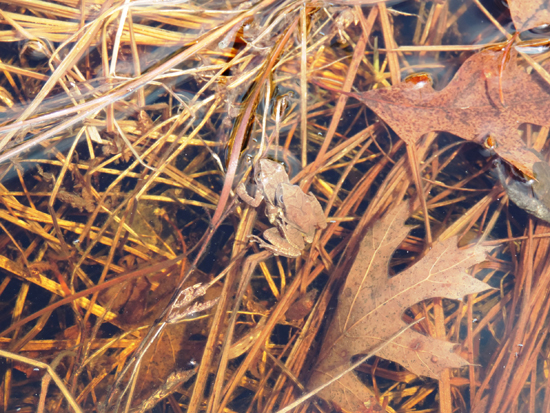
Spring Peepers by Sara Viernum

Spring Peepers by Sara Viernum

06/25/13

Win win situation for the Hedgehog and for the Frogs in New Zealand

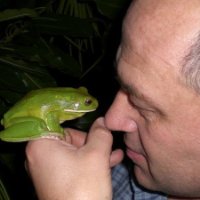
Phil Bishop and frogGuest post by Phil Bishop
acting director at The Centre for Science Communication (University of Otago)
Associate Professor/Chief Scientist ASA


Hedgehogs are cute and cuddly.

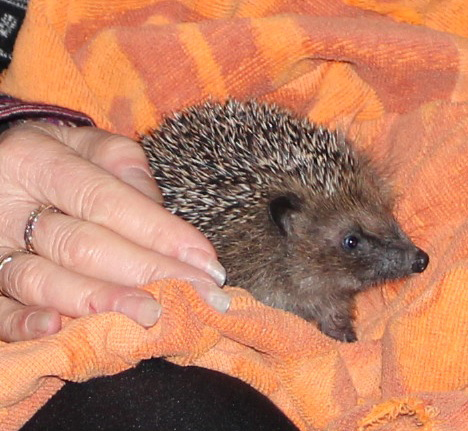
Many children are exposed to characters like Beatrix Potter’s Mrs Tiggy-Winkle, so it was no surprise that when I found a baby hedgehog (called a hoglet) sitting motionless on the sidewalk at 4.30 in the afternoon that I felt moved to help.

This is in New Zealand and many people may not realize that New Zealand was probably one of the last places in the World to be colonized by land mammals.  The only native mammals we have in New Zealand are two species of bats and marine mammals like seals and dolphins.  So all the rats, mice, stoats, weasels, possums and of course, hedgehogs, have all been introduced in the last couple of hundred years.

Hedgehog named Pepper in new zealand

Nearly all the land mammals are introduced species and the native wildlife (birds, reptiles and frogs), who have been happily evolving on their own for the last 80 million years in the absence of mammals, haven’t a clue what to do when they encounter an introduced, vicious, mammalian predator.

I ended up in a dilemma – should I nudge the hedgehog into the oncoming traffic, it was cold and going to die anyway, or should I nurse it back to health and when its old enough, release it back into the wild to wreak havoc with our native wildlife or get squashed on the road as an adult!

The decision was a ‘no brainer’, I couldn’t let this little fellow die a horrible death so I had to rear the little 100 gm orphan.  So now we have a large female hedgehog – a couple of pounds in weight – a vicious predators of my favorite animals that I have been working so hard to save – frogs!  What to do?

Luckily I managed to find someone who was looking for a hedgehog as a pet – so she is now living with a family, never to be released to the wild, never to produce more hedgehogs, never to run the gauntlet of crossing a road but always having her every day needs taken care of.

A win win situation for the hedgehog and for the frogs!

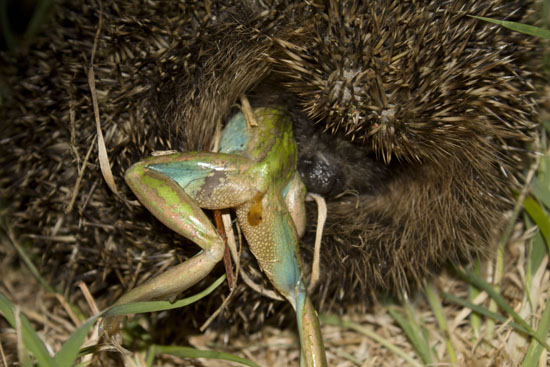
While they might seem cute and cuddly hedgehogs are significant predators of frogs, lizards and even ground nesting birds – and probably play a significant role in the decline of Leiopelma frogs in New Zealand.

frog and hedgehog by Phil Bishop