
01/21/13

Announcing the Winners of the 2012 Frogs Are Green Kids’ Art Contest

We’re excited to announce the winners of our third annual 2012 FROGS ARE GREEN art contest for kids. We received 236 entries from young artists from countries around the world. We are so grateful to the kids, parents, and teachers who sent in their creations. As always, we were thrilled to see so many original, fun, and thoughtful drawings and paintings of our favorite amphibian. It was extremely difficult to pick winners.

The artwork will continue to be on exhibit in the 2012 frogs are green kids’ art gallery on Flickr, and we encourage all participants to show off their amazing artwork to friends, family, and fellow students. All those who entered can download a certificate of participation (pdf download). First place, second place, and honorable mention winners, please contact us to receive your downloadable award certificate.

The winners are as follows:

Overall 2012 Frogs Are Green Kids’ Art Contest winner

“Joint Action for Frog Conservation,” Angel Barachiel S. Muñoz, 8 yrs old, Zamboanga City, Philippines
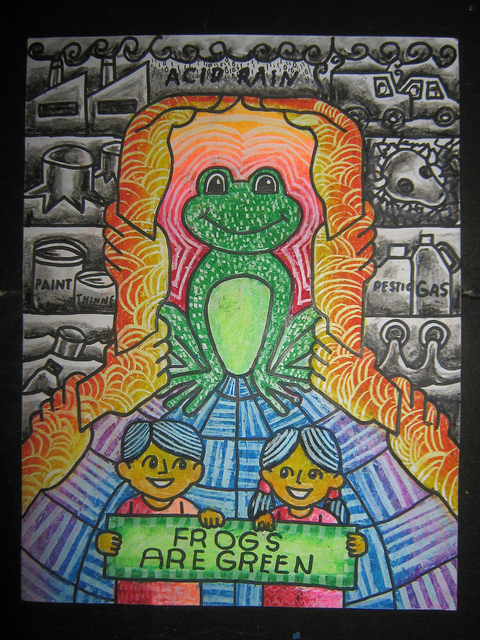
Overall Winner 2012 Frogs Are Green Kids' Art Contest - Angel Baracjiel S. Munoz

Ages 3-6
First place: Todor Gargov, 6 yrs old, The Little Prince Kindergarten, Varna, Bulgaria
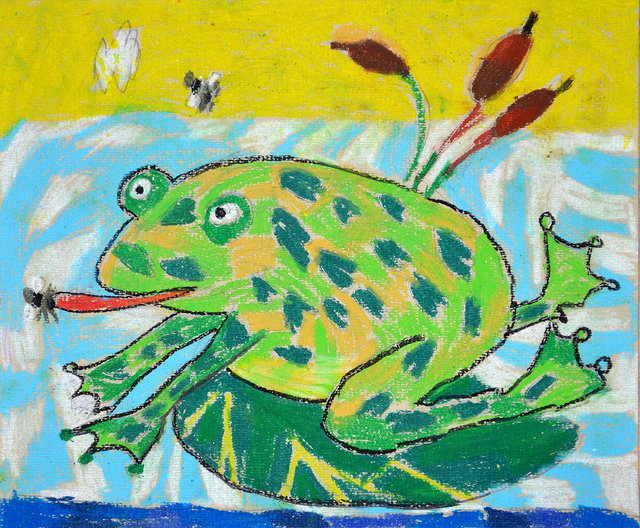
1st Place Winner 3-6 yrs, Frogs Are Green 2012 Kids' Art Contest - Todor Gargov

Second place: “Joyful Life in a Clean Frog Pond” by Kennard Alvaro Hadinata, 4 ½ yrs old, Indonesia
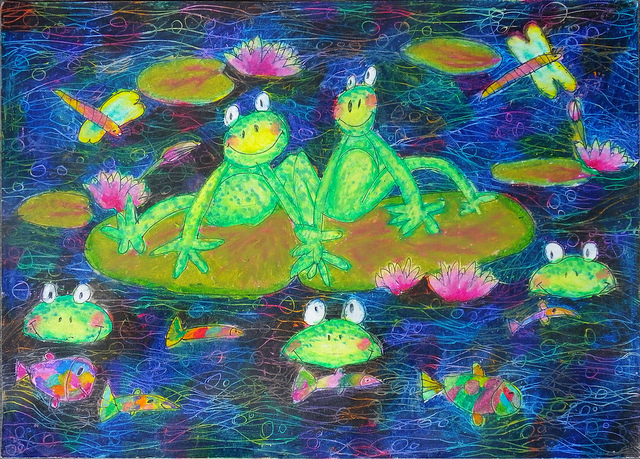
2nd Place 2012 Frogs Are Green Kids' Art Contest - Kenard Alvaro Hadinata

Honorable Mention: Mehran Hasan Bhuiyan, 5 yrs old, Bangladesh
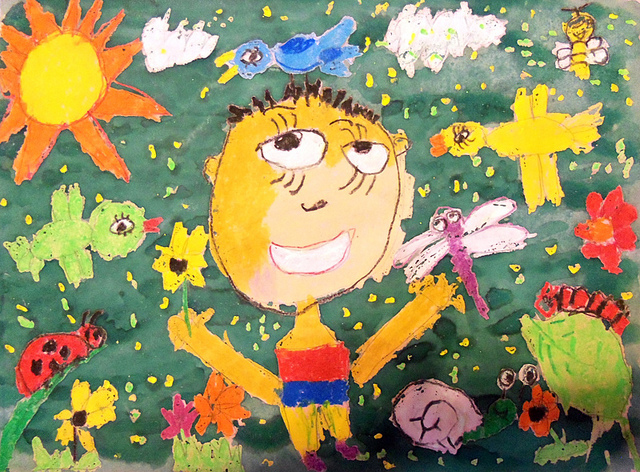
3rd Place 3-6 yrs 2012 Frogs Are Green Kids' Art Contest - Mehran Hasan Bhuiyan

Ages 7-9

First place: Viktoria Kovacheva, 9 yrs old, The Little Prince School, Varna, Bulgaria
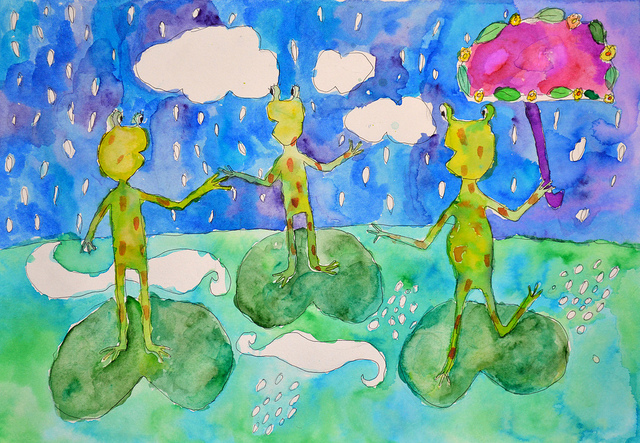
1st Place 7-9 yrs - 2012 Frogs Are Green Kids' Art Contest - Viktoria Kovacheva

Second place: “Frog Rhapsody,” Tatyana Kokal, 9 yrs old, The Little Prince School, Varna, Bulgaria
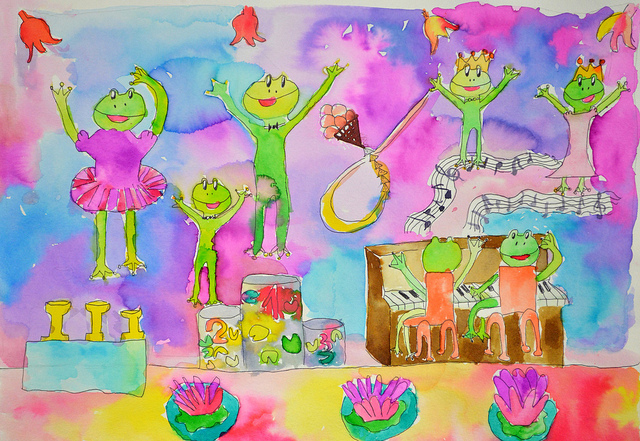
2nd Place - 2012 Frogs Are Green Kis' Art Contest - Tatyana Kokal

Honorable mention: Essa Ahmed Ansari, 7 yrs old, Pristine Private School, Dubai, UAE
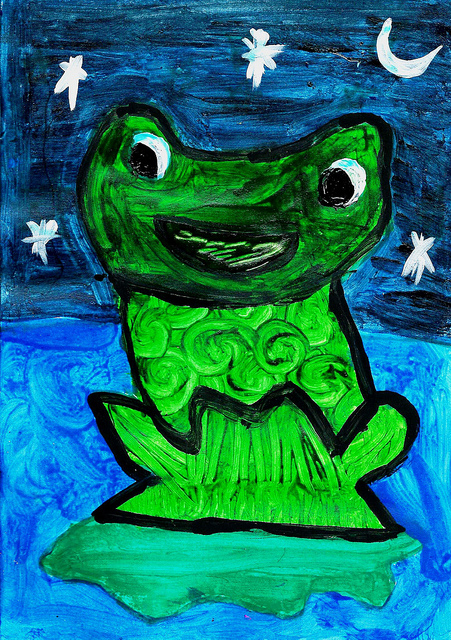
3rd Place 2012 Frogs Are Green Kids' Art Contest - Essa Ahmed Ansari

Ages 10-12
First place: “Sunny Day” by Laura Krišjāne, 10 years old, Riga 45 High School, Latvia
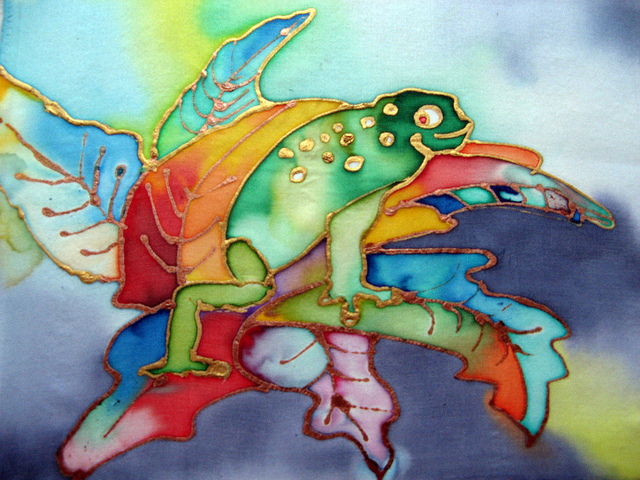
1st place 10-12 yrs 2012 Frogs Are Green Kids' Art Contest - Laura Krišjāne

Second place: “A World that’s Green in His Dream” by Andrew Wang, 12 yrs old, USA
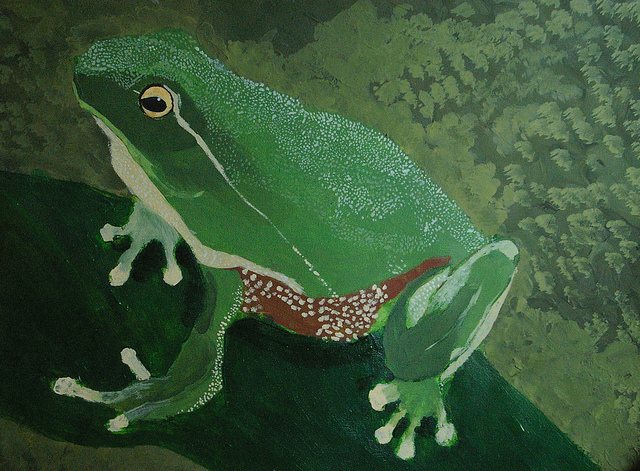
2nd Place 10-12 yrs 2012 Frogs Are Green Kids' Art Contest - Andrew Wang

Honorable mention: “Today” by Estere Zariņa, 10 yrs old, Riga 45 High School, Latvia

3rd place 10-12 yrs 2012 Frogs are Green Kids' Art Contest - Estere Zariņa

Best 3D art
First place: “My Happy Frog” by Egils Ziedins, 11 yrs old, Children’s and Youth Centre, IK Auseklis, Riga, Latvia
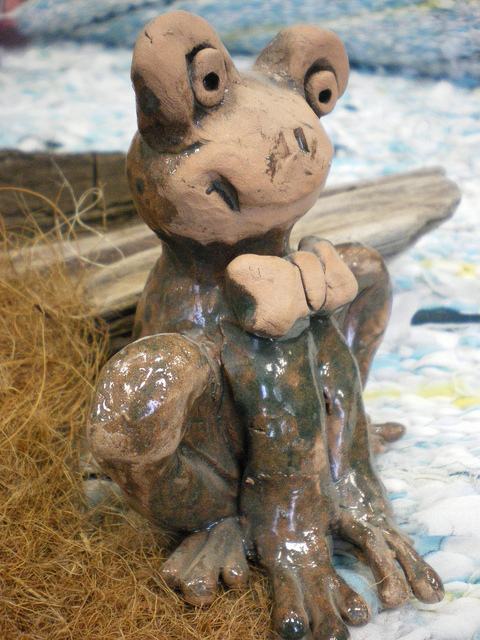
Best 3d clay frog - 2012 Frogs Are Green Kids' art Contest - Egils Ziedins

Best Environmental “Green-Themed” Art

First place: “Environment change took away our frogs’ living area. Protect our Earth and save our frogs from falling!” by Aaron Wang, 11 yrs old, USA
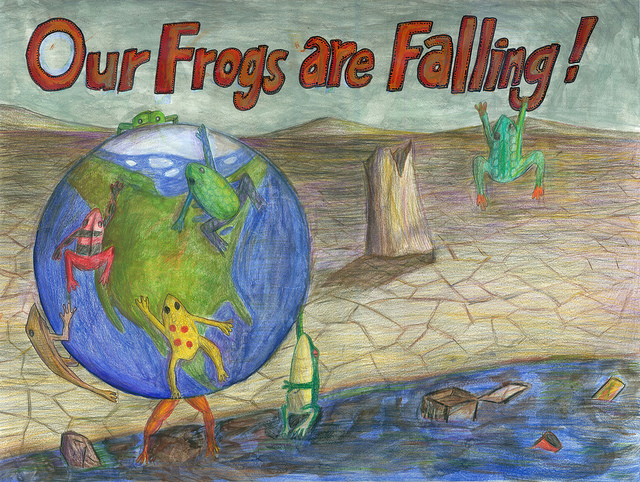
1st place - best eco art - 2012 Frogs Are Green Kids' Art Contest - Aaron Wang

Second place: “Clean Earth, Happy Frog,” Alton Wang, 8 yrs old, USA
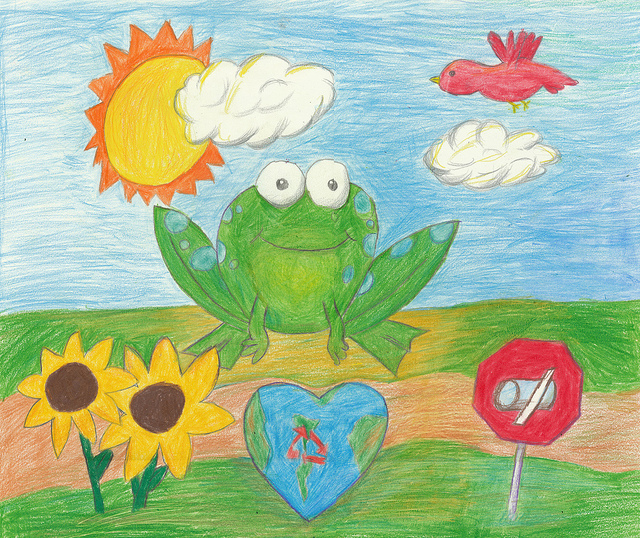
2nd place - best eco art - 2012 Frogs Are Green Kids' Art Contest - Alton Wang

01/21/13

Announcing the Winners of the 2012 Frogs Are Green Photography Contest

We are excited to announce the winners of the fourth annual 2012 FROGS ARE GREEN photo contest. We were thrilled to receive such fabulous entries, and it was difficult to pick the winners. We hope you will continue your adventures as amphibian photographers and enter next year’s photo contest!

We accepted photos in two categories: Frogs in the Wild and Backyard Frogs.


FROGS IN THE WILD

First place: Sherri Simms – “Spotted this frog and had to snap a photo, looked like he was smiling! It was taken at a pond in London, Ontario.”

Winner 2012 Frogs Are Green Photography Contest - Sherri Simms

Second place: Sara Viernum – Northern Red-legged Frog hanging out in the wetlands at Wapato Greenway in Portland, Oregon

2nd Place 2012 Frogs Are Green Photography Contest - Sara Viernum

Honorable mention: Aaron Wang, USA

3rd Place 2012 Frogs Are Green Photography Contest - Aaron Wang

BACKYARD FROGS

First place: Simply Bananas1 “Surfin’ the green wave.”

Winner 2012 Frogs Are Green Backyard Frogs Photography Contest - Simply Bananas1

Second place: Brad Merrell – “A Frog’s Perspective”

2nd Place 2012 Frogs Are Green Backyard Frogs Photography Contest - Brad Merrell

Honorable mention: Eleanor Leonne Bennett Cheshire UK

3rd Place 2012 Frogs Are Green Backyard Frogs Photography Contest - Eleanor Leonne Bennett

01/15/13

Frogs, Bats, and Bees: Why Are Fungal Infections Wiping them Out?

We’ve written before about fungal infections devastating amphibian, honey bee, and bat populations, but this winter we wanted to delve more deeply into this issue. First, we’ll learn a bit about fungi and why they can be such virulent pathogens. In the next few posts, we’ll explore the emergence of these infections in bats, honey bees, frogs, and yes, even in humans.

Killer airborne fungus. Photo from National Geographic, courtesy of Edmond Byrnes and Joseph Heitman, Duke Dept. of Molecular Genetics and Microbiology

What is a fungus?

A fungus is not an animal or a plant. It isn’t a bacteria either. Fungi belong to a separate kingdom that includes molds, yeasts, lichens, and mushrooms. Animals and fungi do share certain features: they breathe oxygen and get energy by eating food. Their cells are similar. Yet fungi don’t eat and digest their food as animals do. Their feeding style breaks down dead plants and animals, decomposing them. But they can also switch their diet from dead animals to live cells.

Fungi can retreat into spores and survive for long periods without food. They can live independently, outside their hosts. As spores they can float through the air, get lodged into the treads of a shoe, or float in water. Unlike bacteria and viruses that may burn themselves out when they kill their victims, fungi can wipe out whole populations without being destroyed themselves.

Why are certain types of animals so vulnerable to fungal diseases?
There isn’t one conclusive answer. Those animals that are immunosuppressed, however, tend to be more vulnerable to fungal infection. But why are these animals so unhealthy? The answers are complex and may have to do with many different causes, perhaps a “perfect storm” of causes: the overall decrease of biodiversity, use of pesticides, climate change, clear cutting of forests and habitat destruction and degradation, and other issues.

Readers of Frogs Are Green are familiar with the the chytrid fungus, Batrachochytrium dendrobatidis, which has wiped out hundreds of species of amphibians.

In 2006 the white-nose syndrome, an infection caused by the fungus Geomyces destructans killed a few bats in New York; since then it has killed more than 5 million bats in 21 states and four Canadian provinces.

Recently honey bee populations have been devastated. There is evidence that co-infection with multiple pathogens, including fungi, is one cause.

A fungus called Cryptococcus neoformans ravages humans with compromised immune systems. It is spread primarily by the guano of pigeons and contracted by inhaling spores. More than 1 million immunosuppressed patients are infected annually around the world.

What is the Causing the Spread of the Emerging Fungal Diseases?

Fungal spores can be easily spread by humans so fungi that were once isolated in different parts of the world can now exchange genes and create new and more virulent pathogens.

As reported in a recent e360 (Yale) article: “Fungi have driven more animal species extinct than any other class of pathogens by quite a long way,” according to Matthew Fisher, an epidemiologist at Imperial College in London.

As Rob Miles, executive director of the Organization for Bat Conservation told Bee, Bat, Frog Deaths May Be Linked, Discovery News”>Discovery News, “It appears that many species are under an immense amount of stress, allowing opportunistic diseases to take hold.”

Information from this post from:

A Rise in Fungal Diseases is Taking Growing Toll on Wildlife by Michelle Nijhuis, Slate

Bee, Bat, Frog Deaths May Be Linked, Discovery News